






Key Takeaways
- Integrating O2C with P2P eliminates finance silos, creating a connected workflow that improves operational efficiency and financial visibility.
- A unified O2C and P2P process strengthens cash flow management by providing real-time insights into receivables, payables, and working capital.
- AI-powered automation reduces manual reconciliation, invoice processing, and approval bottlenecks, enabling faster and more accurate finance operations.
- Connected finance workflows accelerate the financial close process, improve reporting accuracy, and support better strategic decision-making.
- Successful integration requires standardized processes, high-quality master data, and a centralized automation platform to achieve scalable, long-term business value
Modern enterprises rarely struggle because they lack technology—they struggle because their business processes operate in silos. Sales teams manage customer orders independently, procurement teams focus on supplier relationships, and finance spends significant time reconciling disconnected data. The result is delayed cash flow, inconsistent financial reporting, and limited operational visibility.
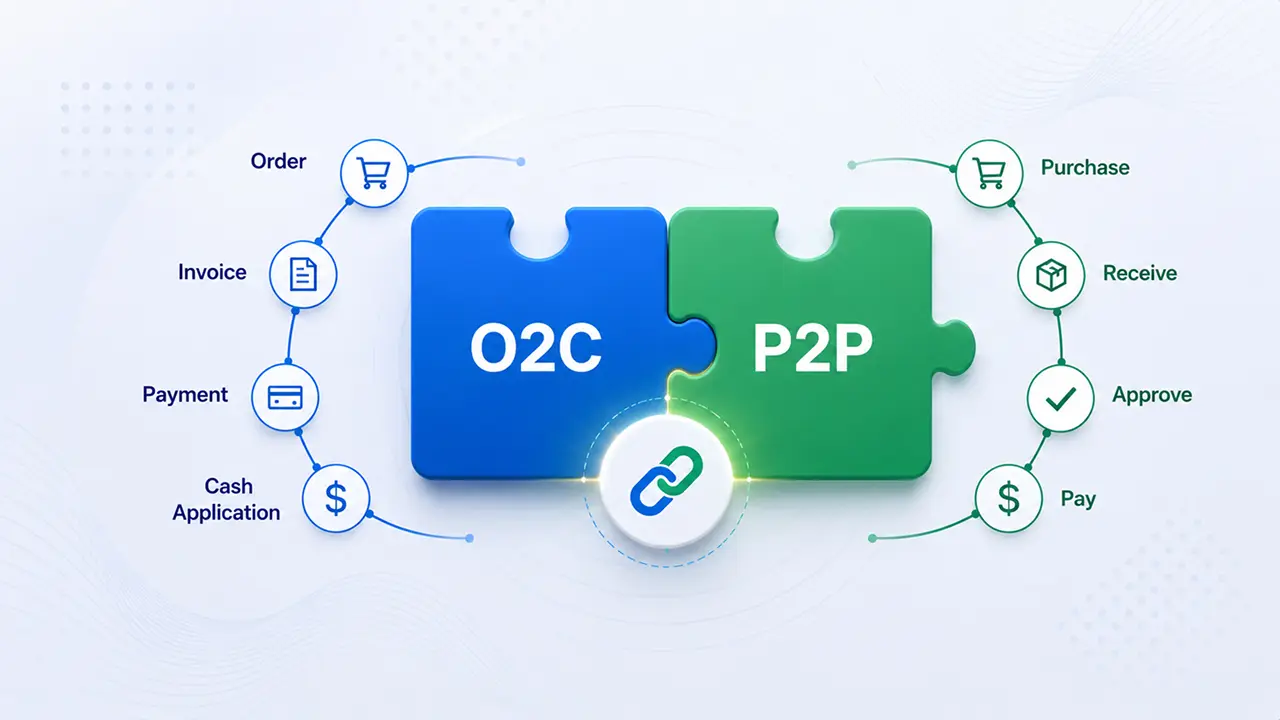
This is why integrating O2C with P2P has become a strategic priority for enterprises pursuing digital transformation. Rather than optimizing Order-to-Cash (O2C) and Procure-to-Pay (P2P) separately, organizations are connecting these critical financial workflows to create a unified ecosystem where information flows seamlessly across departments.
When O2C and P2P work together, businesses gain end-to-end visibility into revenue, spending, working capital, and cash flow. They eliminate manual reconciliation, improve forecasting accuracy, reduce operational costs, and enable faster, data-driven decisions.
Understanding O2C and P2P
Before discussing integration, it’s important to understand the role each process plays.
What is Order-to-Cash (O2C)?
Order-to-Cash covers every step involved in fulfilling customer orders and collecting payments. It typically includes:
- Customer order management
- Credit approval
- Order fulfillment
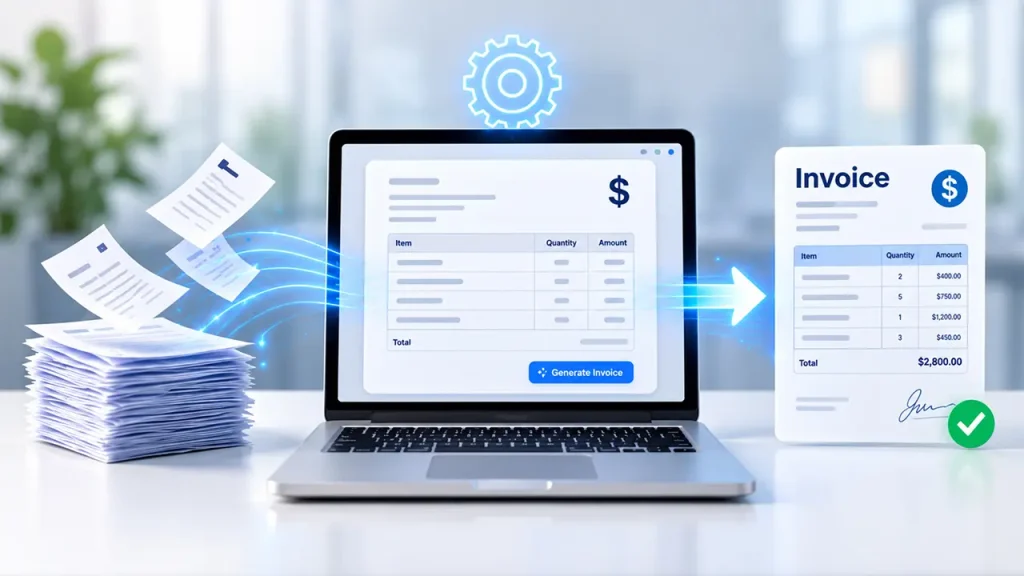
- Invoice generation
- Accounts receivable
- Payment collection
- Cash application
The primary objective of O2C is accelerating revenue realization while delivering a positive customer experience.
What is Procure-to-Pay (P2P)?
Procure-to-pay governs how an organization purchases goods and services and pays suppliers. The process includes:
- Purchase requisitions
- Vendor management
- Purchase order creation
- Goods receipt
- Invoice processing
- Approval workflows
- Supplier payments
The goal of P2P is controlling procurement costs while ensuring efficient supplier collaboration and compliance. Although these processes appear independent, they both directly impact working capital, cash flow, budgeting, and financial performance.
Why Integrating O2C with P2P Matters
In many organizations, O2C and P2P operate as isolated workflows supported by different systems and teams. Sales focuses on collecting customer payments while procurement manages vendor invoices. Finance becomes the bridge responsible for reconciling data between them.
This disconnected approach creates several inefficiencies:
- Duplicate financial data
- Delayed reporting
- Manual reconciliations
- Poor cash flow visibility
- Inconsistent financial planning
- Limited forecasting accuracy
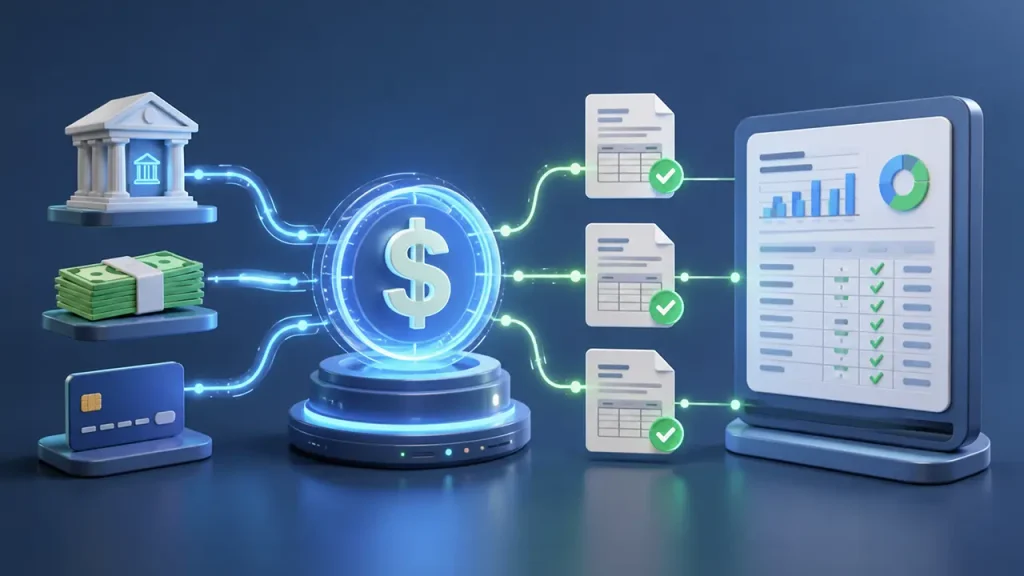
Integrating O2C with P2P enables enterprises to create a single source of financial truth where revenue generation and expenditure management work together rather than independently.
Instead of reacting to financial events after they occur, finance teams gain real-time insights into incoming cash, outgoing payments, outstanding receivables, supplier obligations, and overall liquidity.
The result is better decision-making across the enterprise.
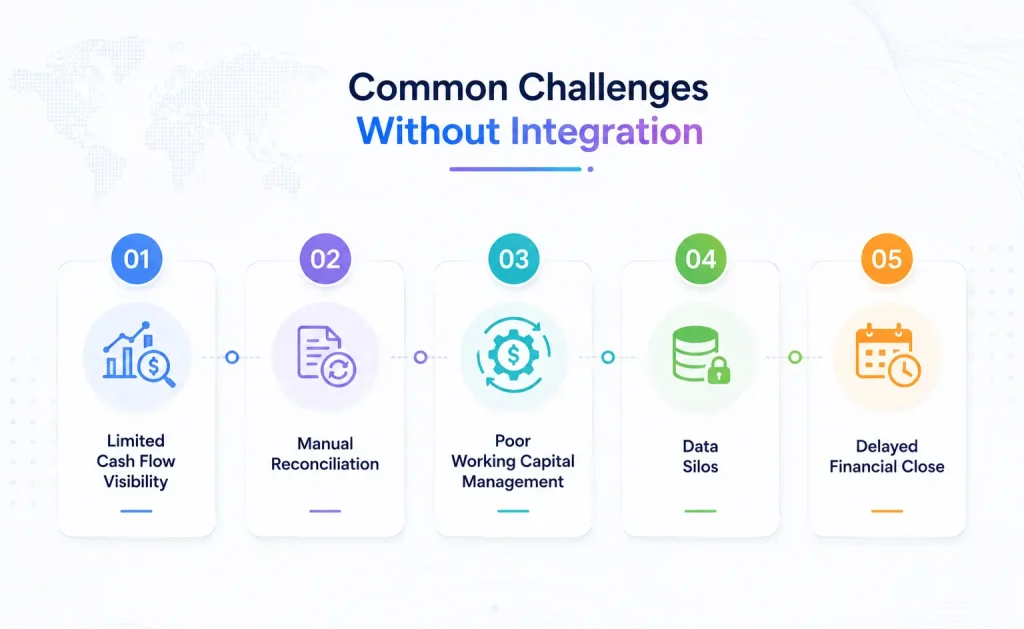
Common Challenges Without Integration
Organizations managing disconnected finance operations often experience recurring operational problems.
1. Limited Cash Flow Visibility
Accounts receivable teams know when customers are expected to pay. Accounts payable teams know when suppliers must be paid. Without integration, finance leaders cannot accurately predict daily cash positions.
2. Manual Reconciliation
Finance professionals spend hours matching:
- Customer receipts
- Vendor payments
- Purchase orders
- Sales invoices
- General ledger entries
These manual activities consume valuable time and increase the likelihood of errors.
3. Poor Working Capital Management
Businesses may delay customer collections while simultaneously making supplier payments earlier than necessary. Without visibility across both processes, organizations cannot optimize cash utilization.
4. Data Silos
Different ERP modules, procurement platforms, CRM systems, and finance applications often contain inconsistent information. This creates reporting discrepancies and slows decision-making.
5. Delayed Financial Close
Disconnected O2C and P2P data requires finance teams to reconcile multiple systems before month-end reporting. This extends close cycles and reduces reporting accuracy.
Key Benefits of Integrating O2C with P2P
Connecting these processes delivers measurable operational and financial improvements.
1. End-to-End Financial Visibility
Integrated workflows provide a comprehensive view of:
- Revenue
- Procurement spending
- Outstanding receivables
- Supplier liabilities
- Cash availability
- Working capital
Leadership teams gain real-time dashboards instead of waiting for manual reports.
2. Better Cash Flow Management
When incoming customer payments and outgoing supplier obligations are visible together, treasury teams can:
- Predict liquidity
- Optimize payment timing
- Improve cash reserves
- Reduce borrowing requirements
Cash becomes a strategic asset rather than an operational concern.
3. Faster Financial Close
Integrated finance data significantly reduces manual reconciliation. Automated transaction matching enables finance teams to:
- Close books faster
- Improve reporting accuracy
- Reduce accounting workload
- Accelerate compliance reporting
4. Improved Decision-Making
Executives no longer rely on fragmented reports from different departments.
Instead, they gain real-time insights into:
- Customer payment behavior
- Supplier performance
- Procurement costs
- Revenue trends
- Profitability
- Financial risks
This supports more informed business decisions.
5. Increased Operational Efficiency
Automation removes repetitive activities such as:
- Data entry
- Invoice matching
- Payment reconciliation
- Status updates
- Workflow routing
Employees spend less time on administrative work and more time on strategic initiatives.
How AI and Automation Enable Connected Finance Operations
Traditional integrations relied on basic system connections and scheduled data transfers. Today’s intelligent automation platforms provide far greater capabilities.
1. Intelligent Data Synchronization
AI continuously synchronizes data across:
- ERP systems
- CRM platforms
- Procurement software
- Billing systems
- Financial applications
Information remains consistent without manual intervention.
2. Automated Invoice Matching
AI can automatically match:
- Purchase orders
- Goods receipts
- Supplier invoices
- Customer payments
This dramatically reduces manual reconciliation while improving accuracy.
3. Predictive Cash Flow Analytics
Machine learning analyzes historical payment patterns to forecast:
- Customer payment delays
- Supplier payment schedules
- Seasonal cash fluctuations
- Working capital requirements
Finance leaders can make proactive decisions rather than reacting to cash shortages.
4. Intelligent Workflow Automation
AI automatically routes approvals based on:
- Invoice value
- Risk score
- Customer profile
- Vendor category
- Business rules
Routine approvals happen instantly while exceptions are escalated to the right stakeholders.
Best Practices for Successful O2C and P2P Integration
Successful integration involves more than connecting software. Organizations should adopt a strategic approach.
1. Standardize Business Processes
Before integration, document and standardize workflows across finance, procurement, and sales. Consistent processes simplify automation and reduce complexity.
2. Establish High-Quality Master Data
Customer records, supplier information, product catalogs, and financial accounts should remain accurate and standardized across systems. Poor data quality undermines even the most advanced automation initiatives.
3. Integrate Through a Central ERP or Automation Platform
Rather than creating numerous point-to-point integrations, organizations should use a centralized platform that connects finance systems through standardized APIs and workflow orchestration. This improves scalability and simplifies maintenance.
4. Automate Routine Activities
Prioritize automation for repetitive tasks such as:
- Invoice generation
- Purchase order matching
- Payment reconciliation
- Cash application
- Approval routing
Employees can then focus on strategic financial analysis.
Conclusion
As enterprises pursue digital transformation, optimizing individual finance processes is no longer enough. Sustainable growth requires connected operations that eliminate silos and enable seamless collaboration across the organization.
Integrating O2C with P2P creates a unified financial ecosystem where revenue generation and procurement activities work together to improve cash flow, enhance visibility, accelerate financial close, and support better strategic decisions. Instead of relying on fragmented systems and manual reconciliation, organizations gain real-time insights into both incoming and outgoing financial activities.
When combined with AI, intelligent automation, and modern integration platforms, O2C and P2P become more than operational workflows—they become strategic drivers of agility, efficiency, and business resilience. Organizations that embrace this connected approach will be better equipped to optimize working capital, strengthen customer and supplier relationships, and build a finance function that is ready for the future.