







Key Takeaways
- Revenue leakage often stems from hidden inefficiencies across the O2C lifecycle rather than a single major issue.
- Manual processes in billing, collections, cash application, and dispute management increase the risk of revenue loss.
- Even minor operational errors can significantly impact profitability, cash flow, and Days Sales Outstanding (DSO).
- Improving end-to-end visibility and standardizing O2C workflows helps identify and prevent revenue leakage early.
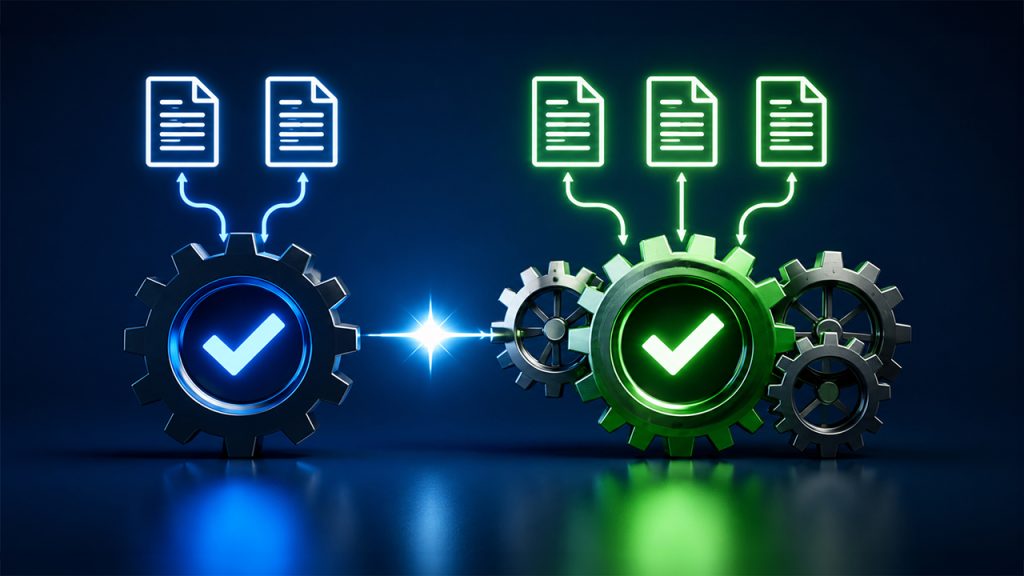
- Intelligent automation enables finance teams to reduce manual errors, accelerate collections, and protect earned revenue.
Every organization strives to grow revenue, improve margins, and strengthen cash flow. Yet, many businesses unknowingly lose a portion of their earned revenue—not because of declining sales or poor customer demand, but because of inefficiencies embedded within their Order-to-Cash (O2C) processes. These hidden losses, often referred to as revenue leakage in finance, accumulate gradually through manual errors, delayed billing, pricing inconsistencies, unresolved disputes, and ineffective cash application.
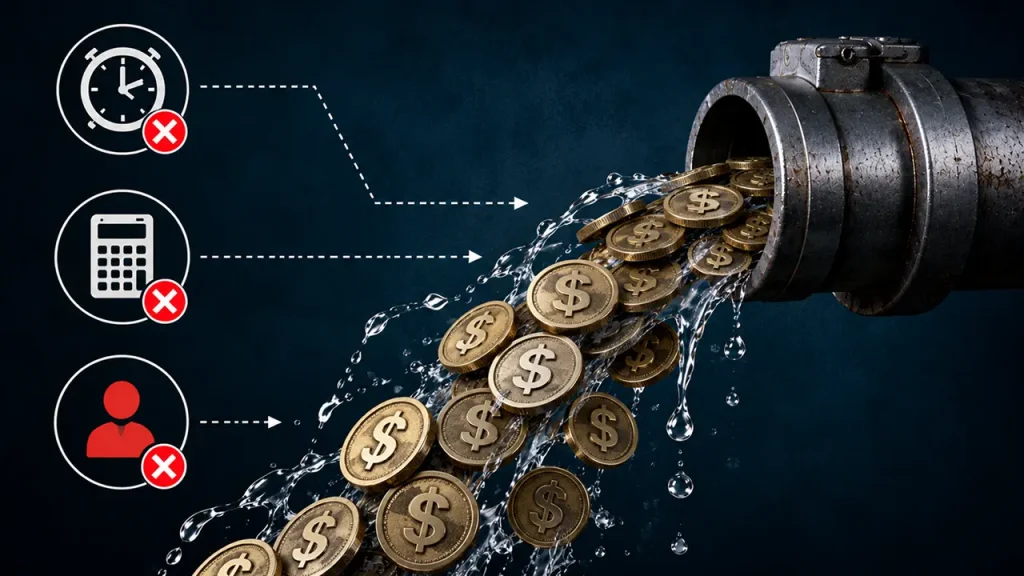
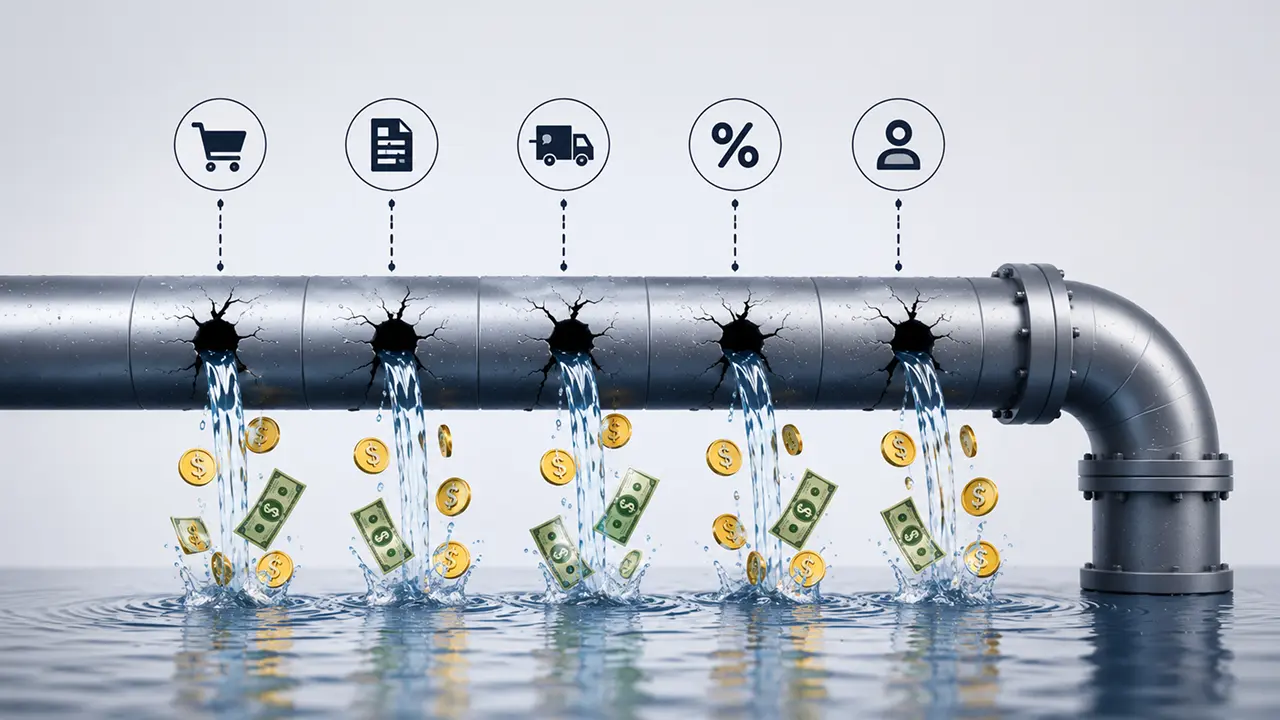
Unlike a major financial write-off, revenue leakage rarely appears as a single significant event. Instead, it occurs through hundreds or even thousands of small operational failures spread across different stages of the O2C cycle. A missed invoice here, an unauthorized discount there, or a payment applied to the wrong account may seem insignificant individually. However, when these issues multiply across high transaction volumes, they can substantially reduce profitability, delay cash collections, and increase operational costs.
The challenge is that traditional finance controls often identify these problems only after the damage has already occurred. By the time discremonth-end reconciliation or audits discover discrepanciesvering the lost revenue can be difficult, time-consuming, or impossible.
As finance teams face increasing pressure to improve working capital while managing growing transaction volumes, preventing revenue leakage and finance issues has become a strategic priority rather than a routine accounting exercise. Organizations are now shifting from reactive correction to proactive prevention by improving visibility across the entire O2C process and leveraging intelligent automation to reduce manual intervention.
Understanding Revenue Leakage in Finance
Revenue leakage refers to the loss of legitimately earned revenue due to preventable operational inefficiencies, process gaps, or execution errors. Unlike planned discounts, promotional offers, or approved write-offs, revenue leakage results from failures in business processes rather than intentional commercial decisions.
For finance leaders, revenue leakage is particularly concerning because it often remains invisible until it begins affecting financial performance. Identifying the root cause can be extremely challenging, especially since losses occur across multiple departments and systems.
Common examples of revenue leakage finance issues include:
- Incorrect pricing applied during order processing
- Missed or delayed invoice generation
- Unauthorized discounts and credit notes
- Duplicate or inaccurate invoices
- Manual cash application errors
- Unresolved customer disputes delaying collections
- Contract terms not reflected accurately in billing
- Payment allocation mistakes
- Delayed revenue recognition due to process bottlenecks
These issues are rarely isolated incidents. Instead, they reflect weaknesses in the overall Order-to-Cash process, where multiple teams—including sales, finance, operations, customer service, and accounts receivable—interact with shared customer and financial data.
As organizations grow, introducing new products, customers, and sales channels, the complexity of managing these processes increases. Without standardized workflows and real-time visibility, even well-managed finance teams can struggle to detect revenue leakage before it affects financial outcomes.
Why Order-to-Cash Is a Major Source of Revenue Leakage
The Order-to-Cash process encompasses every step involved in converting a customer order into collected cash. It typically includes order entry, credit approval, fulfillment, invoicing, collections, cash application, dispute management, and reconciliation.
While each stage serves a distinct purpose, they are closely interconnected. An error introduced at the beginning of the process can continue unnoticed until payment is delayed or financial reports reveal discrepancies.
Consider the following examples:
| O2C Stage | Potential Revenue Leakage |
| Order Entry | Incorrect pricing, incomplete customer information, missed contract terms |
| Credit Management | Delayed approvals causing shipment and billing delays |
| Invoice Generation | Missing invoices, duplicate invoices, incorrect tax calculations |
| Collections | Inconsistent customer follow-ups leading to delayed payments |
| Cash Application | Misapplied or unapplied cash affecting receivable accuracy |
| Dispute Resolution | Extended dispute cycles resulting in unnecessary credit notes |
| Reconciliation | Manual matching errors masking outstanding balances |
Because these activities involve multiple systems and stakeholders, maintaining consistency becomes increasingly difficult as transaction volumes grow.
Many organizations continue to rely on spreadsheets, email approvals, and manual reviews to manage these processes. While these methods may work for smaller transaction volumes, they become increasingly inefficient as businesses expand. Every manual touchpoint introduces another opportunity for delays, inconsistencies, or human error.
The result is a gradual accumulation of revenue leakage that often goes unnoticed until finance teams investigate declining margins or unexpected cash flow issues.
The Hidden Causes of Revenue Leakage Across the O2C Cycle
Revenue leakage is rarely caused by one major operational failure. More often, it develops through several recurring issues that collectively erode financial performance. Understanding these underlying causes is the first step toward preventing future losses.
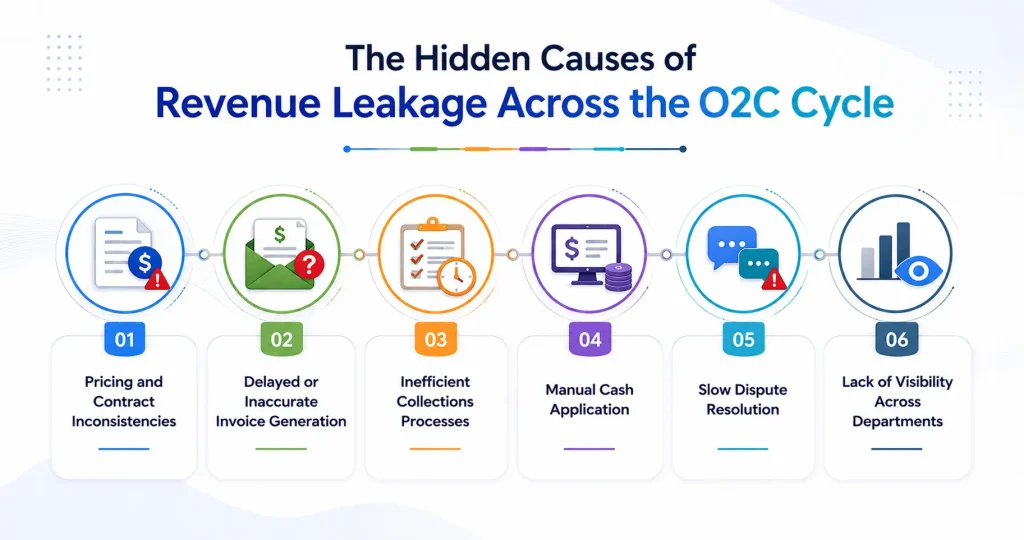
1. Pricing and Contract Inconsistencies
Pricing is one of the most common sources of revenue leakage. Large organizations frequently manage customer-specific pricing agreements, promotional discounts, rebates, and contract-based terms. When these agreements are not accurately reflected during order processing, invoices may be generated with incorrect prices.
Underbilling directly reduces revenue, while overbilling creates disputes that delay collections and damage customer relationships. In many cases, finance teams spend considerable time investigating and correcting pricing discrepancies that could have been prevented through standardized validation. Without automated controls, maintaining pricing accuracy across thousands of customer transactions becomes increasingly difficult.
2. Delayed or Inaccurate Invoice Generation
An organization cannot collect revenue until invoices are issued accurately and on time.
Manual invoice preparation often depends on multiple approvals, incomplete documentation, or disconnected systems. Even small delays in invoice generation can extend payment cycles, negatively affecting Days Sales Outstanding (DSO) and overall cash flow. Similarly, inaccurate invoices create unnecessary customer disputes, which require finance teams to issue revised invoices or credit notes before they can collect payment.
For businesses processing hundreds or thousands of invoices each day, improving billing accuracy represents one of the fastest ways to reduce revenue leakage finance risks.
3. Inefficient Collections Processes
Collections are often managed through manual reminders, spreadsheets, and individual follow-up practices. This creates inconsistent customer experiences while increasing the likelihood that overdue invoices remain unattended.
Some customers receive repeated reminders, while others receive none at all. Collection priorities may differ between team members, leading to delayed payments and increasing outstanding receivables.
A standardized collections strategy supported by workflow automation helps ensure timely communication while allowing finance professionals to focus their efforts on high-risk accounts rather than repetitive administrative tasks.
4. Manual Cash Application
Cash application is one of the most resource-intensive activities within the Order-to-Cash process. Every incoming payment must be matched with the correct customer account and invoice before receivables can be updated accurately.
In many organizations, remittance information arrives through multiple channels, including emails, bank portals, PDFs, spreadsheets, and ERP systems. When payment references are incomplete or inconsistent, finance teams are forced to manually identify and match transactions.
This manual effort increases the likelihood of:
- Unapplied cash
- Misapplied payments
- Duplicate payment postings
- Incorrect customer balances
- Delayed financial reporting
Beyond slowing down month-end close, these errors reduce visibility into actual cash positions and make it difficult to identify genuine collection issues. Automating cash application with AI-driven matching capabilities helps finance teams process payments faster while significantly reducing manual intervention.
5. Slow Dispute Resolution
Customer disputes are inevitable, but prolonged resolution cycles can create significant revenue leakage. Disputes often involve multiple stakeholders across finance, sales, logistics, and customer service. Supporting documents often scatter across different systems, which makes it difficult to investigate issues efficiently.
As disputes remain unresolved:
- Invoice payments are delayed.
- Collections activities are paused.
- Outstanding receivables continue to age.
- Credit notes may be issued unnecessarily to close cases quickly.
Without centralized visibility into dispute status and ownership, finance teams struggle to prioritize high-value cases or identify recurring causes. Over time, unresolved disputes become a hidden contributor to revenue leakage and working capital challenges.
6. Lack of Visibility Across Departments
Revenue leakage is not solely a finance issue—it is an enterprise-wide operational challenge.
Sales teams negotiate pricing, operations fulfill orders, customer service manages disputes, and finance handles billing and collections. When these functions operate in silos, small communication gaps can lead to significant financial consequences.
For example:
- Sales may approve discounts that are never communicated to finance.
- Operations may ship partial orders without updating billing teams.
- Customer service may issue credits without proper financial validation.
- Finance may continue collection activities despite unresolved customer issues.
Without a unified view of the O2C lifecycle, organizations often address symptoms rather than the underlying causes of revenue leakage.
How Revenue Leakage Impacts Financial Performance
Many organizations underestimate the true cost of revenue leakage because its effects extend well beyond lost revenue. Operational inefficiencies influence profitability, cash flow, forecasting accuracy, and customer satisfaction.
1. Reduced Profit Margins
Revenue leakage directly affects the bottom line. Even small pricing errors or missed invoices can accumulate into substantial financial losses when spread across thousands of transactions.
For organizations operating on tight margins, recovering just a fraction of leaked revenue can significantly improve profitability without increasing sales.
2. Increased Days Sales Outstanding (DSO)
Delayed invoicing, unresolved disputes, and inconsistent collections all contribute to longer payment cycles.
As DSO increases, organizations experience slower cash inflows, reducing liquidity and increasing dependence on external financing.
3. Poor Cash Flow Visibility
Manual processes often create discrepancies between reported receivables and actual cash collections.
When finance teams cannot accurately determine which invoices are outstanding, forecasting becomes less reliable, making it more difficult to plan investments, manage working capital, or allocate resources effectively.
4. Higher Operational Costs
Revenue leakage creates unnecessary administrative work.
Finance professionals spend valuable time investigating invoice discrepancies, correcting payment allocations, responding to customer queries, and performing manual reconciliations instead of focusing on strategic financial planning.
The hidden cost of these repetitive activities often exceeds the value of the original transaction errors.
Conclusion
Revenue leakage is rarely caused by a single operational failure. More often, it results from a series of small process inefficiencies that accumulate across the Order-to-Cash lifecycle. Manual invoice generation, inconsistent pricing, delayed collections, payment allocation errors, and unresolved disputes may seem like isolated issues, but together they can significantly impact profitability, cash flow, and customer satisfaction.
As transaction volumes continue to grow, traditional finance controls are becoming increasingly difficult to scale. Periodic audits and manual reconciliations remain important, but they identify problems only after revenue has already been affected.
Preventing revenue leakage finance requires a more proactive approach—one that combines standardized processes, real-time visibility, and intelligent automation to identify risks before they become financial losses. By continuously monitoring the O2C process and reducing reliance on manual intervention, finance teams can improve billing accuracy, accelerate collections, reduce operational costs, and strengthen working capital management.
Ultimately, organizations that treat revenue leakage as a strategic operational challenge rather than an isolated finance issue are better positioned to protect earned revenue, improve financial resilience, and create a more efficient Order-to-Cash process.