







Key Takeaways
- AR automation streamlines payment matching and reconciliation, reducing manual effort and improving accuracy.
- AI-powered reconciliation accelerates cash application and provides real-time visibility into accounts receivable.
- Automated exception management allows finance teams to focus only on transactions requiring human review.
- Choosing a solution with AI matching, ERP integration, analytics, and workflow automation maximizes long-term value.
- AR reconciliation automation helps businesses improve cash flow, reduce operational costs, and build a more efficient finance function.
Accounts receivable (AR) plays a vital role in maintaining healthy cash flow, but reconciling incoming payments with outstanding invoices is often one of the most time-consuming tasks for finance teams. As businesses grow, payment volumes increase, customer payment methods diversify, and reconciliation becomes increasingly complex. Manual matching of invoices, remittances, bank statements, and ERP records can lead to delays, errors, and unnecessary operational costs.
This is where AR automation is making a significant impact. By automating the reconciliation process, businesses can match payments faster, identify discrepancies instantly, and improve financial visibility without increasing manual effort. Instead of spending hours comparing transactions across multiple systems, finance teams can rely on intelligent automation to complete routine reconciliation while focusing on exceptions that require human expertise.
What Is AR Reconciliation Automation?
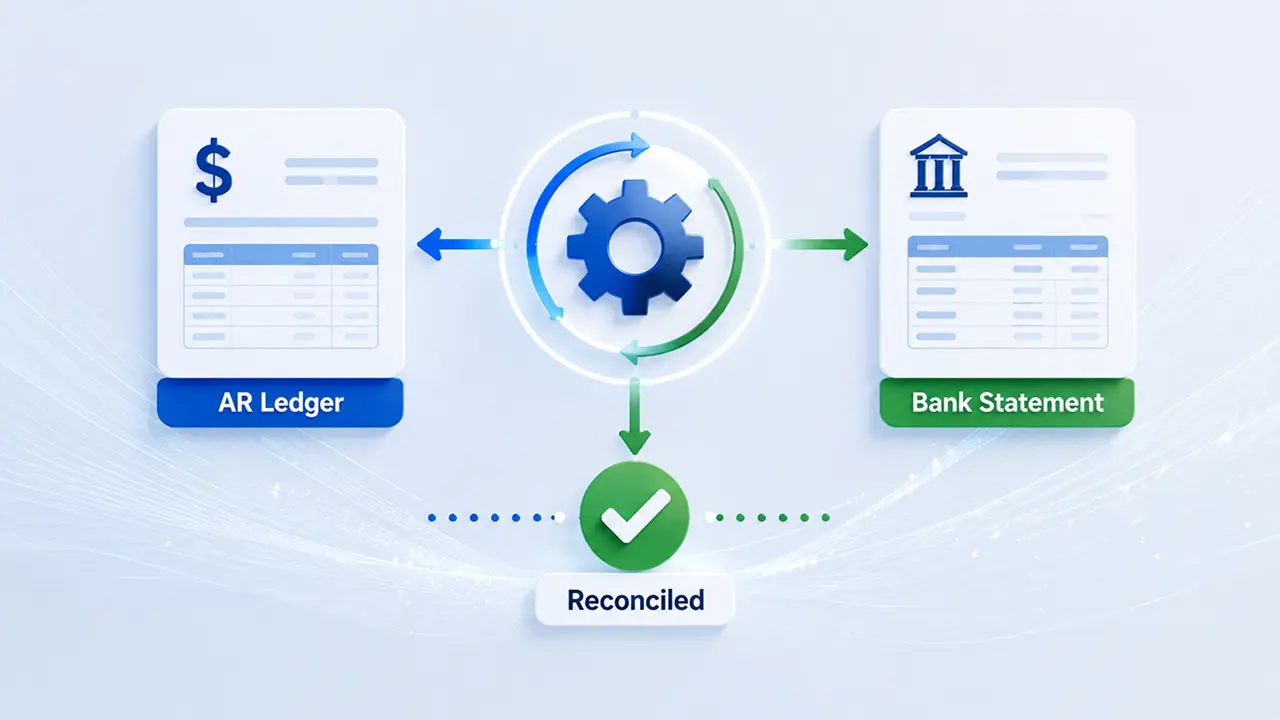
AR reconciliation automation is the process of using intelligent technologies to automatically match customer payments with outstanding invoices, credit notes, deductions, and other accounts receivable records.
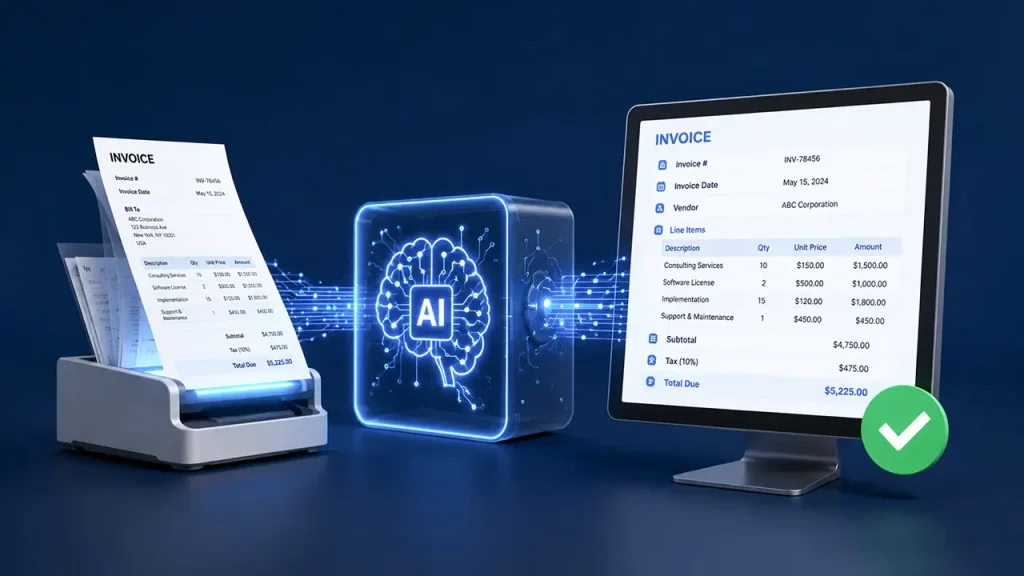
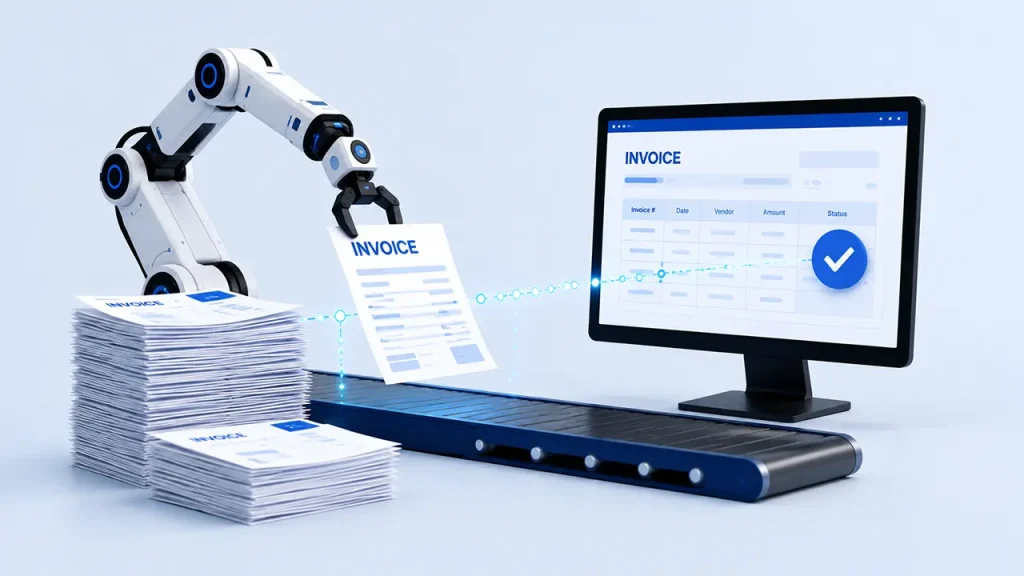
Rather than manually reviewing payment references and updating accounting systems, AR automation uses artificial intelligence (AI), machine learning (ML), robotic process automation (RPA), and business rules to reconcile transactions accurately and efficiently.
An automated reconciliation solution can:
- Match payments to invoices automatically
- Process full and partial payments
- Handle customer deductions and adjustments
- Detect duplicate or missing payments
- Identify reconciliation exceptions
- Update ERP and accounting systems automatically
- Generate audit-ready reconciliation reports
The result is a faster, more accurate, and highly scalable reconciliation process.
Why Manual AR Reconciliation Is Holding Businesses Back
Despite advances in finance technology, many organizations still rely on spreadsheets and manual processes for reconciliation. While this approach may work for smaller businesses, it quickly becomes inefficient as transaction volumes increase.
Some of the biggest challenges include:
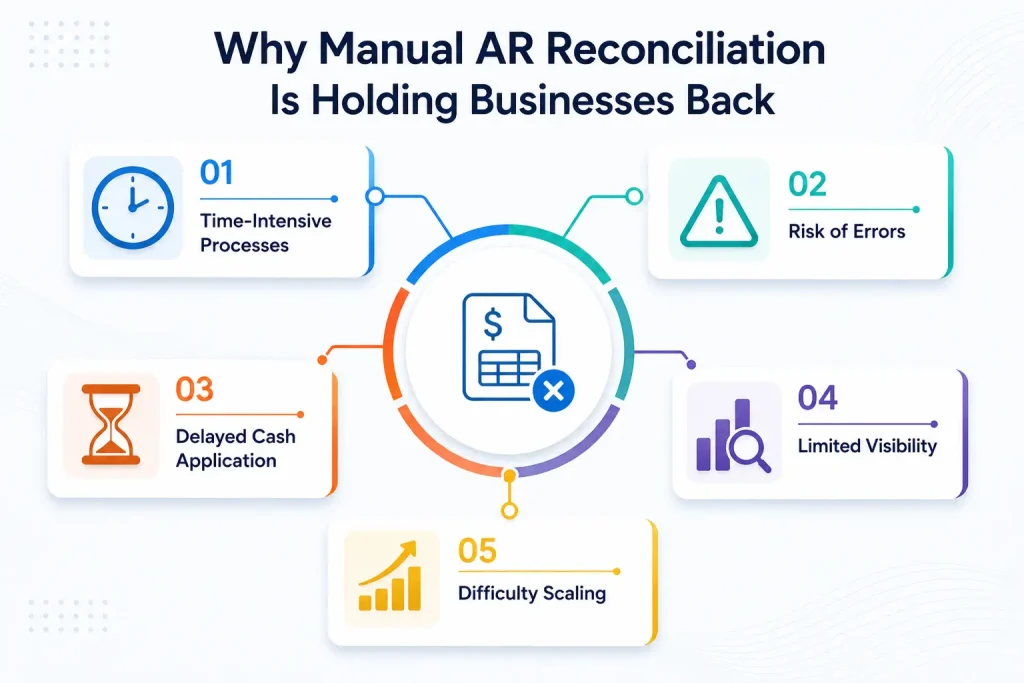
1. Time-Intensive Processes
Finance professionals often spend hours reviewing bank statements, remittance advice, payment portals, and ERP records to determine which invoices have been paid.
2. Risk of Errors
Manual reconciliation increases the likelihood of:
- Incorrect invoice matching
- Duplicate entries
- Missed payments
- Data entry mistakes
- Incorrect customer balances
These errors affect financial reporting and customer relationships.
3. Delayed Cash Application
Until payments are reconciled, customer accounts remain inaccurate. Delays in cash application can impact collections, forecasting, and cash flow visibility.
4. Limited Visibility
Without AR automation, finance leaders often lack real-time insight into outstanding receivables, unapplied cash, payment trends, and reconciliation status.
5. Difficulty Scaling
As customer numbers grow, manual reconciliation requires additional staff, increasing operational costs without improving efficiency.
How AR Reconciliation Automation Works
Modern AR automation solutions streamline reconciliation through a series of intelligent steps.
1. Collect Data from Multiple Sources
The system gathers information from:
- ERP systems
- Accounting software
- Bank statements
- Customer payment portals
- Payment gateways
- Lockbox files
- Remittance advice
Bringing all payment data into one platform eliminates manual data collection.
2. Intelligent Payment Matching
AI-powered algorithms analyze:
- Invoice numbers
- Customer IDs
- Payment references
- Invoice amounts
- Purchase order numbers
- Historical payment patterns
Even when payment references are incomplete or inaccurate, the system can identify likely matches.
3. Automated Exception Detection
Not every payment matches perfectly. The software automatically identifies:
- Partial payments
- Overpayments
- Underpayments
- Duplicate transactions
- Missing remittance details
- Customer deductions
Instead of reviewing every transaction, finance teams only need to investigate exceptions.
4. Cash Application
Once payments are matched, AR automation updates customer accounts, marks invoices as paid, and synchronizes the information with the ERP system. This significantly reduces manual accounting work.
5. Continuous Learning
Machine learning enables the platform to improve matching accuracy over time by learning from previous reconciliation decisions. The more transactions processed, the smarter the system becomes.
Key Benefits of AR Automation
Implementing AR automation delivers measurable improvements across finance operations.
1. Faster Reconciliation
Automation reduces reconciliation time from hours to minutes by matching thousands of transactions simultaneously. This accelerates month-end and year-end financial close processes.
2. Improved Accuracy
Automated reconciliation applies consistent business rules across every transaction, minimizing human errors and improving financial accuracy.
3. Better Cash Flow Visibility
Finance teams gain real-time insight into:
- Outstanding receivables
- Applied payments
- Customer balances
- Payment trends
- Aging reports
Improved visibility supports more informed financial decisions.
4. Increased Productivity
Instead of performing repetitive reconciliation tasks, finance professionals can focus on:
- Collections
- Customer dispute resolution
- Financial analysis
- Strategic planning
This increases the overall value delivered by the finance function.
5. Lower Operational Costs
By reducing manual effort, businesses can process higher transaction volumes without hiring additional staff. Automation also lowers the cost associated with correcting reconciliation errors.
6. Enhanced Customer Experience
Customers benefit from:
- Faster payment posting
- Accurate account balances
- Quicker dispute resolution
- Improved billing transparency
These improvements strengthen customer relationships and encourage timely payments.
Features to Look for in an AR Automation Solution
Choosing the right platform is critical for long-term success. An effective solution should include the following capabilities.
| Feature | Business Benefit |
| AI-powered payment matching | Automatically matches complex transactions with high accuracy |
| ERP integration | Synchronizes reconciliation data across finance systems |
| Exception management workflows | Routes unmatched transactions for quick resolution |
| Multi-payment support | Processes ACH, wire transfers, checks, cards, and digital payments |
| Real-time dashboards | Provides visibility into reconciliation performance |
| Audit trail | Supports compliance with complete transaction history |
| Configurable business rules | Adapts reconciliation logic to company-specific requirements |
| Analytics and reporting | Identifies trends, bottlenecks, and improvement opportunities |
These capabilities help organizations maximize the value of AR automation while supporting future growth.
Best Practices for Implementing AR Reconciliation Automation
Technology alone does not guarantee success. Following best practices ensures a smoother implementation and stronger results.
1. Standardize Payment Information
Encourage customers to include invoice numbers and consistent payment references to improve automated matching rates.
2. Clean Existing Data
Remove duplicate customer records, outdated invoices, and inconsistent master data before implementation.
3. Integrate All Financial Systems
Connect ERP platforms, accounting software, banks, and payment gateways to create a unified reconciliation process.
4. Define Exception Handling Rules
Determine which discrepancies require manual review and which can be resolved automatically.
5. Monitor Key Performance Indicators
Track metrics such as:
- Auto-match rate
- Cash application time
- Reconciliation accuracy
- Exception rate
- Days Sales Outstanding (DSO)
Regular monitoring helps identify opportunities for continuous improvement.
6. Train Finance Teams
Successful adoption depends on ensuring finance teams understand how to manage automated workflows, review exceptions, and leverage reporting dashboards effectively.
The Future of AR Automation
Finance automation is evolving rapidly, and reconciliation is becoming increasingly intelligent. Emerging technologies will enable organizations to move beyond automated transaction matching toward predictive and autonomous receivable management.
Future AR automation solutions will include:
- Predictive cash application using AI
- Intelligent deduction management
- Automated dispute resolution
- Real-time anomaly detection
- Self-learning reconciliation engines
- Conversational AI assistants for finance teams
- End-to-end autonomous accounts receivable operations
As these capabilities mature, finance teams will spend less time processing transactions and more time driving business strategy.
Conclusion
Manual reconciliation is no longer sustainable for organizations handling growing transaction volumes and increasingly complex payment processes. It slows cash application, increases the risk of errors, and limits financial visibility.
By adopting AR automation, businesses can automate payment matching, improve reconciliation accuracy, accelerate cash application, and gain real-time insights into receivables. Beyond improving operational efficiency, automation enables finance teams to focus on higher-value activities such as customer engagement, financial planning, and strategic decision-making.
As digital transformation continues across finance, AR reconciliation automation is becoming a core capability for organizations seeking faster financial operations, stronger cash flow management, and scalable growth. Businesses that invest in intelligent automation today will be better positioned to adapt, compete, and thrive in an increasingly data-driven financial landscape.