






Manufacturing organizations today are operating in an environment of unprecedented complexity. Global competition, volatile demand patterns, supply chain disruptions, and rising operational expenses have created immense pressure on manufacturing leaders to improve efficiency while maintaining high levels of quality and compliance.
For Plant Heads, Operations Directors, and Manufacturing VPs, the challenge is not simply about increasing production volumes. The real challenge lies in running factories that are agile, resilient, and highly optimized.
In many manufacturing plants, digital systems such as ERP platforms, MES systems, and industrial monitoring tools already exist. However, despite the presence of these systems, a large portion of production management activities continues to rely on manual coordination, spreadsheets, emails, and human monitoring.
This creates a significant operational gap.
Production data may exist in systems, but decision-making often remains slow. Maintenance teams may have access to equipment data, but they still address failures reactively. Quality teams may perform inspections, yet they often detect defects only after production losses have already occurred.
This is where manufacturing production automation becomes critical.
Modern factories are increasingly adopting AI-driven automation, real-time data orchestration, and intelligent decision systems that connect production operations, maintenance activities, and quality processes into a unified digital environment.
A growing focus on AI for improving OEE is at the heart of this change.
Overall Equipment Effectiveness (OEE) has been an important way to measure how productive a factory is for a long time. However, traditional OEE monitoring methods typically focus on reporting performance after the fact rather than actively improving it.
With the emergence of AI-driven automation, organizations can now move beyond passive monitoring toward real-time optimization of production performance.
Advanced automation technologies can now:
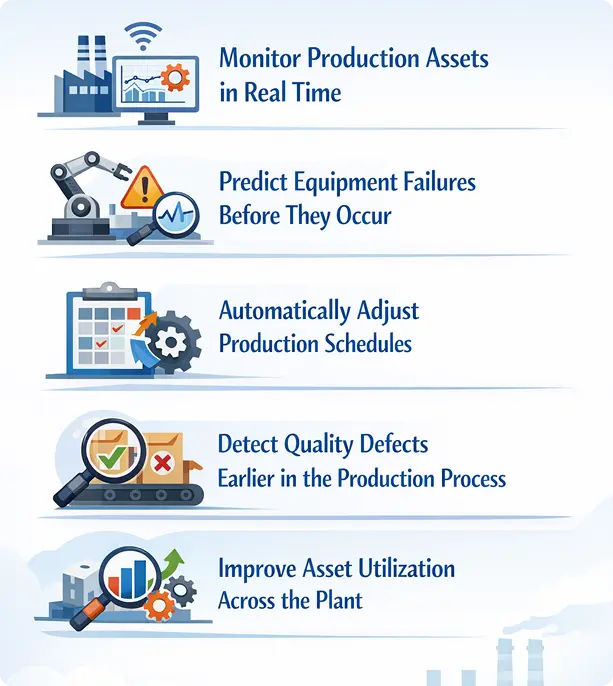
These capabilities enable manufacturers to build smart production environments where operations continuously improve through data-driven insights.
One area where this shift is particularly visible is production planning and scheduling, where many factories still rely on manual planning tools. Modern AI-driven systems can dynamically adjust schedules based on machine availability, order priorities, and real-time operational conditions – a concept explored in detail in our blog “Automating Production Scheduling with Agentic AI.”
However, intelligent automation across the factory floor cannot function effectively without seamless connectivity between enterprise systems and industrial equipment. Many factories still struggle with fragmented architectures where ERP platforms, MES systems, and shop-floor machines operate in silos. Bridging this gap between enterprise IT systems and operational technology is essential for enabling true smart factory automation, which is why “IT/OT Integration: The Missing Link in Smart Factories” has become an increasingly important discussion in modern manufacturing transformation initiatives.
This pillar page explores how manufacturing production automation and OEE improvement AI is reshaping modern factories across four key operational domains:
We will also explore how IT/OT integration enables factories to connect enterprise systems with shop-floor equipment, allowing automation to orchestrate workflows across both digital and physical operations.
For manufacturing leaders, the shift toward smart factory automation is no longer optional. It is becoming essential for maintaining operational efficiency, ensuring product quality, and sustaining competitiveness in a rapidly evolving industrial landscape.

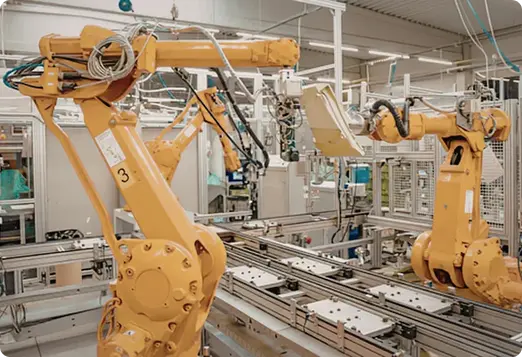
The concept of the smart factory has evolved significantly over the past decade. Initially associated with basic industrial automation and machine connectivity, smart factories are now defined by their ability to combine data, intelligence, and automation to optimize operations continuously.
At the core of this evolution is the convergence of three technological domains:
When these domains operate independently, manufacturing operations remain fragmented. Production teams work with one set of systems, maintenance teams use another, and quality teams rely on separate reporting tools.
However, when these domains connect through manufacturing production automation, factories gain the ability to coordinate operations across departments and processes.
This transformation creates a new operational model in which machines, systems, and automation platforms collaborate to improve performance. For manufacturing leaders, understanding where automation and AI can deliver the greatest operational impact is an important first step toward building a truly connected production environment. Many organizations begin by evaluating their current production efficiency and identifying automation opportunities across the plant, which is why manufacturers often calculate their OEE improvement potential and book a plant automation assessment before initiating large-scale smart factory initiatives. That said, contact us today and get started.
Despite advances in digital technologies, many factories still use processes that designers created decades ago.
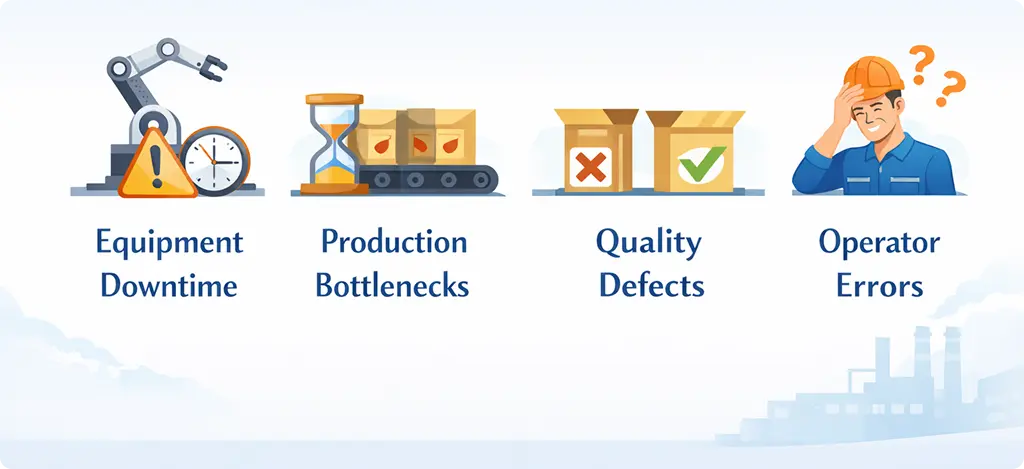
Typical operational challenges include the following:
Despite advances in digital technologies, many factories still use processes that designers created decades ago.
Typical operational challenges include the following:
In many plants, production monitoring still relies on manual reporting.
Operators may record machine performance on paper or spreadsheets, and they later enter this data into reporting systems.
This leads to delays in identifying issues such as:
Many factories still follow reactive or time-based maintenance models.
In reactive maintenance, equipment is repaired only after failures occur. In time-based maintenance, scheduled intervals dictate when components are replaced.
Both approaches create inefficiencies:
Quality control often occurs at the end of production processes.
This means that defects may remain undetected until large production batches are completed.
When defects are discovered late, manufacturers face:
Early detection of quality issues is essential for maintaining high operational efficiency.
To address these challenges, manufacturers are increasingly implementing manufacturing production automation frameworks that integrate production systems, equipment data, and automation platforms.
Manufacturing production automation focuses on removing manual dependencies from key operational processes.
These include:
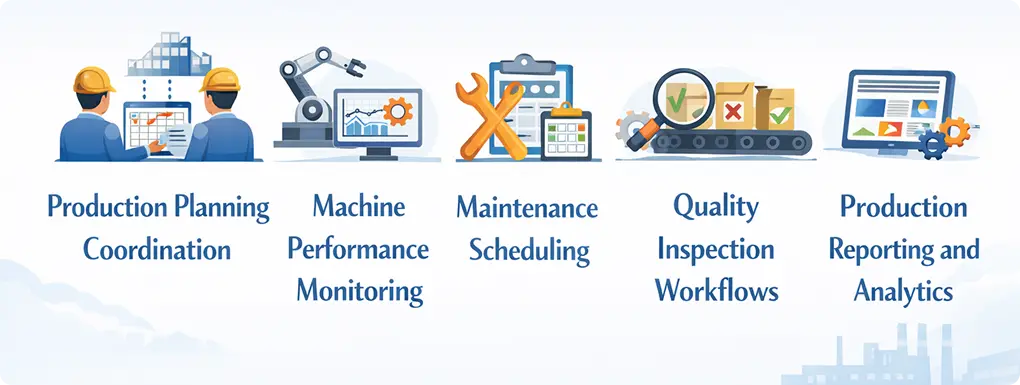
By automating these activities, factories can ensure that operations run continuously and intelligently.
Automation systems can now ingest real-time production data and trigger actions automatically.
For example:
If a machine’s performance drops below a defined threshold, automation systems can:
Similarly, when production demand changes, automation systems can automatically optimize scheduling decisions across production lines.
While automation improves operational efficiency, the real breakthrough comes when automation is combined with OEE improvement AI.
OEE improvement AI uses machine learning algorithms to analyze production data and identify patterns that impact equipment effectiveness.
OEE typically measures three core performance dimensions:
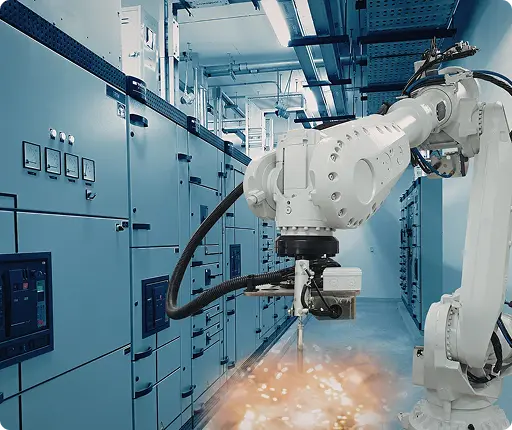
Traditional OEE systems report these metrics historically.
However, OEE improvement AI enables factories to actively optimize these metrics instead of simply monitoring them. By continuously analyzing operational data from machines, sensors, and production systems, AI can identify performance bottlenecks and recommend corrective actions before productivity losses occur. Our blog “Improving OEE Using Automation and AI Agents” explores this shift from passive monitoring to intelligent optimisation in greater depth.
AI systems can analyze historical production patterns to identify the following:
These insights allow factories to make proactive adjustments to improve production performance.
For example, AI may detect that certain equipment failures consistently occur under specific operating conditions.
Maintenance teams can then adjust operational parameters to reduce failure risk.
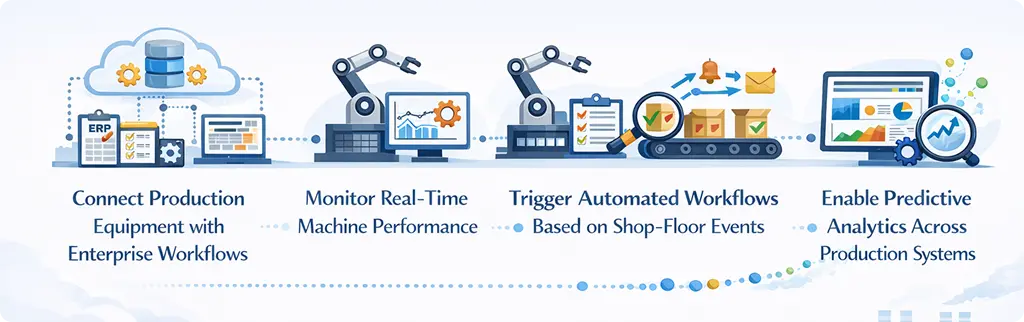
Operational Technology (OT) includes physical equipment and industrial control systems, such as:
Information Technology (IT) includes enterprise software platforms such as:

Many manufacturing organizations have already digitized portions of their operations.
However, digitization alone does not eliminate manual effort.
For example:
Manufacturing production automation moves beyond digitization toward autonomous operations.
Automation platforms can now orchestrate workflows across systems and departments.
Examples include:
This technology allows factories to operate with greater speed, accuracy, and efficiency.
Real-time monitoring and predictive maintenance reduce unexpected downtime. However, many organizations are now realizing that prediction alone is not enough. The next step involves intelligent systems that can automatically recommend or trigger corrective actions—an evolution explored in our blog, “Predictive Maintenance Is Not Enough—You Need Prescriptive Agents.”

Production scheduling sits at the heart of every manufacturing operation. It determines how raw materials, equipment, labor, and time are coordinated to produce finished goods.
For Plant Heads, Operations Directors, and Manufacturing VPs, production scheduling is not simply about assigning jobs to machines. It is about ensuring that the factory operates at maximum efficiency while meeting customer demand, maintaining quality standards, and minimizing operational disruptions.
However, in many manufacturing organizations, production scheduling still relies heavily on manual planning and reactive adjustments.
Production planners often use spreadsheets or static scheduling tools to create production plans. These plans are then distributed to production teams through emails, reports, or internal dashboards.
While this approach may work in relatively stable environments, modern manufacturing ecosystems are far more dynamic. Demand fluctuations, supply chain delays, machine breakdowns, and quality issues frequently disrupt production schedules.
When these disruptions occur, manual scheduling methods struggle to keep pace.
This is where manufacturing production automation becomes essential.
By combining automation platforms with OEE improvement AI, organizations can transform production scheduling from a static planning activity into a dynamic, real-time optimization process.
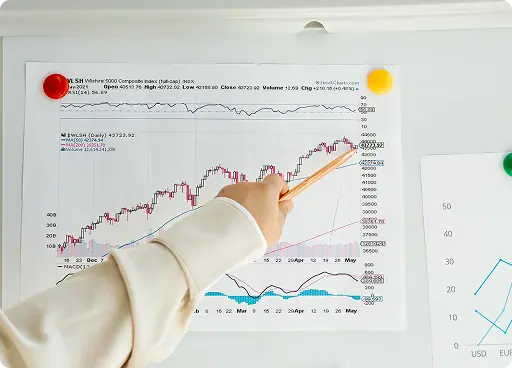
Manufacturing demand patterns are rarely stable.
Orders may fluctuate due to:
When production schedules are created manually, responding to these fluctuations often requires time-consuming adjustments.
Production planners must analyze orders, check machine availability, and recalculate schedules manually.
This slows down operational responsiveness.
Production planners typically rely on information from multiple systems.
These may include:
Because these systems are not always fully synchronized, production planners may not have accurate real-time information about:
This lack of visibility makes scheduling decisions less reliable.
Manufacturing environments frequently experience operational disruptions.
Examples include:
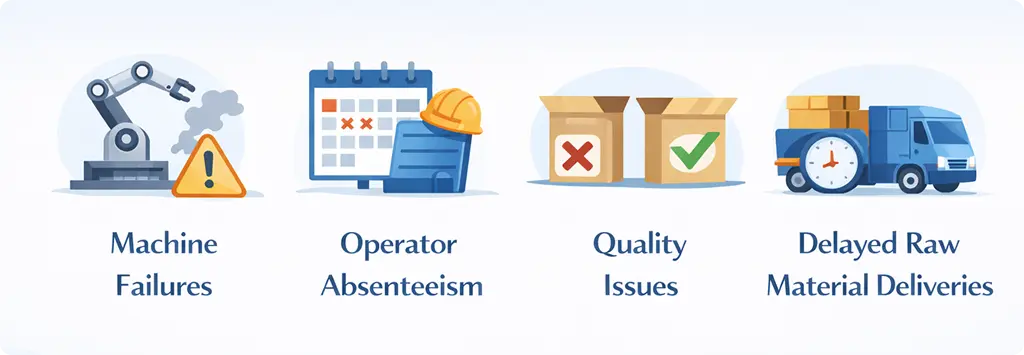
Quality-related disruptions are particularly challenging because identifying defects or handling non-conforming products often requires manual inspection processes. Many manufacturers are now addressing this challenge through automated inspection systems and intelligent workflows, as explored in our blog “Automating Quality Inspections and Non-Conformance Handling“.
When these events occur, production schedules must be adjusted quickly.

In traditional environments, it is necessary for production planners to perform the following tasks manually:
This manual process can take hours or even days. During this time, production lines may remain idle or operate inefficiently.
Manual scheduling often fails to optimize the use of production assets.
Machines may experience:
These inefficiencies directly impact Overall Equipment Effectiveness (OEE).
Without automated scheduling capabilities, manufacturers struggle to achieve consistent OEE improvement with AI-driven optimization.
Modern factories are increasingly adopting manufacturing production automation platforms to address these scheduling challenges.
Automation platforms can integrate with ERP systems, MES platforms, and shop-floor sensors to orchestrate production planning decisions automatically.
Instead of relying solely on manual planning, automation systems can continuously evaluate operational conditions and adjust production schedules dynamically.
This transformation creates a responsive production environment where scheduling decisions adapt to real-time factory conditions. That said, feel free to contact us and discuss your requirements without any further ado.
Automated production scheduling uses advanced algorithms to determine the optimal sequence of production tasks across machines and production lines.
Automation platforms evaluate multiple factors simultaneously, including:
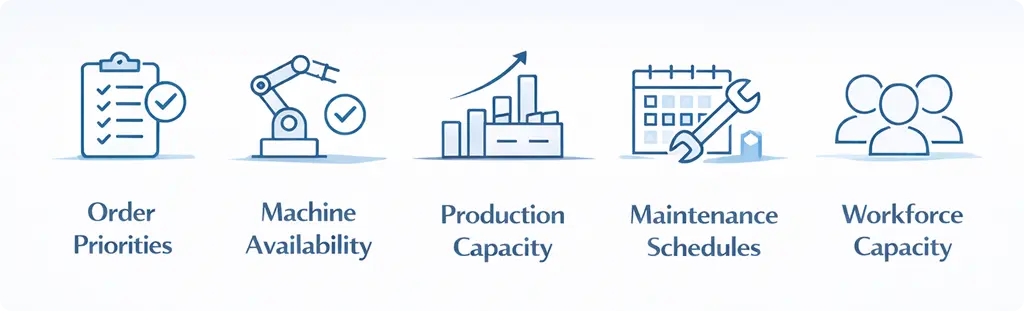
By analyzing these variables, automation systems can generate optimized production schedules that maximize equipment utilization.
This approach significantly improves the effectiveness of manufacturing production automation strategies.
One of the most powerful capabilities of automated scheduling is real-time schedule adaptation.
Instead of waiting for planners to detect disruptions, automation systems can respond automatically.
For example: If a machine experiences unexpected downtime, the automation platform can:
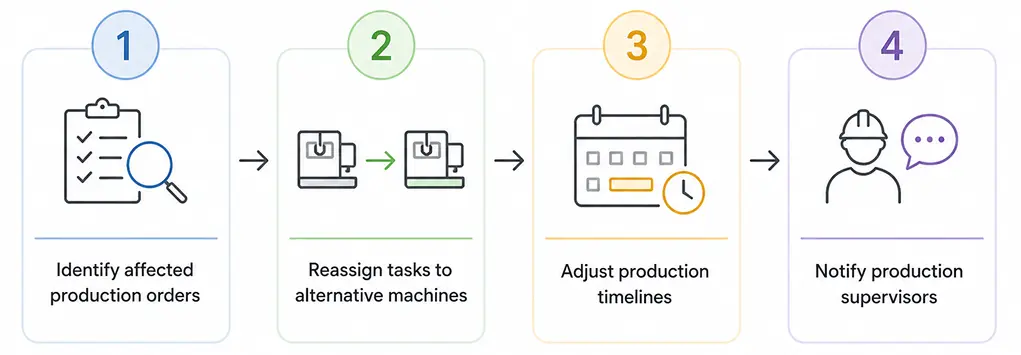
This ensures that production continues with minimal disruption. By maintaining operational continuity, manufacturers can achieve consistent OEE improvement AI outcomes.
Automation becomes even more powerful when combined with OEE improvement AI.
Artificial intelligence can analyze historical production data to identify patterns that influence production efficiency.
For example, AI models may detect the following:
These insights enable automation systems to make smarter scheduling decisions.
For example, AI-driven scheduling systems may automatically:
These capabilities significantly enhance the impact of manufacturing production automation on production performance.
Scheduling is only one part of the production management process. Once schedules are created, production activities must be executed efficiently on the shop floor.
Production execution involves:
In traditional environments, much of this information is recorded manually. Operators may enter production data into MES systems or spreadsheets at the end of each shift.
This introduces delays in identifying operational issues.
Manufacturing production automation platforms enable real-time production monitoring by connecting machines, sensors, and operational systems.
Production data such as:
It can be captured automatically. This real-time visibility enables manufacturing leaders to monitor production performance continuously.
Plant managers can view dashboards showing the following:
These insights are essential for achieving sustained OEE improvement AI outcomes.
Production reporting is another area where manual processes often create inefficiencies. Many manufacturing organizations still generate production reports manually by consolidating data from multiple systems. This process is time-consuming and prone to errors.
Manufacturing production automation can eliminate these inefficiencies by generating reports automatically.
Automation platforms can aggregate production data from multiple sources and generate reports such as the following:
These reports can be delivered automatically to production managers and plant leadership teams.

Production bottlenecks are a common source of inefficiency in manufacturing operations. Bottlenecks occur when one stage of production limits the throughput of the entire production line.
Identifying these bottlenecks manually can be difficult, especially in complex production environments.
However, automation platforms combined with OEE improvement AI can detect bottlenecks automatically.
AI models can analyze production flow data to identify the following:
These insights allow manufacturing teams to address bottlenecks proactively.
Effective production automation requires seamless integration between enterprise systems and shop-floor equipment.
Manufacturing production automation platforms achieve this through IT/OT integration.
Automation systems connect with:
This integration ensures that production decisions are based on accurate, real-time data.
When production scheduling and execution processes are automated, manufacturers typically experience significant operational improvements.
Key performance benefits include the following:
Real-time monitoring and predictive maintenance reduce unexpected downtime. However, many organizations are now realizing that prediction alone is not enough. The next step involves intelligent systems that can automatically recommend or trigger corrective actions—an evolution explored in our blog, “Predictive Maintenance Is Not Enough—You Need Prescriptive Agents.”
Real-time monitoring allows teams to detect issues earlier. Many modern factories are now implementing centralized operational intelligence platforms—often referred to as ‘cognitive control towers’—that provide unified visibility across production, maintenance, and supply chain operations. These systems help decision-makers respond to operational changes faster, as discussed in our blog, “Why Manufacturing Plants Need Cognitive Control Towers.” With better visibility, teams can identify potential bottlenecks before they escalate into major production delays.
These improvements directly contribute to the improvement of OEE through AI-driven optimization. By reducing downtime, improving performance efficiency, and minimizing defects, automation strengthens all three components of OEE.

In modern manufacturing environments, equipment reliability plays a decisive role in determining overall production performance. Even the most optimized production schedules and advanced manufacturing systems cannot deliver expected output if critical equipment experiences frequent breakdowns or unplanned downtime.
For plant heads, operations directors, and manufacturing VPs, maintenance management is therefore not just a support function—it is a strategic component of operational excellence.
Traditionally, maintenance operations in manufacturing plants have followed one of two approaches: reactive maintenance or scheduled preventive maintenance.
Reactive maintenance focuses on repairing equipment after failures occur. Preventive maintenance schedules maintenance activities at predefined intervals based on manufacturer recommendations or historical maintenance cycles.
While preventive maintenance improves reliability compared to reactive strategies, both approaches still suffer from limitations.
Reactive maintenance creates production disruptions, while preventive maintenance often results in unnecessary servicing or replacement of components that may still have significant usable life.
This is where manufacturing production automation combined with OEE improvement AI begins to transform maintenance operations.
By integrating automation systems with real-time equipment monitoring, manufacturing organizations can move toward predictive and prescriptive maintenance models. These models allow maintenance teams to anticipate equipment issues before failures occur and take proactive action to prevent downtime.
Equipment downtime is one of the most significant contributors to production losses in manufacturing environments.
Unplanned downtime affects multiple aspects of factory performance, including production throughput, delivery timelines, and operational costs.
When a critical production machine stops unexpectedly, the consequences can ripple throughout the entire manufacturing process.
Typical consequences of downtime include:
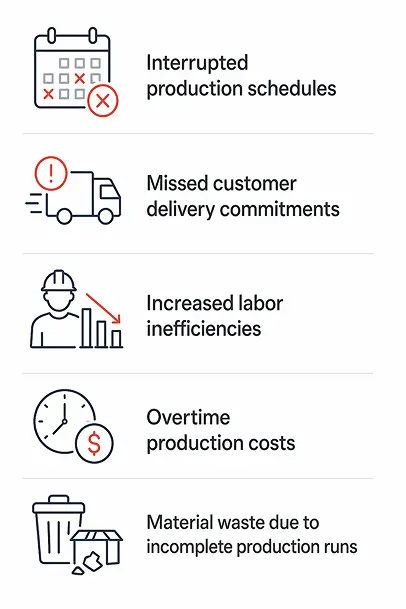

Even small downtime events can significantly impact Overall Equipment Effectiveness (OEE).
Since OEE measures availability, performance, and quality, any loss of equipment availability immediately reduces overall production efficiency. This is why OEE improvement AI initiatives frequently begin with maintenance optimization. By improving equipment reliability, organizations can significantly increase equipment availability, which directly improves OEE performance.
Despite the importance of maintenance operations, many manufacturing plants still struggle with outdated maintenance practices.
Several operational challenges typically affect maintenance teams.
Many maintenance teams lack continuous visibility into equipment health. Machine condition information may only be available during manual inspections or when equipment alarms are triggered. Without continuous monitoring, maintenance teams cannot identify early warning signals of equipment failure.
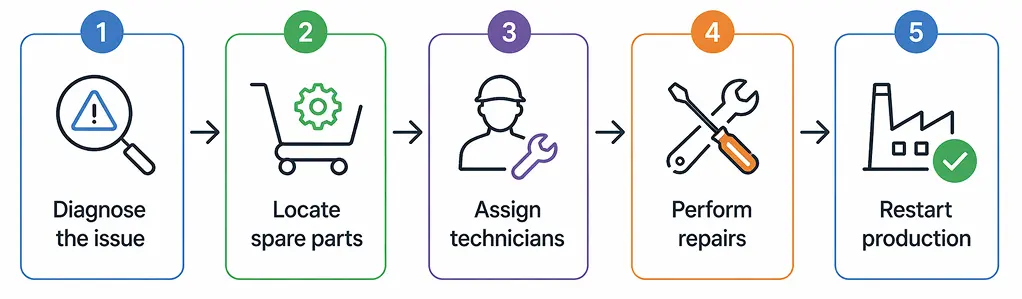
In many manufacturing environments, maintenance teams primarily respond to breakdown events.
When a machine fails, teams must:
Preventive maintenance strategies are often based on fixed maintenance schedules rather than actual equipment conditions.
This approach can lead to:
Both scenarios increase operational costs while limiting the effectiveness of maintenance strategies.
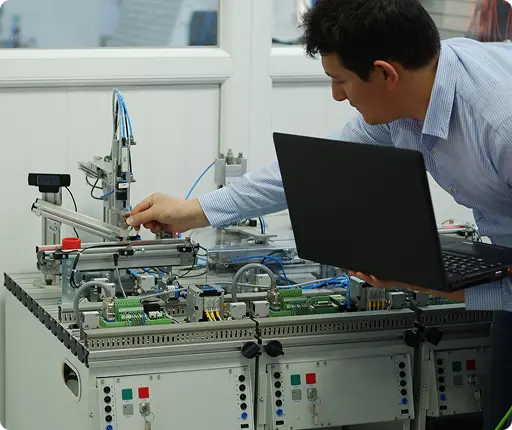
Predictive maintenance represents a major advancement in maintenance management. Instead of relying on fixed schedules or failure events, predictive maintenance uses real-time equipment monitoring and advanced analytics to detect potential failures before they occur.
Manufacturing production automation enables predictive maintenance by connecting machines, sensors, and enterprise systems.
Sensors installed on industrial equipment can continuously monitor parameters such as:
These signals offer useful information about equipment health. Automation platforms collect this data and analyze it continuously. In many manufacturing environments, teams also use the same operational data to identify deeper production issues that lead to defects, scrap, or rework. Advanced analytics systems can trace patterns across machines, materials, and process conditions to determine the underlying causes of quality problems, an approach discussed in our blog “Reducing Scrap and Rework Using AI-Driven Root Cause Analysis.” For example, if vibration levels in a motor begin to increase gradually, predictive systems can flag the issue before the motor fails.
Maintenance teams can then schedule maintenance during planned downtime rather than reacting to unexpected breakdowns.
While predictive monitoring provides early detection of equipment issues, OEE improvement AI enhances maintenance strategies even further.
AI algorithms can analyze historical production and maintenance data to identify patterns that influence equipment reliability.
These insights may reveal:
By identifying these patterns, AI systems help manufacturers optimize maintenance strategies.
For example, AI models may determine that certain machines perform best when operating within specific load ranges. Production planners can then adjust production schedules to maintain optimal operating conditions. These adjustments contribute directly to sustained OEE improvement AI outcomes.
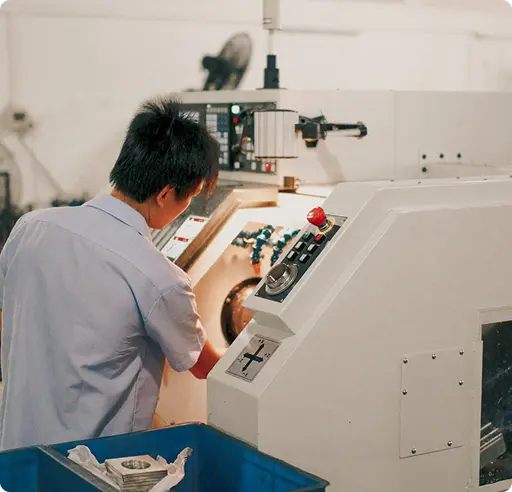
Beyond predicting failures, advanced AI systems can also recommend optimal maintenance actions. This approach is known as prescriptive maintenance.
Prescriptive systems analyze equipment condition data and recommend specific interventions such as the following:
These recommendations help maintenance teams make faster and more informed decisions. Many manufacturers are now moving beyond traditional preventive maintenance strategies toward more intelligent and autonomous maintenance models that continuously monitor equipment health and recommend corrective actions, a transition discussed in our blog “From Preventive to Autonomous Maintenance“.
For example, when equipment health indicators cross predefined thresholds, automation platforms can:
This reduces manual coordination and ensures faster response to maintenance issues.
Asset health monitoring is a foundational component of smart factory maintenance strategies.
Continuous monitoring enables organizations to maintain a real-time view of equipment conditions across the factory.
Modern asset monitoring platforms provide dashboards that display metrics such as:

These insights allow manufacturing leaders to make better decisions about equipment utilization and maintenance investments.
By combining monitoring capabilities with OEE improvement AI, factories can continuously optimize asset performance.

Maintenance operations often involve numerous administrative tasks.
These may include:
When maintenance teams perform these tasks manually, they spend significant time on administrative work rather than technical activities. Manufacturing production automation can eliminate many of these manual tasks.
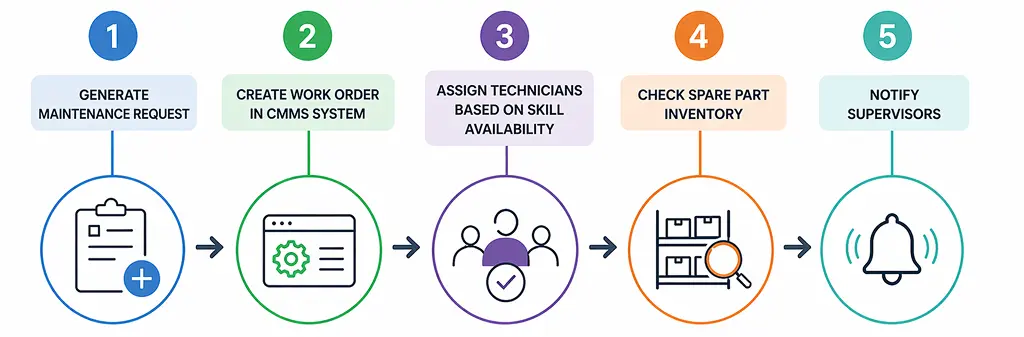
Automation platforms can orchestrate maintenance workflows across multiple systems.
Another challenge in maintenance management involves spare parts inventory. Manufacturers must maintain sufficient spare parts to avoid production disruptions, but excessive inventory increases operational costs.
AI-driven maintenance systems can help optimize spare parts planning.
By analyzing historical maintenance patterns, AI systems for OEE improvement can forecast spare parts requirements more accurately.
This ensures that critical components are available when needed while minimizing unnecessary inventory costs.

Reliable equipment ensures smoother production flows. This stability becomes particularly important when manufacturers introduce new products or scale production lines, where equipment readiness and process consistency directly influence ramp-up speed. Many organizations are therefore investing in automation strategies that support faster and more reliable production ramp-ups, as discussed in our blog, “Production Ramp-Up Automation for New Products.”
Improved availability and reliability contribute directly to OEE improvement AI-driven performance gains.
Maintenance and asset intelligence therefore play a central role in the success of manufacturing production automation strategies.
However, even with optimized production scheduling and reliable equipment, effective quality management is necessary to fully optimise manufacturing performance. Quality issues can disrupt production flows, increase scrap rates, and negatively affect customer satisfaction.
This makes quality automation and compliance management the next essential component of smart factory transformation.
Quality management has always been one of the most critical pillars of manufacturing operations. Delivering consistent product quality is essential not only for maintaining customer satisfaction but also for protecting brand reputation, meeting regulatory requirements, and sustaining operational efficiency.
For Plant Heads, Operations Directors, and Manufacturing VPs, quality performance directly influences production costs, operational stability, and long-term competitiveness.
However, in many manufacturing environments, quality management processes still rely heavily on manual inspections, delayed reporting, and reactive problem resolution.
Quality teams often perform inspections at specific checkpoints within production processes. These inspections may involve manual measurements, visual inspection procedures, or sampling techniques.
While these practices are essential for ensuring product quality, they often detect issues after production has already occurred.
When defects appear late in the production process, manufacturers face multiple operational consequences:
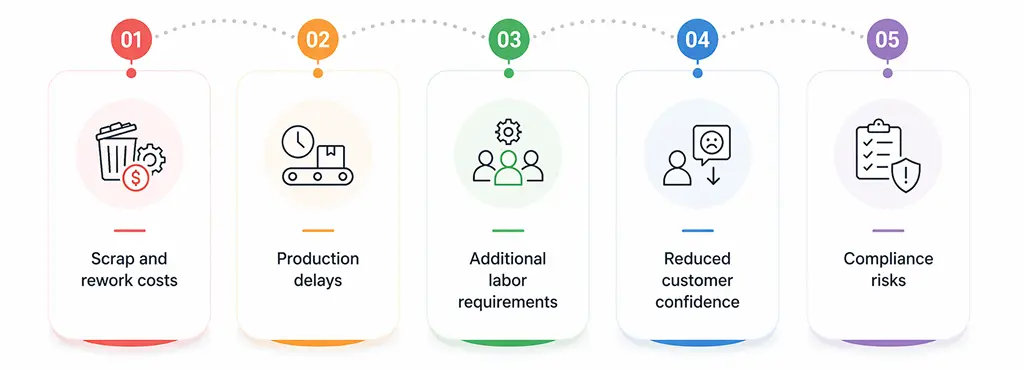
These challenges emphasise the necessity of more proactive quality management strategies.
This is where manufacturing production automation and OEE improvement AI begin to transform quality operations.
By integrating automation platforms with real-time production monitoring and advanced analytics, manufacturers can move toward continuous quality assurance models that detect and prevent defects earlier in the production process.
Quality data is often collected manually during inspection processes. Operators or quality engineers may record measurements in spreadsheets or quality management systems after they complete inspections.
This creates delays between production activities and quality insights. By the time we identify quality issues, we may have already produced large volumes of defective products. Modern automation platforms are beginning to address this limitation by tracking quality performance metrics continuously across production lines, enabling manufacturers to monitor key quality indicators in real time. Our blog “Quality KPIs That Improve with Agentic Automation” discusses many of the most important performance metrics that benefit from this approach.
Many manufacturing organizations rely on sampling-based quality inspections. Instead of inspecting every product, quality teams test a sample from each batch.
While this approach reduces inspection time, it introduces risk. Defective products may pass through production lines undetected if the sampled batch does not include them.

When quality issues arise, it can be difficult to identify the root cause.
Quality teams must often investigate multiple factors such as:
Because production data is often stored across multiple systems, performing root cause analysis may require extensive manual investigation.
Manufacturing production automation enables factories to integrate quality management directly into production workflows.
Instead of treating quality inspection as a separate activity, automation platforms embed quality checks within production processes. Automation systems can collect data from machines, sensors, and inspection tools continuously.
This real-time data collection provides more profound visibility into production conditions and product quality. By integrating quality monitoring with production automation, manufacturers can identify quality deviations earlier in the production cycle.
This significantly reduces the likelihood of large-scale defect generation.
One of the most significant advancements in modern manufacturing is the emergence of automated inspection technologies.
Automation platforms can integrate with various inspection technologies, such as:
These technologies enable factories to inspect products continuously during production rather than relying solely on periodic manual inspections.
For example, machine vision systems can analyze product images in real time to detect defects such as:
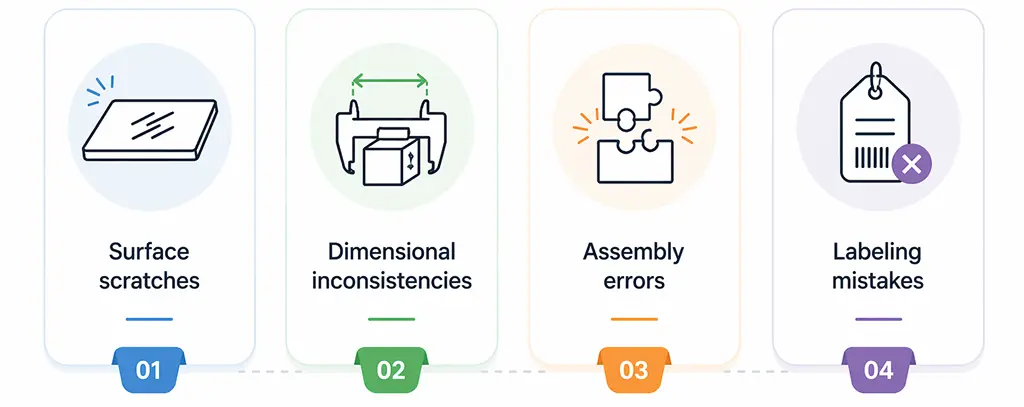
While automated inspection systems can detect visible defects, combining these technologies with OEE improvement AI significantly enhances defect detection capabilities.
AI-powered quality systems can analyze inspection data and identify subtle patterns that may indicate emerging quality issues.
For example, AI models may detect trends such as:
These insights allow manufacturers to intervene early and prevent large-scale quality problems. AI systems can also continuously learn from inspection results, improving defect detection accuracy over time.

Manufacturing production automation platforms enable continuous quality monitoring across production lines.
Automation systems can capture quality-related data from multiple sources, including:
This data can be aggregated into real-time quality dashboards that provide plant leaders with instant visibility into production quality performance.
These dashboards may display metrics such as:
Real-time quality monitoring enables faster identification of potential issues before they escalate into larger production problems.
Quality insights become far more powerful when quality data is integrated with other manufacturing systems.
Manufacturing production automation platforms can connect quality management systems with:
This integration enables organizations to correlate quality performance with operational factors such as:
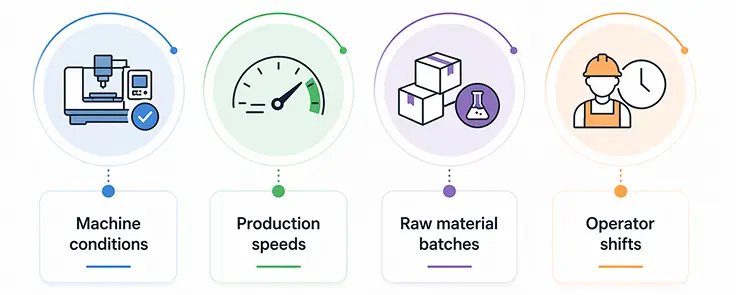
These correlations give useful insights into the root causes of quality issues.
For example, AI analysis may reveal that certain defects occur more frequently during specific production shifts or when machines operate above certain speeds.
These insights allow manufacturing teams to make targeted operational improvements.
In many industries such as pharmaceuticals, aerospace, and medical device manufacturing, regulatory compliance requirements are extremely strict.
Manufacturers must maintain detailed documentation of production and quality processes to demonstrate compliance with regulatory standards.
Manual compliance documentation processes create several risks:
Manufacturing production automation can significantly simplify compliance management.
Automation platforms can automatically record quality events, inspection results, and process parameters.
These records are stored digitally and can be accessed easily during audits or regulatory reviews.
Automation systems can also generate compliance reports automatically, reducing administrative burden on quality teams

Quality issues often lead to scrap and rework, both of which significantly increase manufacturing costs.
Scrap occurs when defective products must be discarded entirely. Rework involves additional processing steps to correct defects.
Both outcomes reduce production efficiency and consume valuable resources.
By implementing manufacturing production automation with OEE improvement AI, manufacturers can reduce scrap and rework rates significantly.
Early detection of quality deviations enables teams to correct issues before they produce large volumes of defective products.
For example, if a machine begins producing components with slight dimensional deviations, automation systems can trigger alerts immediately.
Production teams can then adjust machine parameters before additional defects occur.
Quality performance directly impacts the quality component of Overall Equipment Effectiveness (OEE).
High defect rates reduce the proportion of good products produced relative to total production output.
By improving defect detection and prevention, quality automation strengthens overall OEE performance.
Specifically, quality automation contributes to OEE improvement AI initiatives by:
These improvements ensure that production systems deliver a higher percentage of defect-free products.
For manufacturing leaders, quality automation is not just about defect detection. It is about building production systems that continuously improve product quality through data-driven insights and intelligent automation.
When combined with manufacturing production automation and OEE improvement AI, quality systems become an integral part of factory intelligence.
Quality insights inform production planning decisions, maintenance strategies, and process optimization initiatives. In many manufacturing environments, quality findings also trigger engineering updates that must be propagated across production systems, documentation, and process configurations. By automating these updates, we ensure that product and process changes are implemented consistently across the factory, an approach we explore in our blog “Automating Engineering Change Propagation”.
This integrated approach enables factories to achieve higher levels of operational excellence. At this stage of the smart factory transformation journey, automation platforms and AI-driven insights connect production scheduling, maintenance intelligence, and quality automation.
However, these technologies ultimately aim to improve measurable business outcomes.
This brings us to the final section of this pillar page, which focuses on how manufacturing production automation and OEE improvement AI transform key manufacturing performance indicators.
Manufacturing organizations continuously track performance indicators to evaluate operational efficiency, production stability, and overall business performance. These metrics help manufacturing leaders understand how effectively their factories operate and where they need to improve.
For Plant Heads, Operations Directors, and Manufacturing VPs, operational metrics are more than reporting tools—they are strategic decision instruments that guide investments, operational improvements, and long-term competitiveness.
However, traditional KPI tracking methods often suffer from several limitations. Many manufacturing organizations still rely on historical reporting, manual data aggregation, and fragmented data sources.
In such environments, teams often review KPIs days or weeks after production events occur. By the time leaders analyze the data, the opportunity to correct issues may already be lost. This reactive approach also makes it difficult to identify operational bottlenecks or manage work-in-progress (WIP) inventory efficiently across production lines. Modern automation platforms address this challenge by providing real-time visibility into production flow, helping manufacturers detect bottlenecks early and balance workloads across operations, as explored in our blog, “Managing WIP and Bottlenecks with Automation.”
This reactive approach limits the value of operational metrics.
Modern factories are therefore shifting toward real-time performance management frameworks powered by manufacturing production automation and OEE improvement AI.
By integrating production data, equipment monitoring systems, quality platforms, and analytics engines, manufacturers can transform traditional KPIs into continuous operational intelligence systems.
Instead of merely reporting performance, KPIs become tools that actively drive operational improvement.
Among all manufacturing performance metrics, Overall Equipment Effectiveness (OEE) remains one of the most widely used indicators of production efficiency.
OEE measures how effectively manufacturing equipment is utilized relative to its full productive potential.
It combines three core performance dimensions: when all three dimensions perform optimally, factories achieve higher levels of production efficiency.
However, achieving sustained improvement in OEE requires coordinated improvements across multiple operational domains.
This is where manufacturing production automation and OEE improvement AI deliver measurable value. Feel free to talk to a manufacturing automation expert today for more.
Automation technologies address operational inefficiencies across production scheduling, maintenance management, and quality monitoring—all of which directly influence OEE performance.
In many factories, OEE is primarily used as a reporting metric.
Production teams review OEE dashboards periodically to identify performance trends. While the information provided here offers useful insights, it does not necessarily lead to immediate operational improvements.
AI for OEE improvement enables manufacturers to shift from passive OEE monitoring to active OEE optimisation.
AI models analyze production data continuously and identify factors that influence OEE performance. In advanced manufacturing environments, intelligent AI agents can also assist operators and supervisors by interpreting operational data and recommending real-time decisions on the shop floor, helping teams respond faster to performance issues, as explored in our blog “How AI Agents Improve Shop-Floor Decision Making“.
These insights may reveal patterns such as:
Once these insights are identified, automation systems can recommend operational adjustments.
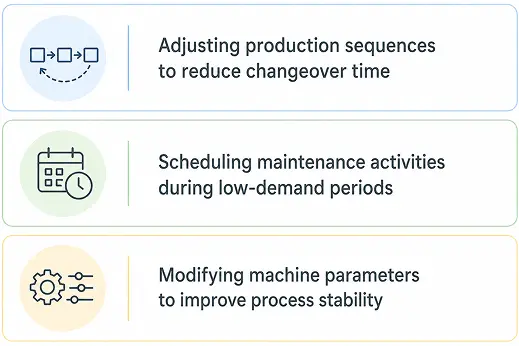
For example, AI-driven systems may suggest:
Manufacturing production automation platforms enable organizations to track operational performance in real time.
Instead of waiting for end-of-shift or end-of-day reports, plant leaders can access dashboards that display live production metrics.
Typical real-time manufacturing dashboards may include:
Real-time monitoring provides operational leaders with immediate visibility into production performance.
If production disruptions occur, teams can respond quickly before issues escalate. For more details, feel free to talk to a manufacturing automation expert today.
Another major advantage of manufacturing production automation is the ability to consolidate operational data from multiple systems into unified analytics platforms.
Manufacturing data often originates from several sources, including:
When manufacturers analyse these datasets together using OEE improvement AI, they gain deeper insights into operational performance.
For example, integrated analytics may reveal relationships between:
These insights enable manufacturing leaders to make more informed decisions about operational improvements.
Implementing manufacturing production automation and OEE improvement AI can transform several key performance indicators.
Below are some of the most important metrics impacted by automation initiatives.
Feel free to talk to a manufacturing automation expert today. Explore production intelligence & OEE optimization solutions without any further ado.

Modern manufacturing leaders require clear visibility into operational performance across their production networks.
Automation platforms provide interactive KPI dashboards that allow executives to monitor factory performance continuously.
These dashboards typically provide insights into:
With these insights, manufacturing leaders can identify improvement opportunities and prioritize operational initiatives.
The transformation enabled by manufacturing production automation and OEE improvement AI extends far beyond operational metrics.
It represents a shift toward intelligent manufacturing environments where operational systems continuously analyze data and improve performance.
In these environments:
This level of operational intelligence allows factories to achieve significantly higher levels of efficiency, reliability, and agility.
Manufacturing organisations are entering a new era in which data intelligence, automation capabilities, and physical equipment drive operational excellence.
For plant heads, operations directors, and manufacturing VPs, the challenge is no longer simply managing production operations—it is about building factories that can continuously adapt, optimize, and improve.

Throughout this pillar page, we explored how manufacturing production automation and OEE improvement AI is transforming the core pillars of manufacturing operations:
By integrating these domains through automation platforms and AI-driven insights, manufacturers can eliminate manual operational inefficiencies and unlock new levels of performance.
The result is a smart production ecosystem where machines, systems, and automation technologies collaborate to deliver consistent operational excellence.
Manufacturers that adopt these technologies will be better positioned to:
As manufacturing complexity continues to increase, the organizations that succeed will be those that leverage automation and intelligence to build resilient, data-driven factories.
Discover how manufacturing production automation and OEE improvement AI can help your factory achieve higher productivity, lower downtime, and improved operational performance. Feel free to talk to a manufacturing automation expert today. Explore production intelligence & OEE optimization solutions without any further ado.

Follow Us