







Key Takeaways
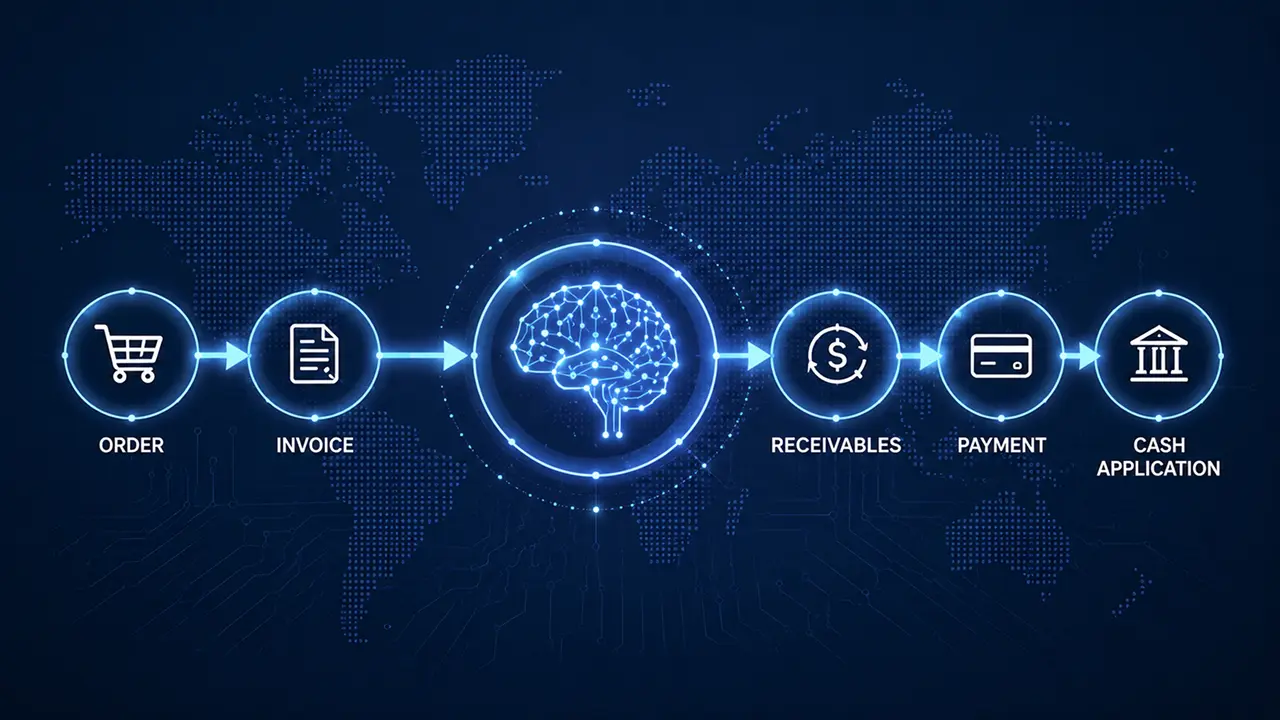
- Autonomous O2C operations use AI agents to automate and optimize the entire order-to-cash lifecycle.
- AI-driven workflows improve cash flow, reduce DSO, and minimize manual effort.
- Intelligent automation enables faster order processing, invoicing, collections, and dispute resolution.
- Autonomous O2C platforms deliver measurable ROI through improved efficiency and customer experience.
- Choosing the right automation partner is essential for achieving scalable, enterprise-wide transformation.
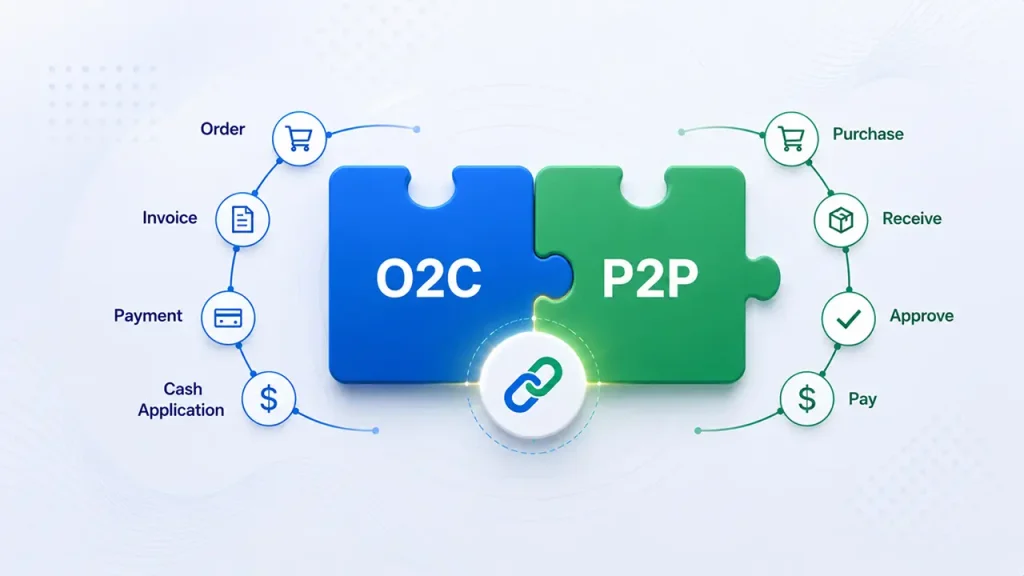
Order-to-cash (O2C) has always been one of the most critical business processes, connecting sales, finance, customer service, and operations. Yet despite years of investment in ERP systems, RPA, and workflow automation, many organizations continue to struggle with delayed order processing, billing inaccuracies, payment disputes, and unpredictable cash flow.
The challenge is that traditional automation executes predefined tasks, but it cannot make decisions, adapt to changing business conditions, or coordinate multiple systems without human intervention. As enterprises pursue greater operational efficiency and financial resilience, they are shifting toward autonomous O2C operations—an AI-driven approach where intelligent agents continuously manage, optimize, and improve the entire order-to-cash lifecycle.
For finance and operations leaders evaluating their next automation investment, the question is no longer whether O2C should be automated. The question is how quickly your organization can move from fragmented automation to autonomous operations.
Why Traditional O2C Automation Falls Short
Most enterprises have already automated portions of the O2C cycle.
Common examples include:
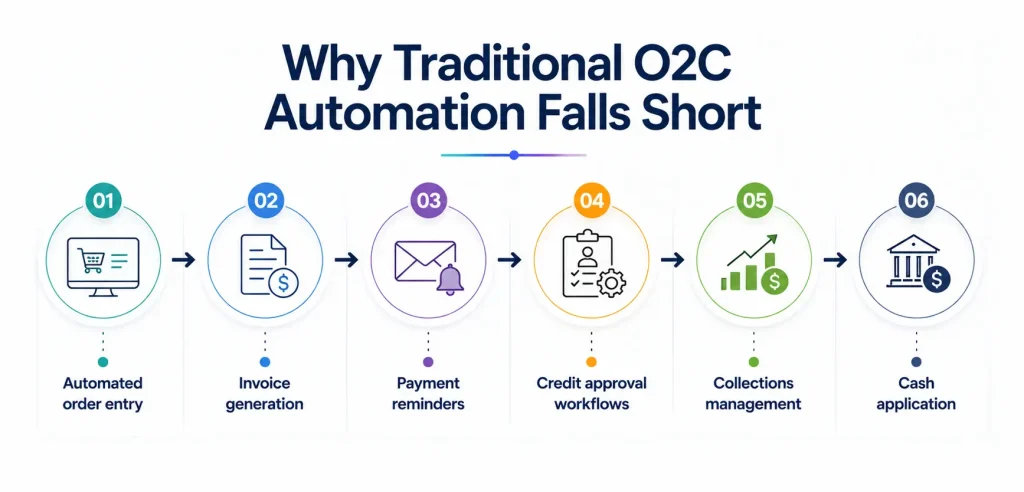
- Automated order entry
- Invoice generation
- Payment reminders
- Credit approval workflows
- Collections management
- Cash application
While these initiatives reduce manual effort, they often operate independently. Data still moves between disconnected systems, employees resolve exceptions manually, and teams spend valuable time monitoring workflows rather than improving outcomes.
Typical challenges include:
- Delayed order validation
- Invoice discrepancies
- Slow dispute resolution
- High Days Sales Outstanding (DSO)
- Manual cash application
- Limited visibility across departments
- Reactive rather than proactive decision-making
As transaction volumes increase, these limitations become pricier.
What Are Autonomous O2C Operations?
Autonomous O2C operations combine artificial intelligence, intelligent automation, machine learning, and autonomous AI agents to orchestrate the complete order-to-cash lifecycle with minimal human intervention.
Instead of simply executing tasks, AI agents continuously:
- Monitor incoming orders
- Validate customer information
- Assess credit risk
- Generate invoices
- Match incoming payments
- Predict payment delays
- Prioritize collections
- Resolve common exceptions
- Escalate only complex scenarios
The result is a continuously optimized O2C process that improves itself over time while reducing operational bottlenecks.
Rather than replacing finance teams, autonomous systems enable employees to focus on customer relationships, strategic analysis, and revenue optimization.
The Business Value of Autonomous O2C Operations
Organizations investing in autonomous O2C operations typically focus on measurable business outcomes rather than automation alone.
1. Faster Cash Flow
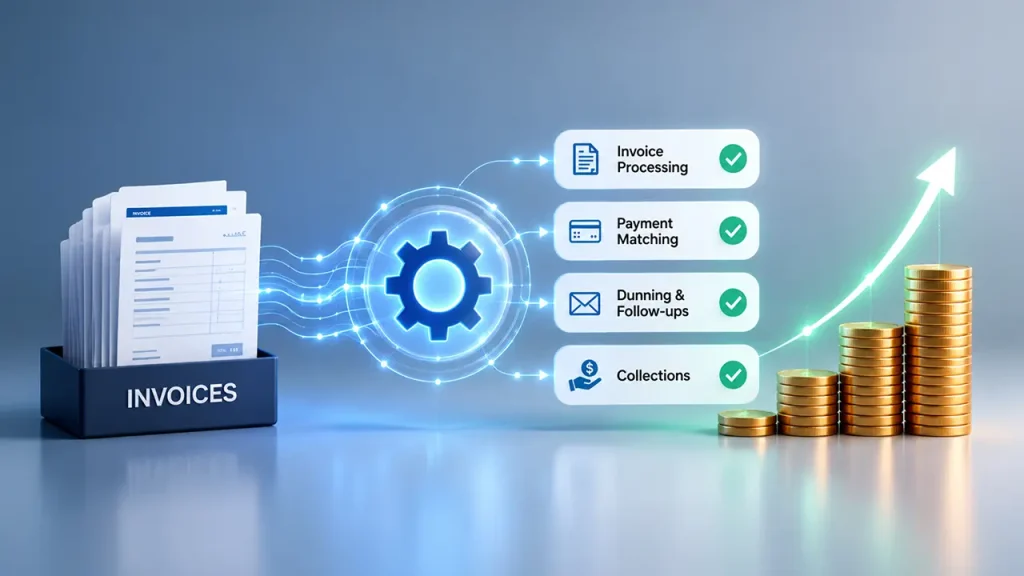
AI agents accelerate invoicing, payment matching, and collections, reducing delays that directly impact working capital.
Benefits include:
- Faster invoice delivery
- Improved payment collection
- Reduced DSO
- Higher cash flow predictability
2. Improved Customer Experience
Customers expect accurate invoices, rapid order processing, and quick issue resolution.
Autonomous workflows help organizations:
- Prevent billing errors
- Resolve disputes faster
- Deliver proactive payment notifications
- Improve order transparency
This strengthens customer relationships while reducing support costs.
3. Lower Operational Costs
Manual finance processes require significant effort across shared service teams.
Autonomous AI reduces repetitive work such as:
- Invoice validation
- Data reconciliation
- Payment matching
- Customer follow-ups
- Exception routing
Finance teams spend less time processing transactions and more time driving business value.
4. Better Decision-Making
Because AI continuously analyzes transactional data, leaders gain real-time visibility into:
- Collection risks
- Customer payment behavior
- Invoice bottlenecks
- Revenue leakage
- Process inefficiencies
Instead of reacting to problems, organizations can prevent them before they affect cash flow.
How Autonomous AI Agents Transform the O2C Lifecycle
Unlike rule-based automation, AI agents collaborate across systems to manage end-to-end workflows.
1. Intelligent Order Processing
AI validates incoming orders against inventory availability, customer contracts, pricing rules, and credit limits before processing. If exceptions occur, the system recommends corrective actions or resolves routine issues automatically.
2. Dynamic Credit Risk Assessment
Instead of relying on static credit policies, AI continuously evaluates:
- Customer payment history
- Financial risk indicators
- Outstanding balances
- Market conditions
- Transaction behavior
This enables more accurate and adaptive credit decisions.
3. Automated Invoice Intelligence
Invoices are generated using validated transaction data while AI checks for inconsistencies before delivery. This significantly reduces invoice disputes caused by pricing errors or missing information.
4. Intelligent Cash Application
Incoming payments are automatically matched with invoices—even when remittance information is incomplete. Machine learning continuously improves matching accuracy, minimizing manual reconciliation.
5. Predictive Collections
Rather than sending reminders based on fixed schedules, AI predicts which customers are likely to delay payment.
Collections teams receive prioritized recommendations based on:
- Payment probability
- Customer value
- Historical behavior
- Invoice aging
This increases collection efficiency while preserving customer relationships.
6. Autonomous Exception Resolution
Not every exception requires human intervention. AI agents automatically resolve routine issues, gather supporting documentation, communicate with customers when appropriate, and escalate only high-value or complex cases.
Why Enterprises Are Moving Beyond Traditional RPA
Many organizations assume RPA alone can automate O2C. While RPA remains valuable for repetitive tasks, it has important limitations.
| Traditional RPA | Autonomous O2C Operations |
| Rule-based execution | AI-driven decision making |
| Handles individual tasks | Orchestrates entire workflows |
| Requires manual monitoring | Self-monitoring and adaptive |
| Limited exception handling | Intelligent exception resolution |
| Static automation | Continuous learning and optimization |
The difference is significant. RPA automates activities. Autonomous operations optimize business outcomes.
Measuring ROI from Autonomous O2C Operations
For organizations evaluating enterprise automation investments, measurable ROI is essential.
Key performance indicators often include:
- Reduced Days Sales Outstanding (DSO)
- Faster invoice processing
- Higher cash application rates
- Lower manual processing costs
- Reduced billing disputes
- Improved order accuracy
- Faster dispute resolution
- Increased employee productivity
- Higher customer satisfaction
- Improved working capital
These improvements compound over time as AI continuously refines decision-making and process performance.
Choosing the Right Autonomous O2C Platform
Not every automation platform is designed to support autonomous operations.
When evaluating vendors, finance leaders should look for capabilities such as:
- AI-powered workflow orchestration
- Autonomous AI agents
- ERP integration
- Intelligent document processing
- Predictive analytics
- Real-time dashboards
- Scalable cloud deployment
- Built-in governance and compliance
- Human-in-the-loop approvals for critical decisions
Equally important is selecting a partner with experience in enterprise finance transformation, ensuring the solution aligns with your existing processes and long-term digital strategy.
Why Auxiliobits Is the Right Partner for Autonomous O2C Operations
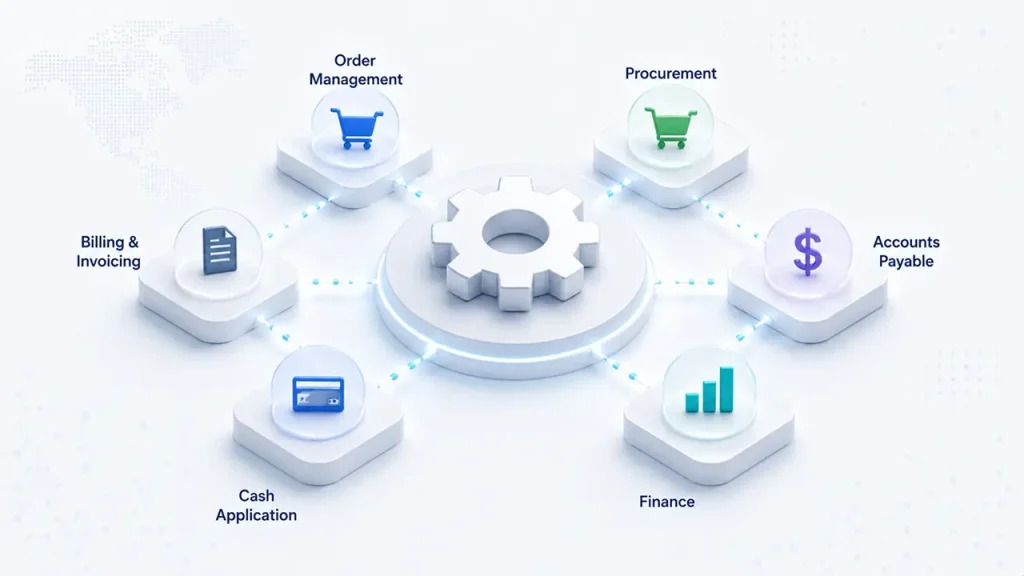
Achieving autonomous O2C operations requires more than implementing another automation tool. It demands an enterprise-wide strategy that connects AI, automation, analytics, and business workflows into a unified operating model.
Auxiliobits helps organizations accelerate this transformation through its AI-driven automation expertise and enterprise consulting capabilities.
With solutions such as AuxiAgents™, intelligent process automation, and AI-powered workflow orchestration, Auxiliobits enables organizations to:
- Automate the complete order-to-cash lifecycle
- Deploy intelligent AI agents for finance operations
- Integrate seamlessly with existing ERP and business applications
- Improve cash flow visibility through real-time analytics
- Reduce manual intervention across finance processes
- Scale automation securely across global operations
- Build governance frameworks for enterprise AI adoption
Rather than implementing isolated automations, Auxiliobits helps enterprises design autonomous finance ecosystems that continuously improve performance, reduce operational costs, and enhance customer experiences.
For organizations looking to modernize finance operations without disrupting existing systems, this approach delivers faster value while supporting long-term digital transformation goals.
Is Your Organization Ready for Autonomous O2C Operations?
The future of finance belongs to organizations that move beyond task automation and embrace intelligent, self-orchestrating operations.
If your teams still spend significant time resolving invoice disputes, manually matching payments, monitoring workflows, or managing collections, the opportunity is clear. Autonomous O2C operations can help eliminate these inefficiencies while improving cash flow, customer satisfaction, and operational agility.
By combining AI agents, intelligent automation, predictive analytics, and enterprise integration, organizations can create an order-to-cash process that continuously adapts to changing business needs.
If you’re evaluating automation vendors or planning your next finance transformation initiative, partnering with an experienced AI automation provider like Auxiliobits can help you accelerate implementation, maximize ROI, and build a scalable foundation for autonomous finance operations.
The shift from automated workflows to autonomous O2C operations isn’t just an upgrade, it’s the next stage of enterprise finance transformation.