





Key Takeaways
- Agentic AI enables real-time portfolio rebalancing beyond fixed schedules, allowing portfolios to respond instantly to market shocks and new information.
- GPU acceleration, particularly via NVIDIA, is critical for running thousands of simulations and complex optimization models within milliseconds.
- Hybrid workflows outperform fully autonomous systems, combining AI speed and computation with human judgment, intuition, and oversight.
- Risk and regulatory compliance remain central—black swan events, noisy data, and explainability challenges necessitate careful monitoring and logging.
- The future lies in integration and innovation, including cross-asset coordination, federated learning, explainable AI, and quantum acceleration to push the limits of agentic portfolio management.
How many of you were aware of the purpose played by portfolio rebalancing? If you are new to this, we have got you covered. The main motive of portfolio rebalancing is to make sure that all the investments are kept in line with the strategy and risk tolerance. Conventionally, this takes place during fixed intervals—monthly, quarterly, and annually. Nevertheless, the market does not wait for a long period of time. Sudden news, challenges, and geopolitical shocks can change asset correlations in ways that static programs cannot easily address. Investors often feel caught between two extremes: moving too fast and over-trading, or moving too slow and missing important opportunities. In high-frequency or algorithmic trading, a delay of even a few milliseconds can make a meaningful difference in returns. This is where agentic AI, combined with NVIDIA’s accelerated computing power, comes into play.
Also read: Agentic fraud detection: combining streaming data and LLM analysis
The Agentic AI Paradigm in Portfolio Management
Agent AI refers to autonomous systems that can sense, reason, and act in a given environment without constant human intervention. In portfolio management, it means:
- Monitoring real-time market data streams.
- Evaluating the portfolio based on predefined risk parameters.
- Deciding when and how to dynamically rebalance allocations.
- Automatically executing trades while logging logic for audit purposes.
Unlike traditional algorithms, agentic systems are not simply reactive – they are predictive. They can simulate potential market movements using stochastic models, reinforcement learning policies, or scenario-based optimization. But these calculations are heavy. Running hundreds of simulations every second requires GPU-level acceleration.
Why NVIDIA, of All Players?
NVIDIA, a name often linked with gaming, might seem an unexpected cornerstone for institutional portfolio management. However, its unique blend of hardware and software is crucial for achieving scalable agentic autonomy. NVIDIA’s GPUs, initially designed for realistic graphics, now power thousands of parallel threads to tackle complex portfolio rebalancing. This allows for simultaneous evaluation of market conditions, scenario analysis, and the determination of optimal actions.
- GPU acceleration drives nightly batch rebalancing times down from hours to mere minutes, which is essential during volatile markets.
- Platforms like NVIDIA cuOpt support agentic models that can react to new constraints in seconds, not days.
- By working with open-source and proprietary agentic toolkits, asset managers don’t have to lock themselves into one vendor’s “black box.” There’s room for bespoke strategies—and critical transparency.
Designing Agentic Portfolios: Key Components
Creating an effective agentic rebalancing system involves several layers:
1. Data Layer
- Real-time price feeds, alternative data (news sentiment, social media signals), and macroeconomic indicators.
- Historical performance for backtesting and anomaly detection.
2. Model Layer
- Predictive models for asset returns and volatility.
- Reinforcement learning agents to simulate different rebalancing strategies.
- Optimization models to ensure alignment with risk/return objectives.
3. Execution Layer
- Algorithmic trading systems capable of millisecond-level execution.
- Order-routing strategies to minimize market impact.
- Risk controls to prevent unintended exposure during volatile periods.
4. Monitoring Layer
- Continuous performance tracking against benchmarks.
- Alerting for regulatory or compliance breaches.
- Logging rationale for trades for transparency and auditability.
Real-Time Decision-Making in Practice
Consider a hedge fund managing a $3B multi-asset portfolio:
- The system ingests 10,000+ price updates per second across equities, bonds, ETFs, and derivatives.
- GPU-accelerated models simulate 1,000+ portfolio scenarios in milliseconds.
- The agent detects a sudden liquidity squeeze in corporate bonds due to overnight news.
- Allocations are dynamically shifted, risk is hedged via derivatives, and every action is logged for audit.
The result? The fund stays aligned with risk-adjusted targets and avoids losses that a human-led quarterly rebalance might miss.
Human Integration and Oversight Challenges
Despite their power, agentic models don’t operate in a vacuum. Experienced portfolio managers often hesitate to trust deep AI systems because:
- Complex reasoning is opaque: It’s hard to explain why a model recommended a particular shift in allocations.
- Guardrails are essential: Real-time adjustments with noisy or adversarial data can lead to overfitting. Overfitting is not just a math problem—it can lead to real financial losses.
- Collaboration is tricky: Integrating AI into human workflows requires careful change management; some PMs only partially accept autonomous suggestions.
Balancing autonomy with human oversight often produces the best results: AI handles speed and computation; humans handle judgment and intuition.
Risk Management and Regulatory Considerations
Autonomous portfolio systems are not risk-free:
- Black swan events: Past crises may be irrelevant for the next extreme event. Models trained on yesterday’s shocks may fail tomorrow.
- Data quality: Faulty or malicious data can propagate erroneous decisions.
- Operational risk: Execution failures can cascade across assets.
Regulators increasingly require explainable AI. Logs showing why and how trades were executed are crucial. Compliance teams must be able to audit agentic decisions and intervene when needed.
Technical and Operational Challenges
Even with GPUs and agentic models, several hurdles remain:
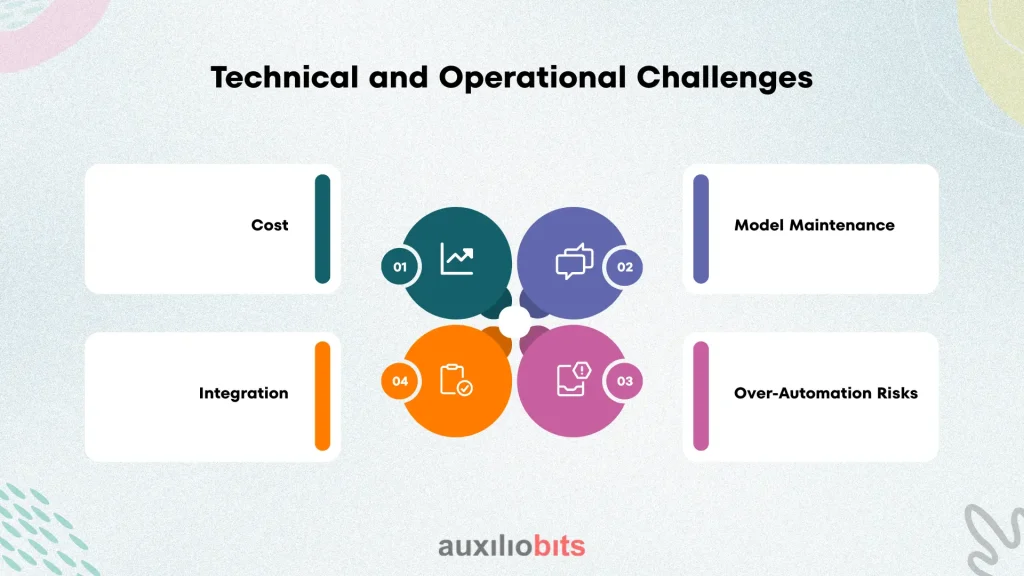
- Cost: High-end GPUs and scaling infrastructure are expensive.
- Model Maintenance: Continuous retraining and tuning are necessary.
- Integration: Bridging agentic AI with legacy trading and compliance systems can be complex.
- Over-Automation Risks: Fully autonomous systems may make decisions that humans would reject. Hybrid oversight often works best.
Small imperfections in models can compound quickly in real markets, making these challenges more than just theoretical.
Future Trends and Opportunities
The agentic portfolio landscape is evolving rapidly:
- Cross-asset coordination: Agents managing equities, derivatives, and FX simultaneously.
- Federated learning: Institutions collaborate to improve models without sharing sensitive data.
- Explainable AI: New techniques provide better interpretability of agentic decisions for compliance and trust.
- Quantum acceleration: Early experiments combine GPU and quantum systems for faster optimization of highly complex portfolios.
As technology advances, firms that balance agentic power with human insight are likely to outperform.
Wrapping Up
Agentic portfolio rebalancing is more than a technological novelty—it’s a practical response to the speed, complexity, and unpredictability of modern markets. Real-time decisions powered by NVIDIA-accelerated models allow institutions to act on insights before opportunities slip away, while also mitigating risks that static, periodic methods cannot handle.
Yet, the power of autonomy comes with caveats. Black swan events, noisy data, and human trust hurdles mean that agentic systems cannot—and should not—operate in isolation. The real skill lies in designing hybrid workflows where AI handles massive computation and scenario simulation, and humans provide oversight, judgment, and intuition.
For forward-looking firms, embracing agentic models isn’t about replacing portfolio managers—it’s about augmenting their capabilities, reducing latency, and creating portfolios that respond intelligently to a world where milliseconds can make millions. Those who get the balance right will not just keep pace with the market; they’ll anticipate its next move.