







Key Takeaways
- Agents dramatically improve efficiency in freight matching by negotiating hundreds of possible pairings in seconds—far faster than humans.
- Dynamic, multi-criteria matching (cost, empty miles, CO₂ footprint, service history) is where agent orchestration clearly outperforms static load boards.
- Trade-offs remain unavoidable: margin compression, data blind spots, and potential bias toward larger fleets require careful governance.
- Human judgment is still essential for complex, high-value, or relationship-driven loads; agents are best for routine, high-volume transactions.
- Smart freight matching is evolutionary, not revolutionary: it quietly reduces inefficiencies, strengthens carrier participation, and rewires transportation economics without displacing human expertise.
The mismatch between freight supply and demand is not new. What’s changed is that the cost of inefficiency has grown unbearable. Empty miles, idle equipment, manual tendering—that all bleeds money in markets operating on razor‑thin margins. Freight brokers have historically played the intermediary role, but as networks get more fragmented, we’re seeing agent‑based orchestration—software agents negotiating and allocating loads on behalf of shippers, carriers, and even 3PL hubs.
This isn’t vaporware. It’s in production at forwarders, digital freight platforms, and even mid‑sized carriers experimenting with local agent frameworks. The question, though, is less whether smart freight matching “works.” It’s when it works, under what constraints, and how orchestration changes the balance of power between stakeholders.
Also read: Freight Cost Optimization Through Historical Data & AI Insights
Freight Matching Was Always Messy
On paper, freight transactions should be simple. A shipper has a load, a carrier has capacity, and the two meet at a price. Reality is far messier:
- Fragmented Networks: Tens of thousands of small carriers control a large percentage of available tractors. Matching at scale requires visibility beyond the top 20 fleets.
- Unpredictable Demand: Spot loads surge in retail peaks, perishables need tight calendars, and industrial shipments run late because of upstream supplier delays.
- Regulatory and Asset Constraints: Equipment type, driver hours‑of‑service, hazmat certification, axle weights. These aren’t nice‑to‑have metadata; they are hard constraints.
This complexity gives rise to negotiation frictions—phone calls, load boards, brokers layering commissions. An “optimal” match rarely happens, just a workable one. Agent systems are attempting to formalize this mess into distributed but cooperative decision‑making.
Agents as Negotiators
Think of agents here not as robots, but as negotiators with bounded rationality. Each represents an actor:
- A shipper agent broadcasts load requirements, incorporating not just pickup/delivery points but soft preferences—preferred carriers, sustainability metrics, penalties for lateness.
- A carrier agent signals availability, asset attributes, costs, and sometimes lane preferences.
- A platform orchestrator (which could be neutral or biased, depending on governance) mediates conflicts when initial bids don’t align.
The orchestration doesn’t look like magic. It looks like iterative auctioning, constraint satisfiers, and hybrid game‑theoretic logic. The value is speed and scope: hundreds of possible pairings can be tested and rejected in seconds, something humans can’t scale to.
Why Orchestration Beats Static Load Boards
Load boards still dominate the spot market, but they are crude tools. A listing is visible only to those watching; timing is everything, and once it’s booked, it disappears. Agents introduce several superior dynamics:
- Persistence: An agent doesn’t sleep. It negotiates continuously until the load window closes or a better match emerges.
- Multi‑criteria Matching: Not just rate and lane, but deadhead miles, CO₂ footprint, and even dwell time history.
- Dynamic Re-Assignment: If a carrier no‑shows or equipment breaks down, the system re‑enters negotiation loops in near real‑time
There have been dispatch rooms where five human brokers juggle 200 phone calls each. When an algorithmic agent took over overflow loads, the humans first laughed. Three weeks later, they admitted the bot outperformed them on price consistency and empty‑mile reduction. Not glamorous, but brutally pragmatic.
Case in Point: Mid‑Tier Retailer with Seasonal Surges
One U.S. retail operation ran a simple agent pilot last holiday season. Their shipper agent received forecasted outbound loads from 5 regional DCs. Carrier agents, representing both national carriers and local owner‑operators, played in the same sandbox.
- National carriers bid early, locking predictable lanes (e.g., DC to major metro hubs).
- Local carriers swooped in later, scooping up under 250‑mile hauls rejected by bigger players.
- The orchestration agent inserted a policy rule: owner‑operators get first look at loads within 100 miles of home base if their historical on‑time scores exceeded 95%.
The result? Lower rates on secondary lanes, fewer tender rejections, faster tender acceptance without endless email loops. Another unplanned upside: stronger carrier loyalty. Owner‑operators who were historically sidelined felt recognized, resulting in better participation in the following quarter.
Trade‑Offs No One Likes Talking About
Of course, smart freight matching is not a free lunch. Some trade‑offs are rarely discussed in vendor brochures.
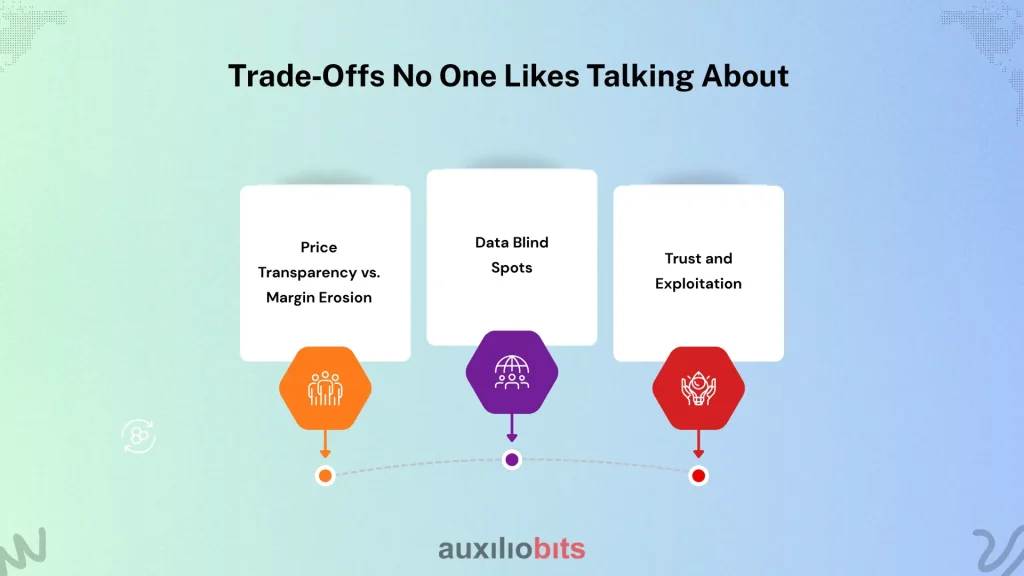
- Price Transparency vs. Margin Erosion: Carriers gain transparency; so do shippers. The orchestration agent often compresses margins brokers historically skimmed, leading to resistance from incumbents.
- Data Blind Spots: Agents are only as good as their data feeds. Inconsistent telematics? Garbage in. Stale capacity info? Matches fail.
- Trust and Exploitation: Smaller carriers sometimes worry that orchestration logic implicitly favors the largest fleets because their data quality looks cleaner. And occasionally, that paranoia isn’t wrong.
These tensions are structural. Agents amplify them, not eliminate them.
Contract Freight and Spot: Very Different Dynamics
A subtlety here: contract freight and spot freight behave differently, and agents must flex accordingly.
- In contrast, orchestration looks like a periodic renegotiation of capacity commitments. Agents may smooth forecast adjustments, but the rhythm is monthly or quarterly.
- In spots, the orchestration is frenetic, minute‑by‑minute. Here, algorithm speed beats human reaction.
What fails is when platforms conflate them. A shipper expecting agent orchestration to break entrenched contract norms will be disappointed. A carrier assuming spot orchestration respects all long‑standing relationships will feel alienated.
Where Human Judgement Still Beats Agents
Despite the hype, some decisions still benefit from human judgment:
- Complex multi‑stop van tours require insight into driver capabilities.
- High‑value loads where security instructions change trip by trip.
- Relationship‑driven exceptions—when a shipper eats a surcharge to maintain goodwill with a long‑term partner.
An agent doesn’t intuit favors, history, or reputational calculus. Those soft factors are glue in logistics. If orchestration overrides them entirely, network trust suffers.
Economics of Empty Miles
The flagship claim for agent‑based orchestration is empty‑mile reduction. And it’s true—they chip away at it. But be careful. Empty miles cost differently depending on who bears them.
- For large fleets, empty repositioning may be tax‑deducted or balanced across the network.
- For small owner‑operators, 50 empty miles can be the difference between profit and break‑even.
- For shippers, it’s largely invisible, baked into rate cards.
Agents can redistribute empty‑mile burdens rather than eliminate them, which raises fairness questions. I’ve seen systems where small fleets improved utilization but felt exploited—agents consistently assigned them “backfill” moves, creating a sense of second‑class status. Without governance, smart freight matching can quietly stratify carrier hierarchies.
Integration Challenges Few Talk About
Deploying orchestration agents sounds neat until you watch IT teams wrestle with integration.
- Legacy TMS Systems: Many carriers still run 15‑year‑old software barely able to produce EDI messages. Getting those to communicate with modern APIs is… painful.
- Latency: Dispatch is often real‑time. Cloud agent platforms with 200ms response sound fast but cause headaches if load assignments lag while a driver waits dockside.
- Regulatory Overheads: European Union cross‑border tenders require data localization and occasionally human sign‑off. Agents can’t wave a wand through that.
Some brokers complain the real cost isn’t building the agent—it’s building and maintaining the messy middle‑ware glue.
Collaboratives and the Rise of Neutral Platforms
One of the strongest signals is the rise of neutral collaboration platforms, where multiple shippers pool demand and carriers bid dynamically. Without agents, this would collapse under combinatorial overload. With agents, feasible.
For example, chemicals shippers in Western Europe have begun pooling non‑hazmat loads to bring owner‑operators into the game, with orchestration rules that prioritize safety track records. The orchestration doesn’t just lower rates; it de-risks regulatory audits.
This hints at a deeper strategic shift: agents as neutral referees, not just faster brokers. Network economics change when participants trust that orchestration doesn’t skew toward any single party.
Technology Stack and Emerging Standards
We’re starting to see typical architectures crystallize.
- Local Agents embedded in TMS/WMS systems that publish availability/capacity.
- Market Agents that run clearinghouse auctions asynchronously.
- Policy Layers building in business rules on sustainability, preferred lanes, or service levels.
Protocols matter here. EDI doesn’t cut it; APIs and streaming protocols (MQTT, Kafka) are becoming baseline. Standards groups are, slowly, trying to define data schemas. Without that, orchestration gets bottlenecked in translation logic.
Our Take: Pragmatic Use, Not Total Replacement
Here’s the take: smart freight matching won’t displace brokers wholesale, at least not soon. But it is already eroding the low‑complexity middle tier. The $600 one‑off truckload to Dallas that used to suck hours out of a broker’s day? An agent will swallow that and spit out a match in minutes.
Humans will handle exceptions, relationship management, and negotiation of contract freight anchored in risk. Agents will increasingly sweep the “boring” tail of transactions. It’s less revolutionary than evolutionary, but functionally transformative for cost and utilization curves.
What is exciting isn’t flashy AI jargon. It’s the mundane: fewer phone calls, fewer no‑shows, fewer unpaid deadhead miles. A dispatch office less cluttered with paper printouts. Carriers small and large plugged into digital networks without three intermediaries in the middle. That’s where orchestration agents quietly rewire transportation economics—one match at a time.