Agentic Automation for Smart Manufacturing Architecting Intelligent Process Automation Across the Factory and Enterprise
Agentic Automation for Smart Manufacturing Architecting Intelligent Process Automation Across the Factory and Enterprise
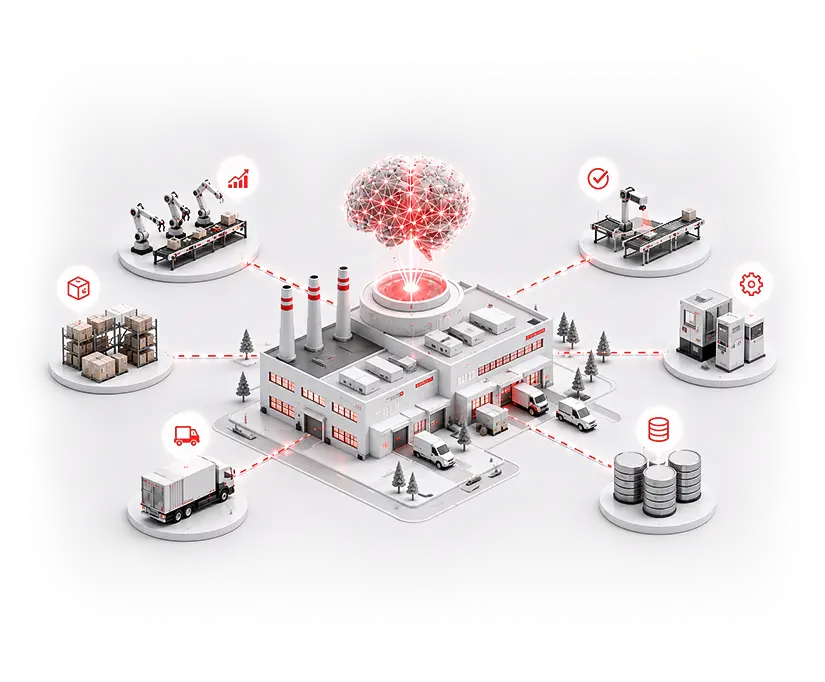
Manufacturing is no longer limited by automation—it is limited by coordination. This whitepaper explores how Agentic AI enables end-to-end process orchestration across ERP, MES, IoT, and supply chain systems , transforming fragmented operations into intelligent, autonomous systems.
Learn how manufacturers can move beyond traditional automation by leveraging AI-powered agents to orchestrate workflows, optimize resources, and improve operational performance. The whitepaper includes key concepts, use cases, and implementation considerations for successful adoption.
The State of Smart Manufacturing
Current automation maturity landscape: where most manufacturers stand today and the gap to truly intelligent operations.
What Is Agentic Automation?
Architecture, core principles, and how agentic AI fundamentally differs from traditional rule-based or ML automation.
Multi-Agent System Design
Orchestration patterns, agent hierarchies, and inter-agent communication protocols for manufacturing environments.
Smart Factory Integration Architecture
Connecting AI agents with OT, MES, SCADA, and ERP layers — bridging the IT/OT divide at enterprise scale.
Deployment Patterns & Reference Architectures
Three proven reference architectures for brownfield retrofits, greenfield deployments, and hybrid environments.
Measuring Operational Intelligence
KPI frameworks, observability tooling, and performance benchmarking for agentic systems in production.
Risk, Security & AI Governance
Trust boundaries, human oversight mechanisms, and compliance frameworks specific to agentic systems in manufacturing.
Roadmap to Autonomous Operations
A maturity model with phased milestones — from isolated automation pilots to fully autonomous, self-healing operations.
High-Impact Use Cases
01
Multi-Agent Production Orchestration
Hierarchical agent networks autonomously coordinate scheduling, routing, and resource allocation across factory cells.
Ideal for CIOs, COOs, manufacturing leaders, and automation teams, this whitepaper explores how AI-powered agents can help organizations optimize production, enhance supply chain visibility, reduce operational bottlenecks, and build more intelligent, autonomous manufacturing processes.