






Total manual effort eliminated per period

Cumulative effort hours saved annually

Across 20 company codes

Post-automation
Our cost accounting team spent an entire weekend managing SAP transaction codes instead of analysing what the numbers were telling us. It was not a sustainable model as we expanded across Europe.
– Director, Finance Operations, EU
The organization’s long-term goal was to evolve its SSC into a Global Business Services (GBS) model — a centralized, standardized, and scalable operational engine.
But without automation:
Reduction in processing time - from 8-10 active hours to under 1 hour of human oversight per month
Manual working days eliminated from the monthly close calendar for the EU cost accounting team
EU plants processed consistently in every monthly cycle, with zero plant omissions or sequencing errors
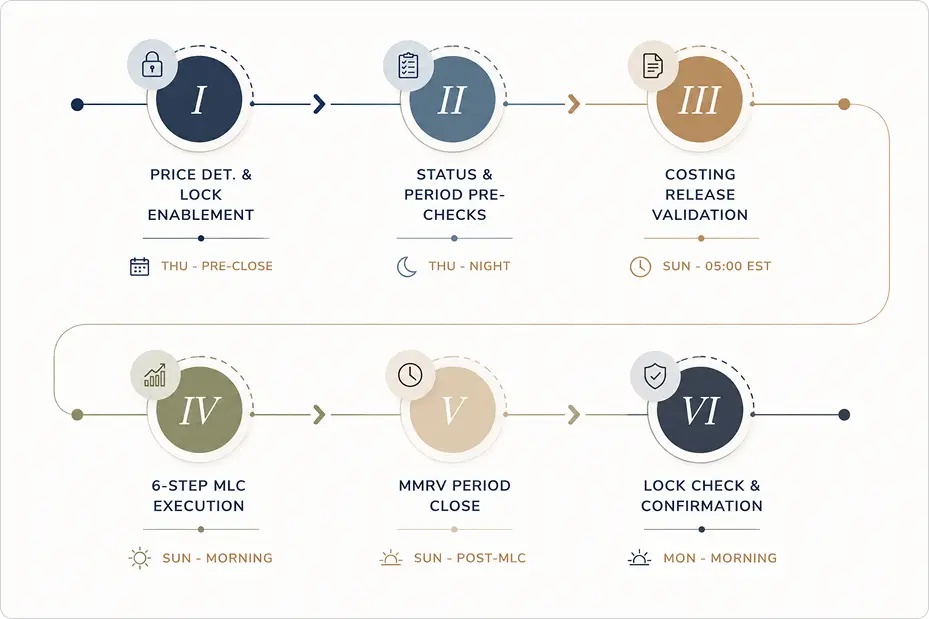
Sequential costing steps executed autonomously with real-time error monitoring and auto-escalation via ServiceNow
Audit trail completeness - every step logged, every exception ticketed, every notification timestamped automatically
Annual volume growth absorbed without adding headcount - the automation scales with new plants and company codes via config tables

When the same sequence of SAP transactions must execute across 65+ plants monthly, with consistent rules and predictable branching logic, RPA delivers near-total time elimination — not just efficiency gains.

By designing email subject lines as machine-readable resume signals, the team created a human-bot handoff protocol that avoids full-process restarts — a critical pattern for long-running, multi-step financial processes.

Storing plant lists, company codes, and execution parameters in editable config tables — rather than hard-coding them — means the automation absorbs 10% annual volume growth without developer intervention or redeployment.

Follow Us