





Key Takeaways
- APA reduces long-term operational costs for complex, variable processes but carries a higher upfront investment.
- RPA remains cost-effective for deterministic, high-volume tasks, though maintenance costs can accumulate.
- TCO must include human intervention, exception handling, governance, and scaling—not just licensing fees.
- Hybrid strategies often yield optimal ROI: blend RPA for stable tasks with APA for adaptive, strategic workflows.
- Real-world deployments demonstrate that intelligent agents can transform cost structures, not just efficiency metrics.
The discussion around automation is often framed as a binary choice: “classic RPA or next-generation AI agents?” Yet, the conversation rarely moves past the surface-level comparison of capabilities. In real-world enterprise settings, the more pressing question is about the total cost of ownership (TCO). After all, a solution that dazzles in a pilot but drains budgets in production isn’t strategic—it’s a sunk cost.
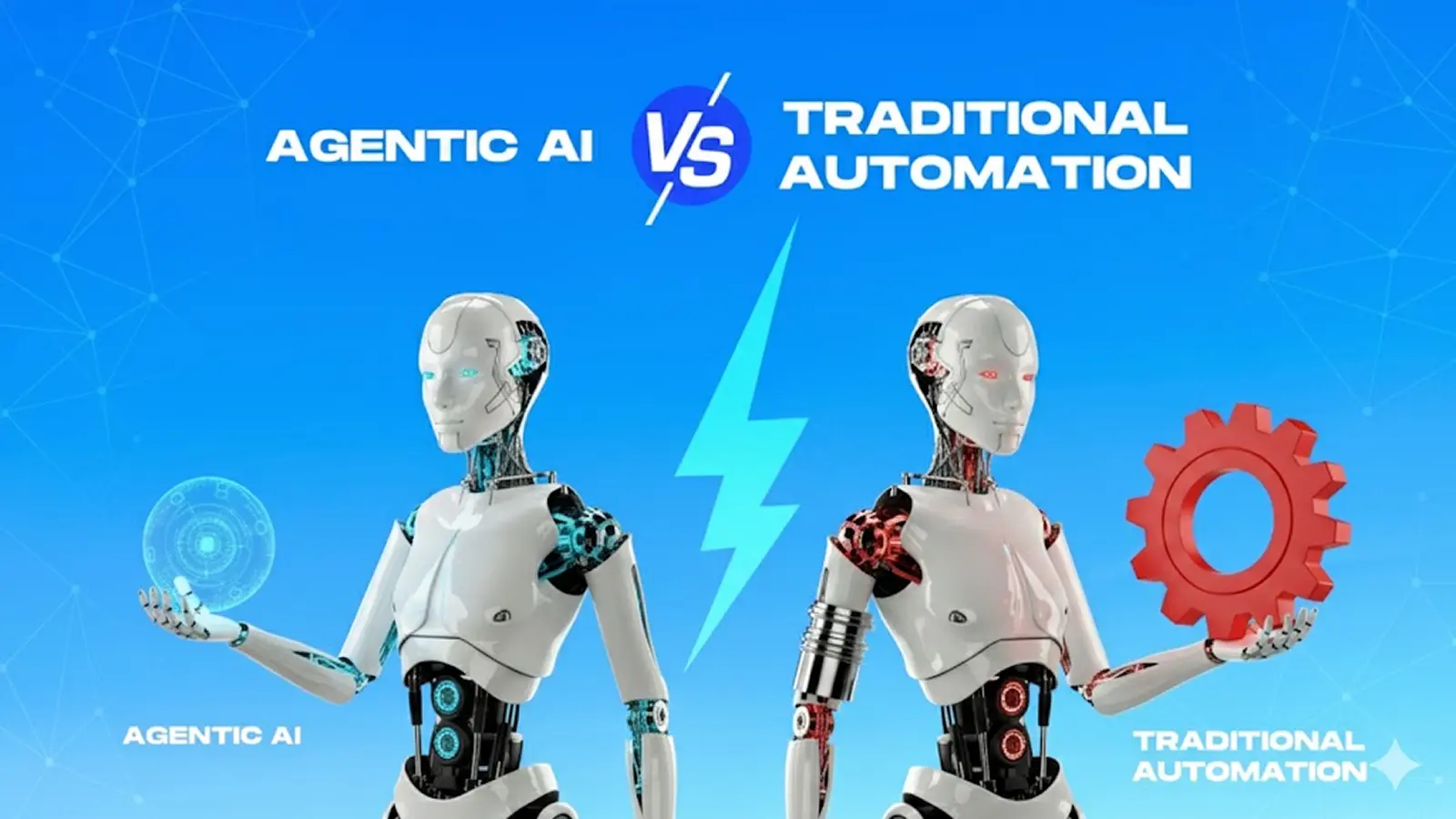
TCO, as an evaluation metric, forces us to look beyond the initial license fee or per-bot cost. It encompasses not only deployment expenses but also operational overhead, governance, maintenance, scalability, and failure recovery. When you compare traditional Robotic Process Automation (RPA) with agentic process automation (APA)—where autonomous AI agents execute, learn, and adapt—the differences in cost structures are subtle but profound.
Also read: How Agentic Process Automation differs from traditional RPA—tech stack perspective
The Anatomy of RPA Costs
Traditional RPA has been around for a decade, and enterprises know its quirks intimately. Licensing costs vary—UiPath, Automation Anywhere, and Power Automate all have different pricing schemes—but it’s not just about the license. Most of the hidden costs stem from the human orchestration required.
1. Development and Implementation
RPA bots are rule-based. They excel in high-volume, repetitive tasks but require painstaking design. Process mining, or task analysis, is often manual. A single bot for invoice processing, for instance, might need weeks of workflow mapping and exception rule definition.
2. Maintenance Overhead
The moment an underlying application changes—say, a bank portal redesigns its UI—bots fail. Organizations frequently report spending 30–50% of their RPA budget on maintenance and troubleshooting alone. This is a structural weakness of deterministic automations: they’re fragile outside of static environments.
3. Scaling Costs
Adding more bots doesn’t scale linearly. Each additional bot requires additional orchestration, monitoring, and sometimes even separate licensing. Scaling across business units can quickly become a combinatorial problem.
4. Operational Governance
RPA doesn’t think. Human teams must intervene constantly to resolve exceptions, audit processes, or prevent drift from compliance. This human-in-the-loop requirement is expensive and slow.
Case in point: A mid-sized insurance company in North America automated claims entry using traditional RPA. They deployed 50 bots, initially expecting 80% efficiency gains. Within six months, 20% of their time was spent fixing broken bots due to UI changes and policy updates. The upfront costs were low, but the ongoing operational overhead ate into ROI.
Agentic Automation: New Capabilities, Different Economics
Agentic process automation, by contrast, is not just RPA with AI tacked on. These are autonomous agents capable of:
- Making decisions based on dynamic data.
- Learning from outcomes and improving processes over time.
- Communicating with other agents to orchestrate multi-step workflows.
This autonomy shifts the cost profile dramatically.
1. Development and Implementation
While APA solutions often carry higher upfront costs, the development phase can be shorter for complex, multi-step processes. Instead of coding every conditional branch, you train agents on objectives, rules, and constraints. The system can adapt to new scenarios without explicit reprogramming.
2. Maintenance Overhead
Agents handle minor changes themselves. If an ERP interface tweaks its API or a process step changes, an agent can detect anomalies, adapt workflows, and sometimes even propose new actions. Fewer manual interventions translate into lower operational labor costs.
3. Scaling Costs
Autonomous agents scale more gracefully. You can replicate decision-making logic across departments or geographies without linear increases in oversight. However, horizontal scaling demands robust orchestration and monitoring infrastructure—so it’s not zero cost.
4. Governance and Compliance
Ironically, the very autonomy that makes APA attractive can increase regulatory scrutiny. Enterprises often invest in “explainability layers,” audit trails, and exception dashboards. These are one-time or ongoing platform costs, but ultimately reduce human governance overhead.
Example: A global logistics firm deployed agentic agents for freight booking and customs clearance. Traditional RPA had failed here—rules changed too often, exceptions were frequent, and delays cost money. APA agents reduced operational staff by 35%, handled 90% of exceptions autonomously, and learned to predict delays based on historical patterns. The upfront investment was significant, but within a year, the TCO was notably lower than if they had tried to scale RPA for the same complexity.
Nuances in Cost Comparison
It’s tempting to conclude, “APA is more expensive upfront but cheaper over time.” That’s true in a sense, but the reality is layered.
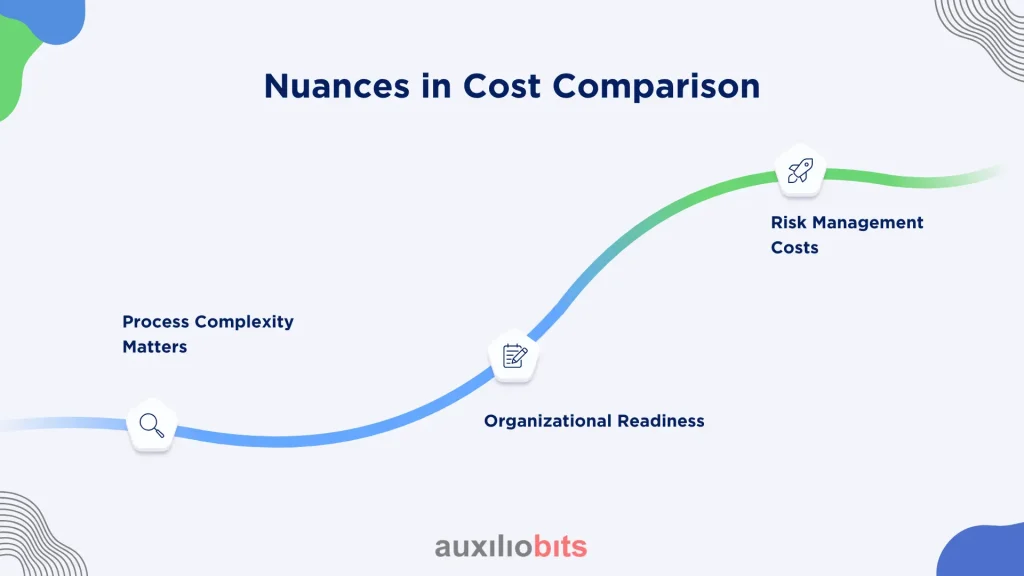
1. Process Complexity Matters
Simple, high-volume, rule-based processes still favor RPA. Think of mass invoice entry or standard payroll processing. Here, APA may be overkill—the sophistication isn’t necessary, and cost-per-bot might be higher.
Conversely, processes with variability, uncertainty, and frequent exceptions—like procurement approvals or claims adjudication—tip the scales toward agentic solutions. Attempting to force traditional RPA on such workflows inflates TCO through maintenance and failure recovery.
2. Organizational Readiness
APA adoption requires data maturity, API integration, and employee buy-in. Firms without clean data pipelines, process documentation, or IT governance often see delayed ROI. The TCO isn’t purely technological—it’s organizational. You might save money on bots, but spend it on retraining, change management, and data cleanup.
3. Risk Management Costs
RPA failures are visible and predictable. APA failures can be subtler—agents might make incorrect decisions that aren’t immediately obvious. Enterprises investing in APA often allocate additional budget for monitoring, incident response, and ethical AI compliance. These costs are part of TCO but also reduce long-term risk exposure.
Breaking Down Costs: A Practical Comparison
| Cost Category | Traditional RPA | Agentic Automation (APA) |
| Licensing | Low to medium per bot | Higher per agent often includes learning modules |
| Development | Long, rule-intensive | Shorter for complex processes; objective-driven |
| Maintenance | Highly sensitive to changes | Lower; adaptive agents self-correct minor changes |
| Operational Oversight | High human intervention | Moderate; requires monitoring of agent decisions |
| Scaling | Linear or worse, incremental cost per bot | Horizontal scaling is more efficient; it requires orchestration |
| Exception Handling | Manual and labor-intensive | Automated and adaptive, but requires audit controls |
| Data/Infrastructure Readiness | Minimal | Significant investment upfront |
| Compliance & Governance | Moderate | Higher initial investment reduces long-term risk |
Hidden Considerations
- Shadow Work Costs: Many organizations underestimate the “shadow work” of traditional RPA—manual intervention outside formal workflows. APA reduces this but requires trust-building with human operators.
- Learning Curve: Agents learn over time, but initial performance may lag as they adapt. Some TCO models don’t capture this transient dip in efficiency.
- Vendor Lock-In: APA platforms are newer, and switching costs can be significant if an enterprise commits to a particular framework or learning model.
- Hybrid Approaches: Many companies realize that a mix of RPA and APA is the sweet spot—using lightweight bots for deterministic tasks while letting agents handle the nuanced, exception-heavy processes.
Thinking Beyond Pure Cost
Sometimes, the conversation about TCO obscures another, more critical variable: business value creation. Agentic agents aren’t just about cost reduction—they enable capabilities previously impossible:
- Proactive decision-making rather than reactive task execution.
- Cross-process orchestration without additional human operators.
- Insights and predictive actions from the data agents process autonomously.
Traditional RPA is transactional. APA is strategic. A myopic focus on bot price can blind organizations to the real potential of agentic solutions.
Bottom Line
TCO is a useful lens, but it’s only part of the story. Compare apples to apples: consider complexity, volatility, exception handling, governance needs, and scaling ambitions. In practice, enterprises often end up with a tiered strategy:
- RPA for low-complexity, high-volume tasks
- Agentic automation for exception-heavy, variable, or strategic processes
- Hybrid orchestration to balance cost, control, and adaptability
Ignoring this nuance is where TCO calculations can mislead executives. The cheaper bot isn’t always cheaper in the real world. And the more “intelligent” agent isn’t always the right choice if your processes are static and predictable. Context is king.