





Key Takeaways
- Combining NVIDIA’s high-fidelity perception layers with Azure Maps’ cloud-scale context allows autonomous agents to navigate both micro-level obstacles and macro-level routing challenges.
- Modern route-planning agents maintain probabilistic world models, integrate streaming sensor data, and anticipate uncertainty, moving beyond traditional “shortest path” computations.
- Latency mismatches, semantic divergences, and data freshness issues require careful orchestration and policy-engineered decision layers to prevent planning failures.
- Ports, logistics yards, corporate campuses, and utilities benefit from semi-autonomous agents most, as controlled environments allow safe and optimized deployment.
- Semi-autonomous copilots, continuous simulation feedback, and policy-shaped routing are emerging trends, highlighting the value of integrating precision-focused local models with strategic global planning.
The last five years have been quietly revolutionary for routing systems. Not the flashy autonomy that the average reader associates with drone deliveries or robotaxis—but the subtler, enterprise‑grade evolution of how machines plan their paths through dynamic environments. When you marry NVIDIA’s accelerated mapping stack with Azure Maps’ geospatial services, you don’t just get better directions; you get a very different kind of decision-making agent. One that combines high‑precision perception layers with cloud‑scale context.
This piece examines where that combination actually works, where it stumbles, and how real operators—not just glossy demos—are beginning to stitch these systems into logistics, mobility, and infrastructure operations.
Also read: Reducing downtime: Nvidia GPU‑powered anomaly detection agents for machinery
What We Mean by Route‑Planning Agents
Traditional navigation software is basically a calculator. You give it roads, traffic density, and maybe a cost function (fastest, scenic, fuel‑efficient), and it computes shortest paths on graph structures. It doesn’t adapt outside its lane markings.
Autonomous route‑planning agents, in contrast, are more exploratory. They maintain a world model, they weigh probabilities, they integrate streaming sensor data with real‑time map updates, and—here’s the key—they must anticipate uncertainty. A road closure is at the next block. An opportunistic detour when a delivery truck finishes early. Even the micro‑decisions about which side of a parking lot to enter.
That’s why architecture matters. You need both localized perception (where am I, what’s around me?) and macro context (what’s the road network topology, how does traffic flow evolve across a city at 4 p.m. on a Tuesday?). NVIDIA provides strong tools for the first; Microsoft Azure adds strength in the second.
NVIDIA’s Contribution: Digital Twins at Vehicle Resolution
NVIDIA has been building digital twins of roads far longer than many notice. Drive Sim and Omniverse‑based platforms create photorealistic, highly dynamic replicas of environments. For autonomous agents, this isn’t just a fancy rendering tool. It allows machine‑learning models to train on corner cases that the physical world rarely offers in time:
- Pedestrians emerging from occlusion.
- Re‑routing in construction detours without signage.
- Weather‑distorted lane visibility where the semantic map still needs to guide.
More importantly, NVIDIA’s GPU‑accelerated pipelines generate HD semantic maps. These aren’t the vector tile maps most GIS engineers are used to—they’re closer to a 3D blueprint of drivable space, lanes, barriers, and curb types. That level of detail is expensive to create manually, hence the ecosystem shift toward AI‑driven, sensor‑fed automation of it.
If you’re an operator trying to orchestrate an autonomous shuttle fleet at, say, an airport campus, you can’t rely only on consumer‑grade mapping. You’d deploy agents that leverage this high‑resolution context generated with NVIDIA toolchains.
Azure Maps: Cloud-Scale Context and Enterprise Glue
Mapping isn’t just precision, though. It’s also freshness, traffic feeds, and integration with enterprise data. Azure Maps has carved out a niche in those dimensions.
Some underappreciated aspects:
- Data Fusion: Azure Maps can integrate organizational telemetry (fleet sensor data, IoT signals from roadside beacons, ERP systems) into route computation flows. That moves route‑planning out of being a “nav app” and into being a live operational control system.
- Scalability: Multi‑tenant fleets can run thousands of concurrent queries, each with slightly different constraints, without drowning in endpoint throttling—something developers rarely believe until they hit the bottleneck on less enterprise‑grade APIs.
- Global Coverage with Configurable Granularity: For some use cases, you don’t want centimeter precision; you want harmonized geospatial APIs across 50 regions. Azure provides consistency, where NVIDIA focuses on local fidelity.
For example, one logistics operator experimented with over‑relying on NVIDIA’s stack for long‑haul trucking. Fantastic in simulation, less practical in production because the maps weren’t nationwide. They eventually hybridized it with Azure Maps’ broader but coarser routing network. That mix of scales—honed tile precision when docking, coarse real‑time routing when crossing the interstate—is where this stack begins to stand out.
Why Agents Need Both Layers
The interplay between local versus global information is where autonomous agents have traditionally failed. Inside labs, they’re brilliant at lane‑detection and micro‑maneuvers. In real cities, those skills collapse when construction shoves traffic into a dirt shoulder with no HD representation.
The practical setup looks like this:
- Edge stack powered by NVIDIA mapping for perception‑rich path generation, especially last‑mile maneuvers and dynamic obstacles.
- Cloud service calling Azure Maps APIs for network‑scale optimization, traffic pattern adjustments, and multi‑vehicle coordination.
- A decision‑layer agent that arbitrates between the two, sometimes trading off safety margins against fleet‑efficiency metrics depending on the situation.
That arbitration is still more art than science. In practice, it becomes a policy‑engineering exercise: when does the agent trust centimeter‑level ground truth (slowing down costs minutes), and when does it prioritize throughput even if the representation is fuzzier?
Challenges in Integration
If this sounds elegant in theory, it’s a mess in deployments. Some pain points:
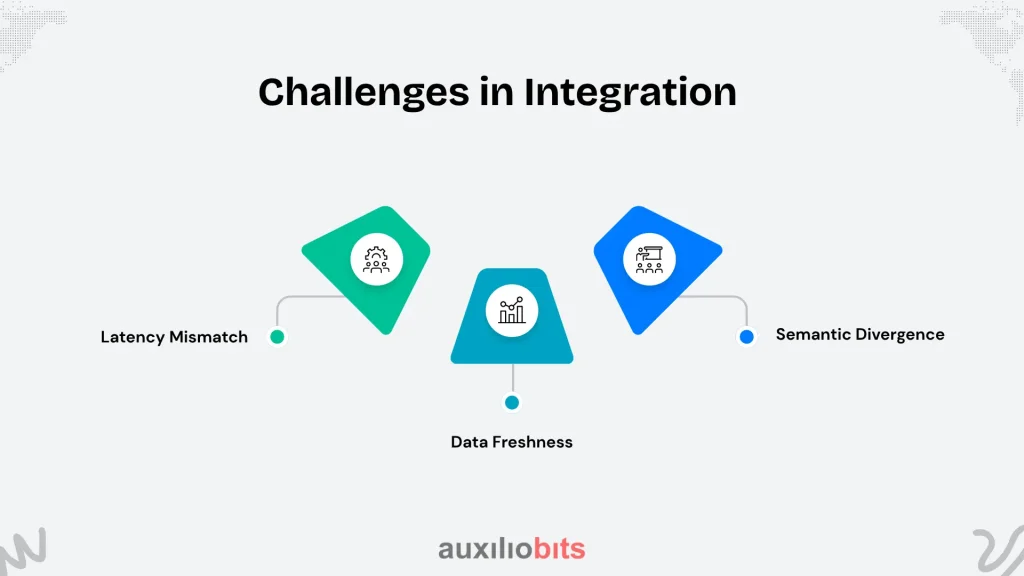
- Latency Mismatch: NVIDIA stacks often expect ultra‑low latency, GPU‑local processing. Azure Maps API calls introduce cloud latencies (tens to hundreds of ms). For a fast‑moving agent, even that can destabilize planning.
- Data Freshness: HD maps degrade fast. Temporary roadworks matter far more than precise curb geometry. Azure’s real‑time feeds help, but they can’t cover every choke point in the world.
- Semantic Divergence: NVIDIA semantic maps classify drivable areas differently from Azure’s road network models. That requires translation layers—sometimes losing nuance.
Industrial and Enterprise Use Cases
Not every route‑planning agent is heading onto public streets. Some of the most intriguing experiments are happening in controlled environments.
- Ports and Logistics Yards: Semi‑autonomous yard tractors can rely on NVIDIA’s detailed spatial layouts to inch precisely into berths. Azure Maps algorithms layer in dock scheduling and container movement forecasts.
- Corporate Campuses: Shuttle services—think tech campuses like Redmond or Cupertino—are safer testbeds. Fleet control rooms use Azure Maps to allocate resources, while NVIDIA mapping makes sure buses don’t misinterpret ad hoc pedestrian crossings.
- Utilities and Field Services: Imagine routing maintenance drones along power lines. NVIDIA mapping aids obstacle avoidance at the structure level, while Azure ensures coordinated deployment across large territories.
In each, the “agent” is not a car but a software service making integrated decisions across a fleet. The autonomy is less visible—yet arguably more valuable than the one‑off robotaxi stunts.
When It Breaks
People like highlighting wins; the failures are more educational. A cold example:
For example, one European postal operator ran NVIDIA mapping‑based vans in a suburban pilot. Amazing lane following, smooth detours. Until snow fell. The HD semantic layer lost reliability—kerbs and marking contrasts vanished. Azure Maps still reported normal road topology, but it lacked the sub‑surface corrections needed for safe local maneuvers. The result? Half the vans defaulted to conservative crawling, deliveries delayed by hours.
The lesson wasn’t that either component failed, but that neither had robust cross‑winter redundancy. Without adaptive reweighting of confidence layers, the planning agent collapsed.
Human Factors
There’s a trap in assuming route planning is just computation. People forget that operators interact with these agents. Dispatchers want explainable paths: why did one vehicle detour 6 minutes off the optimal? Drivers (when still present in semi‑autonomous systems) want predictable behaviors aligned with their intuition.
Azure has the upper hand in explainability—routes can be visualized in conventional cartographic terms. NVIDIA’s geometry is more opaque for non‑engineers. The tension often results in decision‑support UIs that simplify away the nuance—potentially dangerous if management doesn’t realize the simplification hides brittle edges.
Where This Technology Seems Headed
Unlike the buzz around full autonomy, the Nvidia‑Azure combination is becoming an enabling layer for semi‑autonomous orchestration rather than total autonomy. It’s creeping into supply chains, fleet management, and smart infrastructure with surprisingly little publicity.
To me, the more pragmatic future looks like:
- AI Copilots for Fleet Optimizers: Planning agents that combine local precision (via NVIDIA) with strategic constraints (via Azure), producing routes as soft recommendations rather than hard automation.
- Continuous Simulation Feedback Loops: Simulated activity in Omniverse feeds into Azure Maps traffic APIs, which in turn provide improved predictive congestion forecasts.
- Policy‑Shaped Routing: Agents aligning paths to sustainability goals, compliance constraints, or labor agreements, not just travel time—because enterprises increasingly need routing to respect ESG policies alongside efficiency.
What excites me most isn’t the autonomy per se, but the hybrid intelligence emerging when you force these two different mapping paradigms to talk. They disagree, often uncomfortably. But in that tension, you get richer, more robust planning than either layer can provide alone.
Final Thoughts
An autonomous route‑planning agent is not merely “navigation 2.0.” It is a negotiation between high‑fidelity world models and large‑scale operational logic. NVIDIA brings the surgeon’s precision; Azure Maps provides the strategist’s vision. Real integration means reconciling those temporal, semantic, and practical mismatches—no small task, but one that turns routing into a genuinely enterprise‑critical capability, rather than a commodity API call.