







Key Takeaways
- Distributed Redis clusters across multiple regions ensure continued availability and resilience during regional outages or disasters, minimizing downtime for mission-critical RPA operations.
- Active-active clustering distributes workloads evenly and maintains availability during maintenance or unexpected failures, making it suitable for applications with dynamic and high-volume processing needs.
- Active-passive clustering prioritises continuity and reliability, offering a more straightforward setup ideal for steady workloads where consistent uptime is more critical than full resource usage.
- Database cluster setups like SQL Server ‘Always On’ improve fault tolerance by replicating primary databases, ensuring quick failover and data integrity during server outages.
- UiPath’s HAA Add-on with Redis ensures transaction consistency and automatic failover in clustered environments, strengthening the automation infrastructure’s high availability and reliability.
High availability is critical for organisations that rely on RPA to automate mission-critical business processes. Implementing high availability can be complex, and the specific architecture will depend on your organisation’s requirements and resources. UiPath provides documentation and support to help organizations design and implement high-availability solutions that fit their needs. Below are some key strategies to choose the right components for your organisation and achieve great results:
Design Strategy
1. REDIS Database Distributed Architecture
Deploy across multiple data centres or regions to minimise the impact of regional failures.
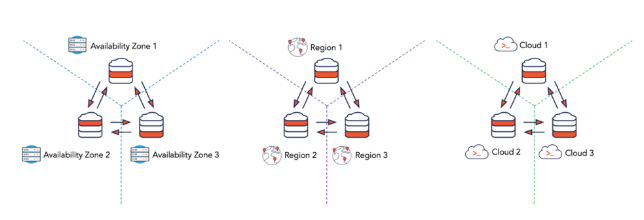
Single-Region Redundancy— If your organisation operates in a region with a historically low risk of natural disasters or other regional failures (e.g., power outages, network disruptions), you may feel more confident relying on a single region.
Setting up and maintaining redundant infrastructure in multiple regions can be cost-prohibitive for some organisations, especially smaller ones. If you have limited resources, single-region redundancy can provide an affordable level of fault tolerance.
Geo Distributed Redundancy – Multi Region – Protect your systems and data from large-scale regional disasters like earthquakes, hurricanes, floods, or power outages. If one region becomes unavailable, the redundancy in the other areas ensures business continuity.
Additionally, storing backups of critical data in multiple regions provides an additional layer of data protection, ensuring that data can be recovered in case of corruption or loss in one area.
Moreover, replicating services or data in multiple regions can reduce latency and provide a better user experience if your user base is spread worldwide. It ensures that users in different parts of the world have fast, local access to your services.
2. Clustering Setup
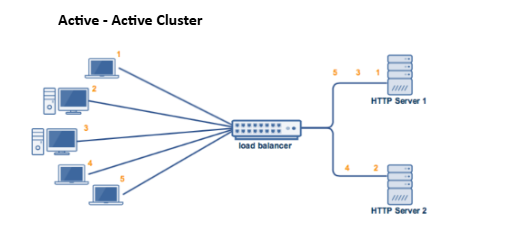
When to choose: Choose this pattern for applications where you need to distribute workloads across multiple resources and maintain high availability, even during routine maintenance
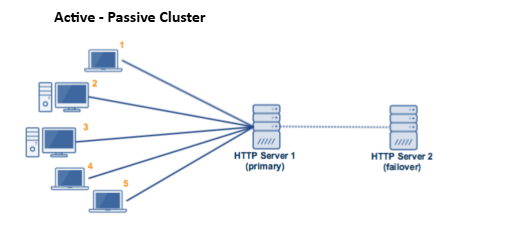
When to use: This is used when minimising downtime, which is critical, but resource utilisation is less important. It’s suitable for applications with predictable, steady workloads.
Essential components of a High Availability Architecture
1. Multi-node deployment of the server application: Multiple nodes need to be deployed to minimize downtime in case of a failure. Additionally, this approach will help us cater to the growing business needs.
2. When setting up the database server, ensure it supports cluster deployment. Multiple clusters can be installed on different servers and combined to work as a single database server instance. SQL Server additionally provides a configuration called ‘Always On,’ which automatically maintains a primary database copy.
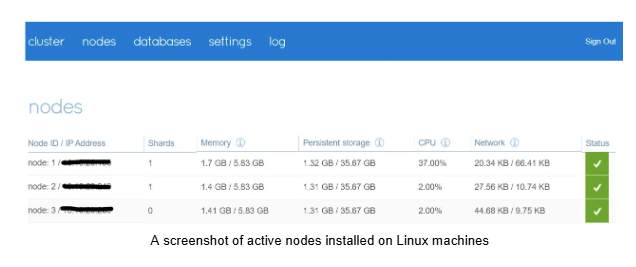
3. The HAA Add-on from UiPath offers high availability and recovery functionality. This Linux-based add-on manages all transactions in a Redis cluster. UiPath recommends setting up at least three such clusters so that the other two will take over in the event of any failure.
Network Load Balancer helps balance the incoming traffic and distribute it over our instances. Specific algorithms define how the incoming traffic must be routed, but the popular approach is the round-robin mechanism.
Conclusion
Implementing high availability in an RPA environment is crucial to maintaining business continuity and operational resilience. Organisations can achieve fault tolerance, reduce downtime, and ensure smooth operations by choosing the correct architecture pattern—single-region or geo-distributed, active-active or active-passive clusters. UiPath’s tools, including the HAA Add-on and Redis cluster support, make building robust and scalable automation platforms aligned with your organisation’s budget, infrastructure, and business needs easier.