





Key Takeaways
- Traditional vendor scorecards are inefficient due to scattered data sources, manual workflows, and delayed insights, which impact timely and accurate vendor performance evaluations.
- Multi-agent systems automate data collection, cleaning, and analysis across multiple platforms, enabling continuous and error-free vendor performance tracking.
- Connectors, cleaners, analyzers, orchestrators, and reporting agents work together to deliver real-time, centralized vendor performance dashboards.
- With AI agents handling repetitive and complex data tasks, businesses gain faster access to actionable insights and improved vendor accountability.
- Implementing multi-agent data aggregation transforms vendor management from a reactive to a proactive, intelligence-driven process.
Today, organizations depend on a diverse network of vendors and suppliers to deliver goods, services, and critical technologies. Managing these relationships effectively is crucial for maintaining operational efficiency, reducing risk, and ensuring high-quality service delivery. However, evaluating vendor performance can be challenging, mainly when data is spread across multiple systems, departments, or geographies. This is where vendor scorecarding plays a vital role.
Vendor scorecards are structured methods for tracking and assessing supplier performance against predefined metrics such as delivery timelines, service quality, cost efficiency, compliance, and innovation. Traditionally, this process has been manual and time-consuming, relying on fragmented data inputs and subjective assessments.
Today, the integration of multi-agent data aggregation is revolutionizing vendor scorecarding. Intelligent agents can automatically gather, analyze, and correlate performance data from various internal and external sources, such as ERP systems, CRM platforms, emails, contracts, and real-time logistics feeds. These agents coordinate to deliver a unified, real-time view of vendor performance, enabling businesses to make data-driven decisions quickly and confidently.
The result is more brilliant, faster, and more accurate vendor assessments that help organizations optimize vendor relationships, mitigate risks, and drive continuous improvement across the supply chain.
Also read: Cost Optimization in Finance: AI for License Auditing and Rationalization.
The Traditional Challenges of Vendor Scorecarding
Vendor scorecarding is valuable for tracking how well your suppliers and vendors are performing. It helps you evaluate things like delivery time, quality of service, pricing, and how responsive the vendor is. However, the traditional way of doing vendor scorecarding comes with many challenges, especially when done manually.
Manual Data Collection from Many Sources
In many organizations, data about vendors is spread across several systems and formats. For example, one team might use an ERP system, while another uses a procurement platform. Some performance details might be buried in emails, customer service feedback, or Excel spreadsheets shared between departments.
Key Challenges
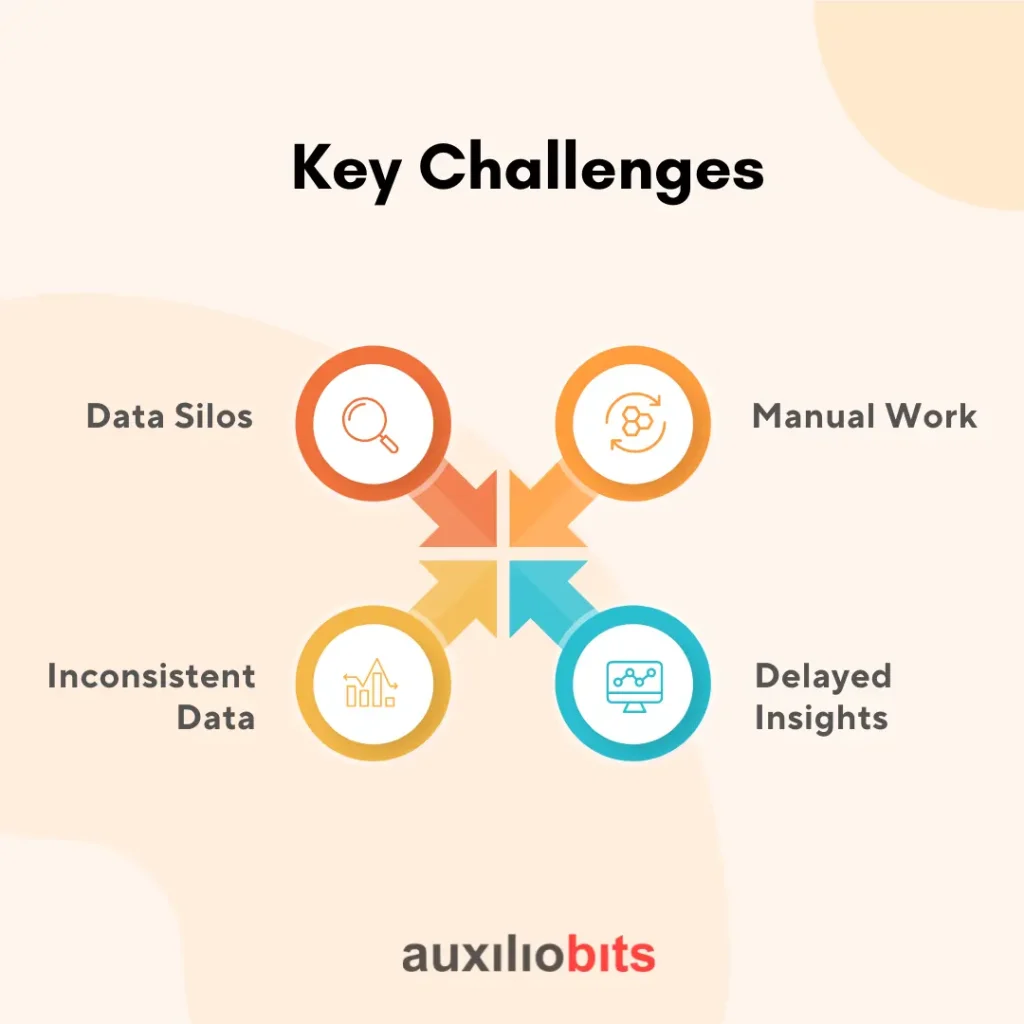
1. Data Silos:
Each department may have its system or method for tracking vendor-related data. This means the information is not centralized, making it hard to get a complete view. It takes time and effort to locate all the needed data.
2. Manual Work:
Once the data is found, someone has to manually clean it, organize it, and input it into a scorecard format. This is time-consuming and often prone to errors.
3. Inconsistent Data:
Different teams may track other key performance indicators (KPIs) or use different formats, making it difficult to compare vendors fairly or get accurate insights.
4. Delayed Insights:
Because of the manual nature of the process, the data might already be outdated by the time the scorecard is created and shared. This limits the ability to respond quickly to problems or changing vendor performance.
How Does Multi-Agent Data Aggregation Help?
In today’s fast-paced digital world, businesses rely on accurate and timely data to make wise decisions. However, data often comes from emails, customer relationship systems (CRMs), enterprise resource planning (ERP) software, and more. Gathering and making sense of all this data manually can be time-consuming and prone to errors.
That’s where multi-agent data aggregation comes in.
Think of it like a team of intelligent digital assistants—each with a special role. These assistants are small AI-powered programs called agents. Together, they form what’s called a multi-agent system. Their job is automatically collecting, cleaning, analyzing, and combining data from different places to give you a clear, up-to-date picture.
Each agent is designed to handle a specific task in the data processing. For example:
- One agent connects to a system like SAP or Salesforce to retrieve useful data such as invoices, delivery logs, or customer complaints.
- Another agent cleans the data, removing duplicates or correcting errors to ensure accuracy.
- A third agent might analyze the data, like calculating the average time it takes for a delivery to reach a customer.
- A fourth agent feeds this cleaned and analyzed data into a real-time dashboard displaying vendor performance scores.
This process runs continuously and often in real-time or near real-time, so you always have the latest information.
Let’s simplify this with a real-world example:
Imagine your company wants to track the performance of different vendors. Instead of having one person manually check dozens of systems every day, you use a multi-agent system.
- Agent 1 checks emails for any vendor-related complaints.
- Agent 2 reads data from the CRM to see how happy customers are with the vendor.
- Agent 3 connects to the ERP to pull delivery records.
- Agent 4 combines all this information, analyzes it, and updates a scorecard showing each vendor’s performance.
Because these agents are automated, they work much faster than humans and don’t get tired or make mistakes. They can also handle much more data than a person could. This makes your business more efficient and helps you make decisions faster and more confidently.
Multi-agent data aggregation benefits large organizations that rely on multiple software platforms. It helps bring everything together in an innovative, organized way.
In short, multi-agent data aggregation is like building a dream team of AI-powered helpers that work behind the scenes, constantly collecting and analyzing data to keep your business informed and ready to act.
How It Works: Architecture Overview of Multi-Agent Data Aggregation?
Vendor scorecards are a way for businesses to evaluate how well their vendors are performing. However, collecting all the data needed to score vendors from different systems, formats, and departments can be overwhelming. That’s where a multi-agent data aggregation system comes into play. It uses a team of AI-powered agents to automate and streamline the process.
Let’s walk through the simplified architecture and see how everything works together.
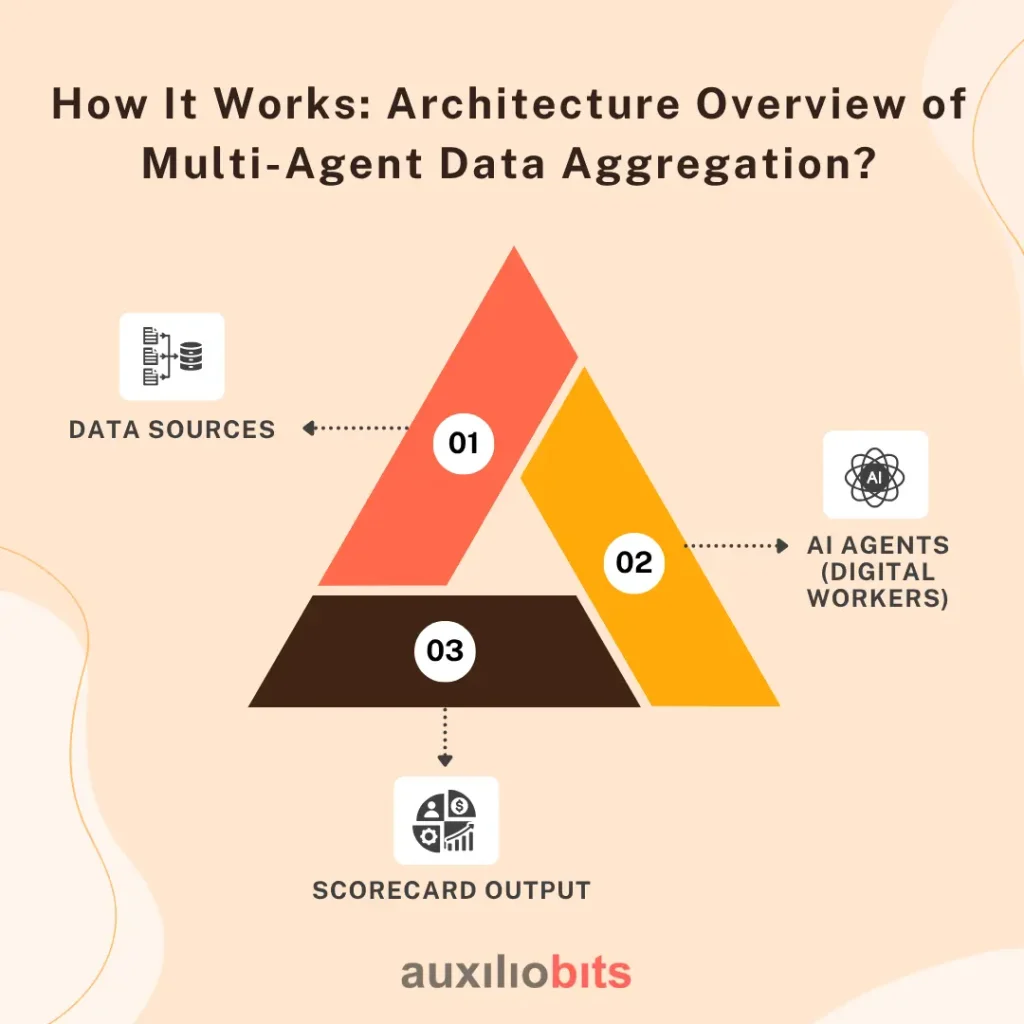
1. Data Sources
The first step is collecting data, which comes from many places:
- ERP Systems like SAP or Oracle store important information such as invoices, delivery times, and order status.
- CRM Tools like Salesforce contain customer feedback, support cases, and relationship data.
- Procurement Platforms like Ariba or Coupa provide data about supplier contracts, compliance, and purchase orders.
- Spreadsheets and Documents might include custom tracking sheets, vendor reports, or feedback logs.
- Emails and Support Tickets often hold unstructured feedback, complaints, or follow-up requests related to vendors.
- IoT Devices and Sensors (if physical goods are involved) can send real-time data on location, temperature, or delivery status.
All these sources hold valuable pieces of the vendor performance puzzle.
2. AI Agents (Digital Workers)
Now, let’s look at the different AI agents involved in processing this data:
- Connector Agents: These agents act like smart fetchers. They connect to all the systems listed above using APIs or file uploads and bring in the data, whether it’s from a database, cloud platform, or email inbox.
- Cleaner Agents: Once data is collected, it might be messy. For example, one system might list a vendor as “ABC Corp” and another as “ABC Corporation.” Cleaner agents fix these inconsistencies. They also remove duplicates, correct errors, and ensure data is appropriately formatted.
- Analyzer Agents: These are the brains of the system. They apply business rules and KPIs (Key Performance Indicators) to the data. For example, they might check if deliveries were on time, if pricing matched contracts, or if there were frequent complaints. They can also use machine learning to detect patterns or predict risks.
- Orchestrator Agent: This agent is like the team manager. It makes sure all the other agents do their work in the right order and at the right time. It handles dependencies, schedules, and workflow logic.
- Reporting Agent: After the data is cleaned and analyzed, this agent takes over. It sends the final results to dashboards, spreadsheets, or emails. It ensures decision-makers get easy-to-read summaries and visuals.
3. Scorecard Output
Once the agents have done their job, the results are displayed in different ways:
- Visual Dashboards (e.g., in Power BI or Tableau): These show vendor scores, trends, and issues in a clear, interactive format.
- Performance Alerts or Suggestions: The system can flag low-performing vendors or suggest actions, like renegotiating a contract.
- Downloadable Reports: Managers can download detailed reports for reviews, audits, or meetings.
- Automated Recommendations: The system may even prioritize top vendors or flag vendors needing closer monitoring.
This architecture creates an efficient, innovative, and reliable way to monitor vendor performance. Using AI agents specializing in different tasks, businesses can save time, reduce manual effort, and make better decisions based on real-time data. It’s like having a team of invisible assistants working around the clock to keep your vendor relationships healthy and your operations smooth.
Conclusion
In a world where vendor performance directly impacts operational success, traditional scorecarding methods are no longer enough. Multi-agent data aggregation brings speed, precision, and intelligence to the process by automating data collection, cleaning, analysis, and reporting. With AI agents working continuously behind the scenes, organizations can unify fragmented data, reduce human error, and access real-time insights to make smarter decisions. By embracing this advanced approach, businesses enhance vendor transparency and accountability and drive long-term value, resilience, and efficiency across the supply chain.