
Key Takeaways
- Time is a binding constraint, not metadata. In real-world enterprise workflows, even small delays can cascade into significant SLA breaches. Agents must treat time as an explicit factor, not just a recorded attribute.
- LangGraph enables operational temporal planning. Its graph-orientated, stateful architecture allows agents to track, adapt, and interleave tasks effectively, turning timing into a first-class design element.
- Emergent temporal behavior exists, but explicit design is safer. Agents naturally make timing decisions, but without deliberate temporal planning, they risk overreacting, over-polling, or triggering fallbacks too soon.
- Practical temporal planning strategies include constraints, event triggers, and fallbacks: defining hard vs. soft deadlines, exposing timestamps, using event-driven coordination, and planning for idling ensure resilient workflows.
- Temporal reasoning is critical for agentic automation trustworthiness. As agents evolve from simple task automation to autonomous collaborators, explicitly modeling time becomes essential for reliability, SLA adherence, and operational integrity.
Temporal reasoning is one of those capability gaps that enterprise teams only notice when agents begin missing SLAs. A retrieval agent that answers customer queries instantly looks impressive—until it has to coordinate with downstream systems, wait for external approvals, or schedule tasks across hours rather than milliseconds. That’s when timing suddenly becomes architecture, not configuration.
LangGraph, despite the buzz around its multi-agent coordination patterns, hides a serious power: its support for temporal planning. This is not the academic type, where Gantt charts are labelled “start” and “finish,” but rather the operational type, where delays ripple, dependencies overlap, and an agent must make decisions about what to do and when, not just what to do.
Most enterprises underestimate this problem. Time is usually treated as metadata, not as a first-class variable. But in real operations—supply chain, fraud detection, field service scheduling—the difference between a two-minute delay and a thirty-minute delay isn’t cosmetic. It changes outcomes.
Also read: Framework for Building a Multi-Agent Control Center for Enterprise Operations
Why Time Sensitivity Becomes a First-Class Problem
One misconception seen repeatedly is the assumption that agents operate in a vacuum. They don’t—at least not in enterprise environments. They operate in ecosystems full of:
- Systems that have response variability
- Human approval cycles that are never as predictable as the workflow diagram claims
- Rate limits come from APIs that throttle at the worst possible moment.
- Regulatory windows (bank cutoffs, trading hours, billing cycles)
- Physical delays—manufacturing lines don’t move because an agent “decided” they shouldn’t.
When you stitch these constraints into an autonomous workflow, time stops being an attribute. It becomes a binding constraint.
A procurement agent that validates vendor onboarding documents may technically have all the steps defined. However, document verification can take minutes. Supplier risk checks may be batched hourly. Finance teams might only review exceptions before 4 PM. The agent isn’t just solving a sequence; it’s solving a temporal optimization problem.
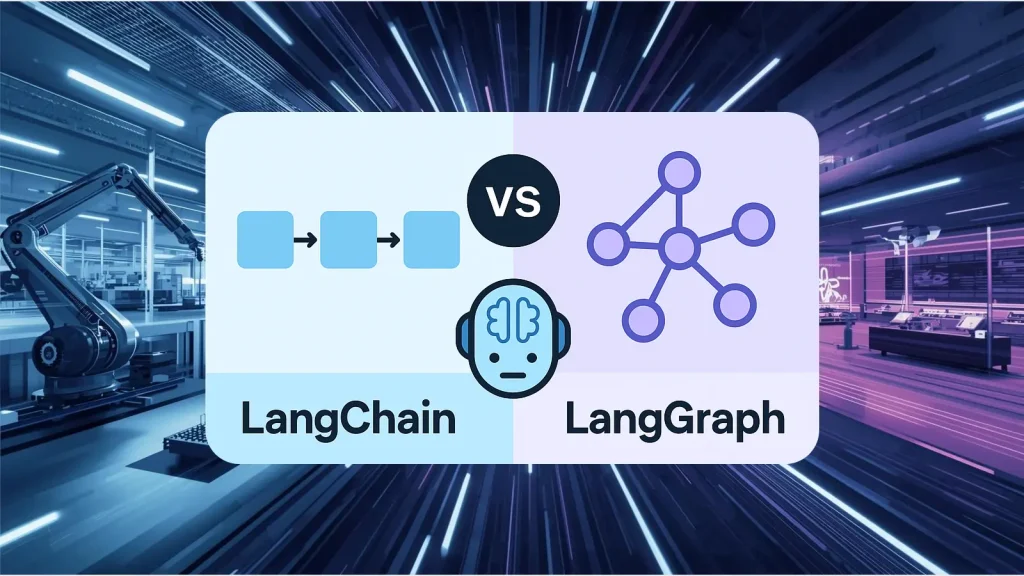
LangGraph’s graph-oriented philosophy begins to shine here. Nodes aren’t merely actions—they’re events embedded in time. Edges aren’t transitions—they’re temporal commitments.
This framing changes everything.
Temporal Planning in LangGraph
While LangGraph wasn’t marketed as a temporal planner, its design naturally supports it. Temporal planning in this context refers to the agent’s ability to:
- Track when a task begins, ends, or must be scheduled later
- Predict or infer durations (even if loosely)
- Adapt workflows when delays occur
- Interleave tasks intelligently
- Re-plan sequences as the world changes
And perhaps the trickiest part: deciding when doing nothing is actually the correct move.
Contrary to popular expectation, idling is sometimes a strategic action. A risk-evaluation agent shouldn’t ping the AML system 500 times in five minutes simply because it can.
The temporal component in LangGraph typically arises from the following factors:
- Stateful workflow memory
- Node-level deadlines or timing metadata
- Conditional waits (sleep, polling, backoff patterns)
- Event-driven triggers from external systems
- Scheduler integrations (cron-like orchestrations)
- Constraints are encoded directly into the edges of the graph.
While not formally labelled as “temporal operators,” these ingredients combine to create a surprisingly robust planning capability.
How LangGraph Represents Time—Even When You Didn’t Explicitly Model It
One of the elegant quirks of LangGraph is that many teams end up using temporal planning unintentionally. Because the graph is stateful, every transition can carry timing metadata.
Examples:
- A node stores start_time and completion_ time in state
- A workflow uses a retry_after timestamp
- A conditional branch depends on “Has 10 minutes elapsed?”
- The graph polls an external job and resumes when a timeout fires
Even if you never declared a temporal model, your agents are already making timing decisions.
That said, relying on emergent behavior alone is risky. Temporal workflows benefit from explicit design. Otherwise, agents tend to overreact to delays, over-poll systems, or trigger fallback logic prematurely.
How To Introduce Temporal Planning into LangGraph Workflows
Here’s a non-formulaic checklist practitioners actually use:

- Define both hard and soft timing constraints.
Hard: must be completed by 4 PM.
Soft: aim for completion within 5 minutes but tolerate variability.
- Expose timestamps as part of the state.
Agents should “see” elapsed time.
- Add guards that push tasks forward when constraints are violated.
Don’t let workflows drift.
- Separate waiting from stopping.
An agent may pause without abandoning progress.
- Use event triggers whenever possible.
Time-driven polling is expensive; event-driven coordination is cleaner.
- Provide every long-running task a fallback path.
Temporal planning is largely about being prepared.
- Monitor workloads with metrics that include timing variance, not just averages.
Averages hide SLA breaches.
- Integrate with enterprise schedulers when needed.
Sometimes an agent is not the best candidate to manage time.
Temporal Reasoning Becoming a Core Capability in Agentic Automation
Agentic systems are moving from “smart macros” to autonomous collaborators. As soon as that happens, time stops being implicit. It becomes an explicit modeling responsibility.
LangGraph provides a solid foundation for this shift—mainly because its graph structure mirrors how real operations behave: asynchronously, unpredictably, and with timing constraints everywhere.
Temporal planning isn’t icing. It’s structural integrity.
And the sooner enterprise teams embrace it as such, the more reliable—and frankly, more trustworthy—their agent deployments will become.