






- Static compliance reports are becoming obsolete. Modern operations move too quickly for quarterly or monthly oversight to effectively detect risks.
- Living Compliance Systems enable real-time governance. Continuous monitoring guarantees the immediate identification and resolution of compliance issues, rather than weeks later.
- Continuous compliance automation reduces regulatory risk. Automated policy checks across systems prevent violations before they escalate into audit findings.
- Always-on monitoring improves operational visibility. Beyond compliance, organizations gain more profound insight into process health, data quality, and workflow efficiency.
- The future of compliance is embedded within operations. Instead of preparing for audits periodically, enterprises are shifting toward compliance systems that operate continuously in the background.
For decades, corporate compliance has followed a familiar pattern: gathering data, compiling reports, distributing them to auditors, and hoping that nothing critical was missed between reporting cycles. It’s a model that worked reasonably well when regulations changed slowly and business processes moved at human speed.
But modern enterprises don’t operate on quarterly timelines anymore.
Manufacturing plants generate sensor data every second. Finance systems reconcile thousands of transactions per hour. Supply chains stretch across jurisdictions with constantly shifting regulations. Under these conditions, compliance based on static reports begins to feel almost ceremonial—an administrative checkpoint rather than a real control mechanism.
Many compliance leaders quietly acknowledge this. Reports often arrive weeks after the events they describe. By the time someone notices a deviation, the operational context has already moved on.
This mismatch is driving a structural shift toward living compliance systems—frameworks that continuously monitor processes, evaluate risk conditions in real time, and trigger corrective actions automatically. At the center of this transition is continuous compliance automation, which replaces periodic verification with always-on oversight.
The idea sounds ambitious. In practice, however, it’s increasingly becoming necessary.
Why Static Compliance Reporting Is Breaking Down
Compliance reporting historically grew out of accounting practices. Financial records were reconciled periodically, so compliance checks followed the same cadence. Monthly reports. Quarterly certifications. Annual audits.
There was a certain logic to it. The problem is that operational environments have evolved while compliance processes largely have not.
Consider how regulatory exposure emerges today:
- A supplier uploads incorrect documentation to a procurement portal.
- A plant modifies a production parameter without updating environmental reporting thresholds.
- A finance team applies a new tax rule incorrectly in one regional system.
- Data retention policies fail to trigger when customer data moves between applications.
None of these issues appear neatly at quarter-end. They happen continuously.
Yet traditional compliance mechanisms still operate like scheduled inspections. Teams run validation scripts once a month, generate exception reports, and distribute them through internal review chains.
By the time those reports are read, several things may already have occurred:
- the process has repeated the same mistake hundreds of times
- downstream systems have propagated the error
- auditors have inherited incomplete records
At that stage, compliance work becomes damage control.
The Concept of Living Compliance Systems
A living compliance system is less about reporting and more about active governance embedded inside operational workflows.
Instead of evaluating compliance after processes complete, the system monitors activity as it happens. Risk conditions are detected dynamically, and predefined rules—or increasingly, intelligent agents—intervene immediately.
In other words, compliance moves from periodic oversight to operational infrastructure.
Several architectural characteristics distinguish these systems:
- Continuous signal collection from ERP, MES, procurement platforms, and IoT devices
- Policy engines that evaluate regulatory rules in real time
- Automated response mechanisms triggered when thresholds are breached
- Audit trails generated automatically rather than assembled later
It’s not simply automation layered on top of reporting. The system becomes part of the operational environment itself. Interestingly, many organizations already possess the necessary data streams. What they lack is orchestration—something capable of interpreting signals continuously instead of batching them into reports.
Always-On Monitoring: The Backbone of Continuous Compliance
Always-on monitoring changes the entire posture of compliance teams.
Under static models, compliance officers often feel like investigators reviewing historical evidence. With continuous monitoring, their role becomes closer to air traffic control—maintaining situational awareness across multiple operational systems.
The difference is subtle but powerful.
Rather than asking, “What happened last quarter? ”, the system constantly asks:
- Is this transaction compliant right now?
- Has a regulatory threshold just been crossed?
- Is documentation missing for a vendor onboarding step?
If a deviation occurs, the response can be immediate.
Some organizations implement alerts. Others go further and embed automated remediation workflows. A procurement contract missing mandatory regulatory clauses might trigger an approval block. A financial transaction lacking tax classification might automatically route for validation.
Not every situation demands automation, of course. Certain compliance judgments still require human review. But identifying issues instantly—rather than months later—dramatically changes risk exposure.
A Manufacturing Example: Environmental Compliance
Manufacturing offers a particularly clear illustration of the shift.
Environmental reporting often relies on emissions thresholds, energy consumption metrics, and production volume ratios. Traditionally, these values are aggregated periodically before being submitted to regulatory authorities.
In several plants across Europe and North America, however, companies have begun implementing continuous environmental compliance monitoring.
Sensors feed emissions data directly into analytics platforms. Policy rules evaluate whether production changes might push output beyond permitted limits. If risk conditions appear, the system can:
- notify plant supervisors
- adjust production parameters automatically
- generate preliminary compliance documentation
One operations manager once described the difference bluntly: “We used to discover compliance issues during reporting. Now we discover them while they’re forming.”
That small shift prevents regulatory violations long before they become official breaches.
Also read: AI-Driven Lead Qualification for Manufacturing Sales
Compliance Automation: Where It Works Well
Continuous compliance automation isn’t universally applicable. Some areas adapt easily, while others remain stubbornly manual.
Processes well suited for automation typically share a few traits:
- clearly defined regulatory rules
- high transaction volumes
- structured data flows across systems
You can continuously monitor financial reconciliation checks, tax classification validations, and vendor documentation verification using relatively straightforward rule engines.
But certain compliance domains involve interpretive judgment.
Consider ethics investigations, anti-bribery reviews, or internal policy disputes. These rarely fit neatly into deterministic automation logic. Attempting to automate them completely often creates more confusion than efficiency.
The trick is recognizing where automation provides leverage and where human expertise still matters.
A practical approach often looks something like this:
- Automate signal detection
- Automate initial validation
- Escalate complex cases to human reviewers
That hybrid model tends to produce the most reliable outcomes.
Why Continuous Compliance Automation Is Gaining Momentum
Three structural forces are accelerating adoption.
1. Regulatory Velocity
Regulations evolve rapidly, particularly in industries like finance, pharmaceuticals, and manufacturing. Compliance teams struggle to maintain manual oversight across constantly shifting rule sets.
Continuous monitoring systems adapt more easily because policies are encoded as rules rather than interpreted manually each time.
2. Operational Complexity
Modern enterprises operate dozens—sometimes hundreds—of interconnected applications. Data flows across ERP systems, CRM platforms, supply chain tools, and analytics environments.
Compliance risk rarely exists within a single system anymore. Compliance risk no longer exists within a single system; it emerges across multiple systems. Living Compliance Systems track those interactions continuously instead of analyzing isolated datasets.
3. Auditor Expectations
External auditors increasingly expect stronger control frameworks, especially for publicly traded companies. Static documentation often fails to demonstrate real-time governance.
Continuous monitoring platforms provide traceable evidence that policies are actively enforced.
This matters more than many organizations realize. Regulators aren’t just concerned about policies—they care about enforcement mechanisms.
The Architecture Behind Living Compliance Systems
Underneath the conceptual shift lies a fairly concrete technology stack. Most implementations include several layers working together:
1. Data Integration Layer
Connects operational platforms such as ERP, procurement systems, MES platforms, and document repositories.
2. Monitoring & Event Streams
Captures transactions and operational signals continuously rather than in batch exports.
3. Policy Engine
Evaluates compliance rules dynamically. Some organizations still rely on rule-based systems; others incorporate machine learning for anomaly detection.
4. Automation Layer
Triggers workflows, escalations, or corrective actions when policy violations occur.
5. Audit Intelligence Layer
Stores event histories, remediation steps, and evidence records for regulatory reporting.
The architecture sounds elaborate, but many enterprises already operate most of these components independently. The real innovation lies in connecting them to a continuous loop.
Unexpected Benefits Beyond Compliance
Interestingly, organizations that deploy continuous compliance automation often discover side benefits.
Some of them were not anticipated at all.
For example:
- Operational inefficiencies become visible because monitoring surfaces abnormal process behavior.
- Data quality improves as validation rules catch inconsistencies earlier.
- Internal audits become faster since evidence collection happens automatically.
One finance executive described it this way: “We started the project to reduce compliance risk. What we actually gained was operational transparency.”
That pattern appears frequently.
Compliance monitoring, when implemented correctly, becomes a window into process health.
Challenges That Organizations Underestimate
Despite the advantages, the transition toward Living Compliance Systems isn’t always smooth.
Two challenges surface repeatedly.
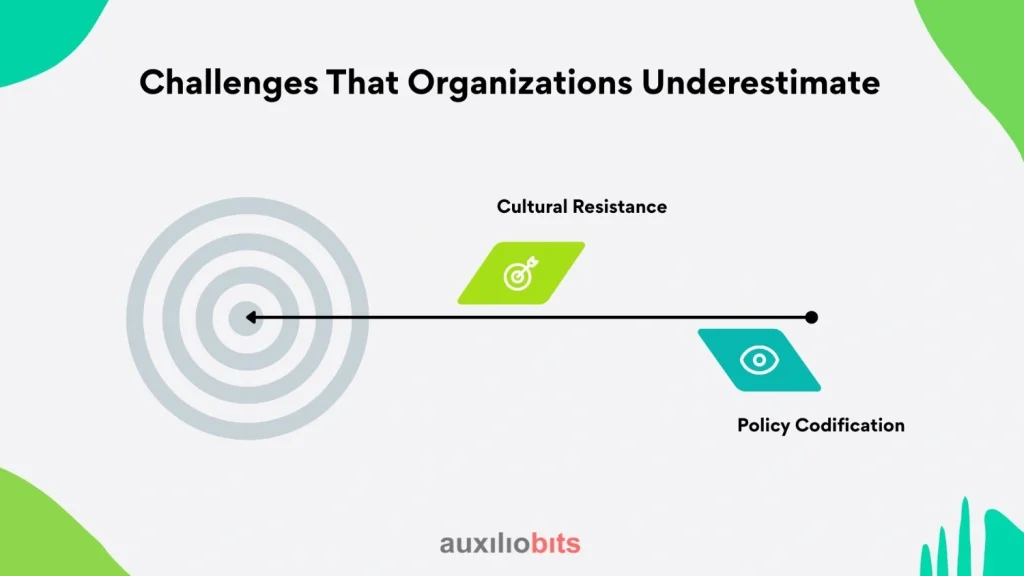
1. Cultural Resistance
Compliance departments traditionally operate as oversight bodies. Embedding automation directly into operational workflows can feel uncomfortable—almost like relinquishing control.
There’s also skepticism among operational teams. Automated compliance checks sometimes appear intrusive at first.
Adoption tends to improve once teams realize the system actually prevents last-minute audit chaos.
2. Policy Codification
Many regulatory policies were never written with automation in mind. They exist as narrative guidelines interpreted by compliance officers.
Translating those policies into machine-readable logic can be surprisingly complex.
Some rules require contextual interpretation that no automation system can fully capture. Others depend on external regulatory guidance that evolves over time.
Organizations often underestimate the time required to formalize policies properly.
The Role of Intelligent Agents
A newer development in this space involves autonomous or semi-autonomous AI agents participating in compliance monitoring.
Rather than executing static rule sets, these agents evaluate contextual signals and adapt monitoring behavior dynamically.
For instance:
- An agent might analyze procurement patterns to identify unusual vendor relationships.
- Another might review contract clauses across regions and flag deviations from regulatory templates.
- A financial monitoring agent might correlate tax classification anomalies across multiple ERP environments.
These capabilities extend beyond traditional rule engines. Still, caution is warranted. Regulatory accountability ultimately remains with the organization—not the algorithm. AI-driven compliance monitoring must remain transparent and auditable.
Blind trust in automated decision-making would defeat the purpose.
A Quiet Shift in Compliance Mindset
Perhaps the most intriguing transformation isn’t technological at all.
It’s philosophical. Compliance used to be something organizations prepared for periodically—especially before audits. Living compliance systems redefine it as something organizations operate within continuously.
That distinction changes behavior.
Teams stop thinking in terms of audit preparation cycles. Instead, compliance becomes a real-time operational attribute, much like system reliability or cybersecurity posture.
There’s something slightly ironic here.
For years, companies invested heavily in dashboards and reporting systems designed to visualize compliance status. Yet visibility alone doesn’t prevent violations. It merely reveals them after the fact.
Continuous compliance automation focuses on prevention rather than observation.
And once organizations experience that shift, going back to static reporting frameworks feels… oddly outdated.
Looking Ahead
The movement toward living compliance systems is still in its early stages. Many enterprises remain firmly anchored in reporting-based governance models.
But the direction is fairly clear. Regulatory pressure is increasing, operational environments are becoming more complex, and data flows are accelerating. Under those conditions, compliance frameworks designed around periodic inspection struggle to keep up.
Always-on monitoring, policy-driven automation, and real-time governance represent a more resilient model.
Not perfect. Not universally applicable. However, it comes much closer to the actual operations of modern organisations.
And perhaps that’s the underlying point.
Compliance should not be something discovered during audits. It should be something quietly maintained—continuously, almost invisibly—while business processes run.
That’s the promise behind Living Compliance Systems.