






Key Takeaways
- Supplier data quality determines whether automation accelerates sourcing—or amplifies chaos. Most sourcing automation failures don’t come from bad tools; they come from inconsistent supplier records, fragmented material codes, and outdated certifications. Automating on top of poor data simply creates faster errors. Cleaning and governing supplier data isn’t optional—it’s the entry ticket.
- RFQ automation delivers value only when it respects sourcing judgment. Automating RFQ creation, routing, and follow-ups removes administrative drag, but negotiation logic still belongs to humans. The biggest gains come when automation handles repetition and humans focus on supplier strategy, risk, and long-term partnerships.
- Price automation is about control, not just speed. Continuous price updates reduce invoice disputes and forecasting gaps, but only when rules differentiate standard pricing from special conditions. Automation that lacks context creates compliance issues instead of preventing them.
- The strongest ROI shows up beyond headcount reduction. Cycle-time compression, fewer emergency buys, improved supplier responsiveness, and better forecasting accuracy often outweigh pure labor savings. Mature manufacturers measure sourcing automation ROI across operational stability—not just FTE hours saved.
- Direct sourcing automation works best as a program, not a project. Phased rollout, exception handling, supplier readiness assessment, and governance mechanisms separate sustainable success from short-lived pilots. This is why sourcing automation aligns naturally with Agentic Process Automation and a HyperAutomation CoE model, not isolated bot deployments.
Direct sourcing in manufacturing isn’t glamorous, but it’s the lifeline of operational efficiency. Raw materials, components, and semi-finished goods need to flow seamlessly from suppliers to production lines, yet too often the process is fragmented, manual, and painfully slow. Procurement teams juggle spreadsheets, email threads, and ERP screens just to keep up with supplier updates. The question isn’t whether automation should be applied—it’s how to apply it where it truly matters.
Supplier Data: The Foundation That Often Gets Ignored
Manufacturing companies often underestimate the power of clean, up-to-date supplier data. Ask any procurement manager, and they’ll confess: they spend half their week just chasing basic information. Lead times, certifications, capacity constraints, contact points—this is the stuff spreadsheets won’t reliably track.
Automation can centralize supplier data into a single, living repository. Think of it as creating a digital twin of your supplier ecosystem. AI or RPA bots can:
- Capture updates directly from supplier portals.
- Validate certifications and compliance documents automatically.
- Flag anomalies like sudden lead-time spikes or price discrepancies.
Yet, this isn’t foolproof. Automated data collection works best when suppliers adhere to structured formats. If your network still communicates via unstandardized PDFs or informal emails, bots will either choke or require heavy exception handling. The nuance? Automation reduces manual effort but doesn’t replace governance. Someone still has to decide which deviations are critical.
A mid-sized automotive supplier implemented supplier data automation and saw a 40% reduction in manual follow-ups. The trick wasn’t the bot itself; it was the upfront effort to normalize supplier IDs, contacts, and material codes. Without that prep, the bot merely churns errors faster.
RFQs: The Art of Turning Repetitive Tasks Into Digital Workflows
Request for Quotations (RFQs) are the backbone of direct sourcing—but they are also the most repetitive and error-prone. A single manufacturing firm may issue hundreds of RFQs weekly, each requiring:
- Product specifications to be accurate.
- Supplier selection based on capacity, past performance, and certifications.
- Delivery timelines and payment terms to be aligned with contracts.
Manual RFQ management creates delays. It’s common for sourcing teams to send multiple rounds of clarifications, sometimes because suppliers miss an attachment or a spec detail. Automation steps in here, but it has to be smart, not just fast.
- Prepopulate RFQs: Bots can pull historical order data, supplier performance metrics, and current inventory levels to generate RFQs with minimal human input.
- Intelligent routing: AI can determine which supplier is most likely to respond competitively based on historical response rates.
- Automated follow-ups: Reminders can be triggered based on elapsed time or supplier inactivity.
It’s important to note, though, that automation doesn’t eliminate negotiation. Humans still need to weigh strategic considerations—like prioritizing a long-term partner over a slightly cheaper new entrant. But reducing the administrative load lets procurement focus on value rather than just chasing forms.
An electronics manufacturer automated RFQ distribution across its 200+ suppliers. Response time fell by 60%, and the team reclaimed nearly 10 hours per week per sourcing agent. But, interestingly, the savings weren’t linear across all suppliers. Smaller vendors often needed manual nudges despite automated reminders—highlighting that automation needs exceptions baked into the workflow.
Price Updates: Keeping Pace Without Chasing Emails
Raw material prices fluctuate constantly—steel, copper, specialty chemicals—all can shift multiple times a month. Procurement teams traditionally react rather than anticipate, often chasing price confirmations via email or phone. Automation changes this dynamic.
- Supplier portal scraping: Bots can pull posted prices directly from supplier websites or online catalogs.
- Scheduled updates: Daily or weekly automated checks ensure your internal systems reflect current pricing.
- Threshold alerts: AI can flag unusual price spikes or drops that warrant human review.
But caution: not all price updates are created equal. A bulk order discount for one client may not apply to another. Automated systems need rules to differentiate standard pricing from special-case scenarios. Failing to encode these nuances leads to misquotations or procurement disputes.
One global chemical manufacturer integrated price-monitoring bots into its ERP. The system automatically updated material rates and generated alerts when costs exceeded pre-set thresholds. The company reported a 25% improvement in forecasting accuracy and fewer invoice disputes—but procurement still needed to verify large deviations manually. Automation doesn’t remove accountability; it redistributes it.
Also read: How Manufacturing Leaders Are Building Autonomous Operations
Mapping ROI: Metrics That Matter
Manufacturers love numbers, and procurement leaders need proof before investing in automation. Beyond the obvious labor savings, effective direct sourcing automation impacts:
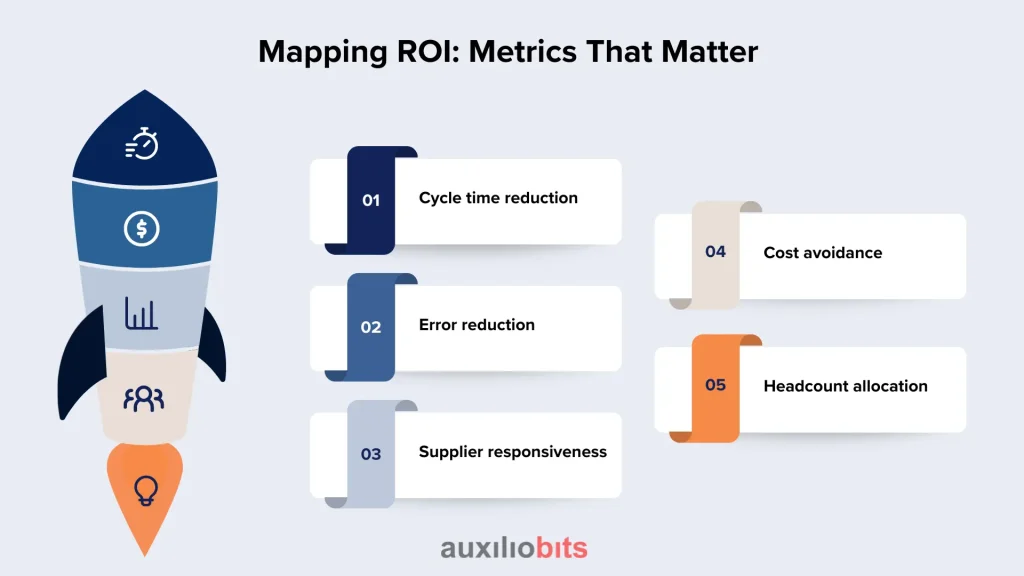
- Cycle time reduction: How long from identifying a need to issuing an approved order? Automation can shave days or even weeks.
- Error reduction: Fewer misquoted materials, mismatched specifications, or missed approvals.
- Supplier responsiveness: Faster turnaround on RFQs often strengthens relationships and opens negotiation leverage.
- Cost avoidance: Accurate pricing updates prevent overpayments.
- Headcount allocation: Staff freed from repetitive tasks can focus on strategic sourcing, compliance, or supplier development.
A consumer electronics firm calculated ROI on automating its RFQ process: 15 FTE hours saved per week, roughly $60,000 annually, plus a 10% reduction in expedited shipping costs due to more predictable supply. Interestingly, the CFO admitted the “soft savings” in negotiation quality and supplier satisfaction were even more significant over time, though harder to quantify.
Where to Begin: Tactical Steps That Work
It’s tempting to try automating everything at once, but direct sourcing is a web of interconnected tasks. A phased approach avoids chaos:
- Audit supplier data: Identify gaps in contacts, material codes, certifications, and capacity info. Standardize formats before connecting automation tools. This upfront work prevents bots from generating garbage outputs.
- Automate the low-hanging RFQs: Start with repeatable, high-volume RFQs for commodities or standardized components. Use AI to prepopulate data and automate reminders.
- Integrate price updates: Focus on high-variance materials first. Capture prices from portals or structured emails, then feed the data into ERP or procurement dashboards.
- Measure ROI early: Track cycle times, error rates, and supplier response improvements. Early wins build trust and justify expanding automation to more complex tasks.
- Embed human oversight strategically: Define exceptions, escalation paths, and validation rules. Automation works best when humans govern the “edge cases” rather than babysit the mundane.
A mid-sized industrial machinery company followed this roadmap. They began with 30 of their highest-volume suppliers, automated RFQs and price updates, and achieved measurable ROI in six months. When they scaled to 150 suppliers, they avoided common pitfalls like duplicate data entries and missed exceptions because governance processes were already in place.
Common Pitfalls and Nuances
Even seasoned manufacturers stumble when automating direct sourcing:
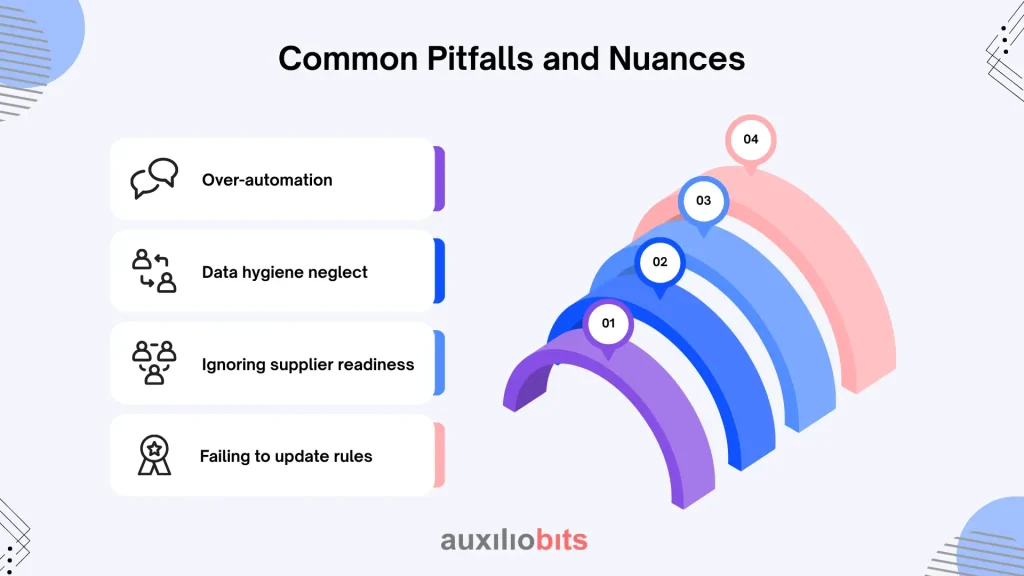
- Over-automation: Trying to digitize every step at once creates more work than it saves. Not every supplier supports automated feeds.
- Data hygiene neglect: Bots amplify bad data. Inaccurate supplier codes or inconsistent material names multiply errors rapidly.
- Ignoring supplier readiness: Some suppliers are technologically lagging. Expect manual exceptions, especially with small or geographically dispersed vendors.
- Failing to update rules: Procurement policies change. Automation scripts need continuous monitoring to reflect contract revisions, approval limits, or regulatory changes.
These aren’t showstoppers—they’re reminders that automation is a tool, not a cure-all. Success comes from marrying technology with disciplined governance and a realistic understanding of supplier behavior.
Thinking Beyond the Immediate
Direct sourcing automation isn’t just about speed or cost reduction—it also sets the stage for advanced initiatives:
- Predictive sourcing: Once historical data is digital, AI can forecast demand and suggest optimal supplier mixes.
- Scenario planning: Automated dashboards can model “what-if” scenarios for pricing fluctuations or supplier disruptions.
- Strategic negotiations: Procurement teams can devote more energy to supplier development and long-term contracts rather than chasing mundane tasks.
In other words, automating the basics doesn’t just save hours—it transforms procurement from reactive to proactive.
Automating direct sourcing in manufacturing requires pragmatism, patience, and careful sequencing. Start with clean supplier data, streamline RFQs, keep pricing accurate, and don’t forget the humans in the loop. The ROI is tangible—faster cycles, fewer errors, better supplier relationships—but the real advantage is strategic: freeing teams to focus on decisions that machines cannot make.
For organizations willing to invest in the upfront rigor of standardization, the rewards are more than just operational—they’re transformational.