







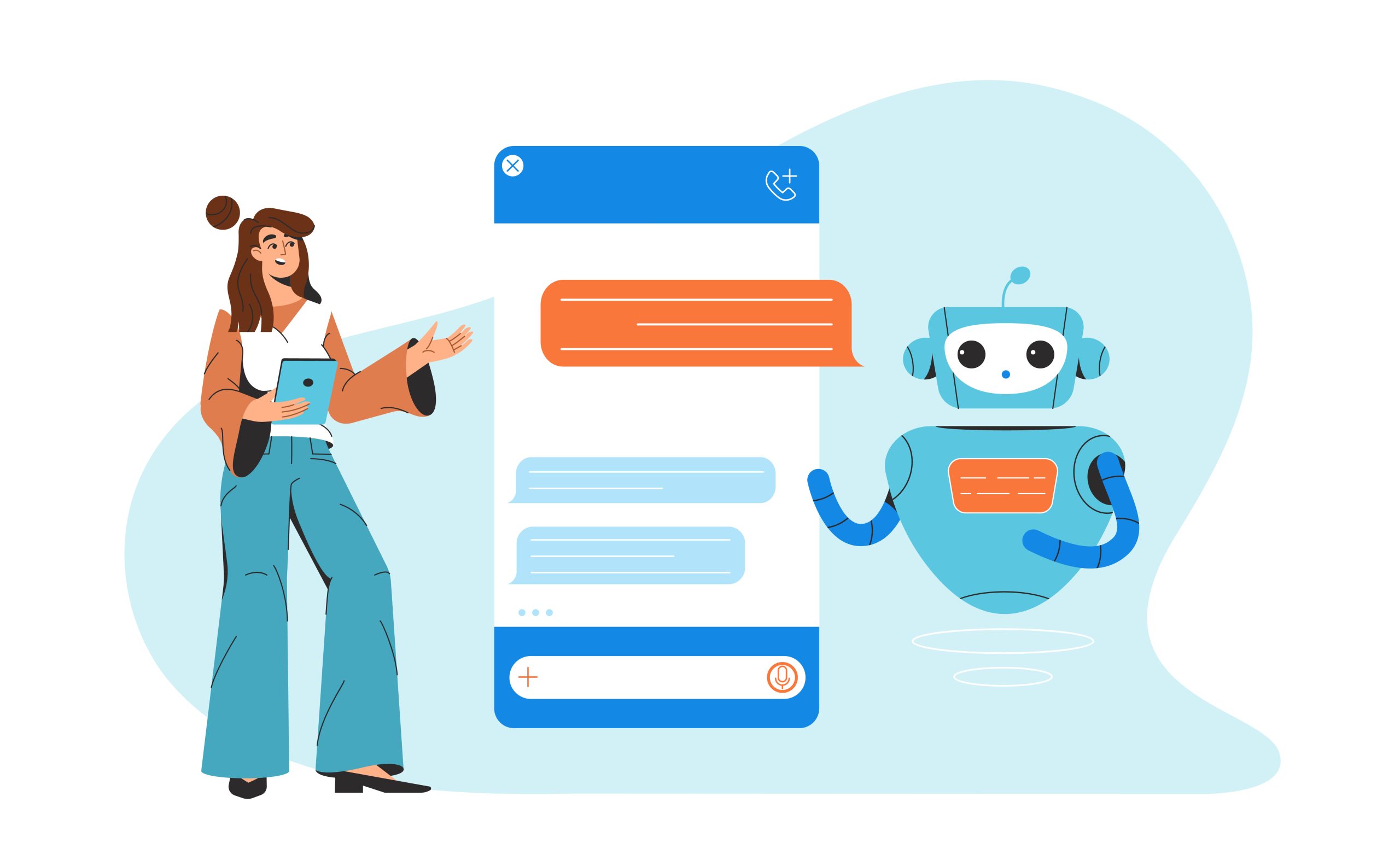
Business operations are always on the run with improvements in customer service. But when is something really exciting? The last few years have seen one such spark: using AI assistants in Customer Services and business process automation. It’s turning customer service and business process automation on its head.
Let’s peep into how they work and why they matter.
What Are AI Assistants?
AI assistants are a kind of software application that contains artificial intelligence. They can interact with the customer, answer queries, and perform many business operations automatically. Imagine them as digital assistants who ease the life of customers and businesses alike.
Benefits of AI Assistants in Customer Service:
1. Responds instantly
Instant response has been one of the significant advantages from using an AI assistant in customer service. Customers should not be kept waiting anymore for a human representative because they can have instant answers about what they want to know. This will speed up the service process and enhance the satisfaction of the customers involved.
2. Round the clock Response Time
AI Assistants in Customer Service do not need breaks or sleep time like humans. Therefore, they can assist customers 24/7. Customers can send or call their queries at any hour of the day, and this is where AI assistants stand useful, especially for those businesses that cater to customers across the globe.
3. Handling Multiple Queries
An AI assistant can multitask, meaning many customer queries can be entertained simultaneously. This will allow the business to attend to many more customers without hiring many more employees. In this regard, no customer is left waiting for assistance.
4. Quality Response to Customer Grievance
With an AI assistant in Business Process Automation, businesses would be able to service customers on the same level of quality. These tools help ensure that every customer gets the same quality response, so there is no human error and it’s guaranteed to be in line with the policies.
5. Learning and Improvement
AI assistants can also learn from interactions. They will analyze customer queries and feedback on their answers over time to improve the responses they give. This means that they become smarter and more effective in executing business processes. In this way, businesses will keep adjusting to the ever-changing needs of their customers.
Impact of AI Business Process Automation
1. Operation Simplification
The use of AI in business process automation does eliminate mundane tasks because it views more sophisticated tasks than a human being, such as data entry and invoicing. This frees up time for the firm and reduces the chances of error.
2. Cost Benefits
Automation often benefits companies with great cost efficiency. With AI executing mundane tasks, there is an opportunity to appropriate other uses of resources effectively for organizations. It lets them concentrate on top-level tasks that demand human ingenuity and discretion.
3. Easy Data Processing
AI assistants also facilitate large data processing. They classify and analyze the data fast, which can also be used to develop reports in a very short time. This boosts the quality of decision-making and keeps business organizations updated on their activities.
4. Better Customer Insights
Based on the analysis of customer interactions, AI assistant in Business Process Automation,offers valuable insights on the behavior of customers. Such information can be deployed by business organizations to enhance services delivered according to the needs of customers. Awareness of what customers want leads to better products and services that customers appreciate.
5. Higher Productivity
Since most of the routine work has been automated, more strategic work will be done by the employees. This in turn increases the overall productivity as well as business morale as it leaves an ample amount of time to focus on creative problem-solving rather than taking up mundane tasks.
How to Implement AI Assistants in Your Business?
Do you think implementing AI assistants in your business? Here are the easy steps to get started:
1. Identify Needs
First things first, find the requirements for which you would require an AI assistant. Are you asking the same questions to your customers every day? Are you tired from doing all the monotonous tasks throughout the day? There is much to be learned from your requirements, which will lead you in selecting the correct method to implement for your AI assistant.
2. Choose the Correct Implementation Tool
There are thousands of AI assistants available today. While researching a tool for implementing an AI assistant, select one that perfectly fits for achieving your business objectives. Some of the appealing features of any tool are natural language process integration, customizable capability, and compatibility with other tools.
3. Train Your AI!
After you have selected an AI assistant in Business Process Automation and Customer Service, it is best to train it properly by feeding it data and examples so it understands your business and the way you interact with customers. The more it learns, the better it works.
4. Monitor Performance
Once the AI assistant has implement, be sure to monitor Performance. Analyze customer feedback and response times. Make adjustments as necessary to optimize Performance.
5. Continually Improve
AI technologies continue to advance. Stay on top of the latest advancements and integrate new features as they become available. Ongoing innovation will help you achieve your highest benefit as an AI assistant.
Challenges to Consider
The good thing with AI assistants for customer service and business process automation is that its benefits are very important, yet there are concerns. For example, while some customers prefer using humans to solve complicated issues, a balance between automation and human support must see to happen.
Another critical concern will be the privacy and security of the data. Be sure to guarantee your AI assistant complies with the Data Protection Act. Customers should have confidence that their data can be safe and secure.
They are revolutionizing customer service and business processes. They can offer instant support, streamline operations and generate better insights into customers. Business will look increasingly competitive while embracing these technologies. Improvement in efficiency and better customer satisfaction can come with improved decisions. For those with the means, cautiously selecting and implementing the right AI Assistants in Customer Service makes all the difference.
Yes, it’s time to join the future of customer service and automation.
The time to take the right step is today!





