









Key Takeaways
- Demand sensing matters more than historical averages – agentic AI interprets real-time signals from multiple sources to recalibrate forecasts dynamically.
- Exceptions are inevitable; response is optional – autonomous agents handle most disruptions, prioritizing high-impact issues and learning from outcomes.
- Multi-agent orchestration scales intelligence – specialized agents for forecasting, replenishment, and exception resolution outperform monolithic systems.
- Humans remain essential – planners focus on strategic decisions while agents manage high-volume, repetitive tasks.
- Results depend on data and process alignment – high-quality inputs, supplier responsiveness, and organizational buy-in are critical for success.
Inventory management has long been a balancing act between overstocking and stockouts. Traditional systems rely on historical consumption patterns, seasonal trends, and often a fair bit of gut instinct. But in today’s environment—volatile supply chains, unpredictable consumer behavior, and shrinking lead times—these approaches are increasingly insufficient. Enter Agentic AI.
Unlike conventional forecasting tools, agentic AI systems operate as autonomous decision-making entities. They can actively monitor data, sense demand shifts, and execute replenishment strategies with minimal human intervention. This isn’t merely automation; it’s a form of intelligence embedded in operational workflows.
Also read: Evaluating Agentic AI in the Enterprise: Metrics, KPIs, and Benchmarks
Demand Sensing: The Heart of Modern Inventory Management
At the core of agentic AI for inventory management is demand sensing. Unlike traditional forecasting models that rely heavily on historical averages, demand sensing adjusts predictions in near real time based on actual market signals. Consider this:
- A sudden spike in e-commerce orders for winter apparel after an unexpected cold snap.
- A regional supply disruption affecting a key component for electronics manufacturing.
- Social media trends triggering a surge in demand for a product nobody saw coming.
An agentic system doesn’t just report these anomalies; it interprets them. By ingesting multiple streams—POS data, supplier inventories, social sentiment, and even weather forecasts—it recalibrates forecasts on the fly.
Take a mid-sized consumer goods company we worked with recently. They were seeing repeated stockouts of a popular breakfast cereal, despite overstocking other SKUs. Agentic AI analyzed retail scan data alongside regional weather patterns and promotional schedules, identifying that a particular weekend promotion in the northeast consistently outpaced forecasts. The system began dynamically adjusting replenishment orders just days before the spike, cutting stockouts by 35% while reducing excess inventory elsewhere.
Why Demand Sensing Often Fails Without Agentic Oversight
Demand sensing alone isn’t a silver bullet. Traditional systems might pick up a signal but then hit human bottlenecks: a planner has to validate it, wait for approvals, or manually adjust orders. By the time the adjustment reaches the supplier, the opportunity is gone. Agentic AI closes this loop by:
- Autonomous Exception Resolution: The AI identifies outliers—say, a sudden drop in demand due to a recall—and automatically decides whether to cancel, delay, or reallocate inventory.
- Cross-System Communication: It can simultaneously update ERP, WMS, and supplier portals without waiting for human intervention.
- Contextual Judgment: Not all anomalies are actionable. An agent can weigh the cost of overstock versus stockout dynamically, considering both financial and operational impact.
Without this autonomous layer, even sophisticated demand sensing algorithms often end up as fancy dashboards—informative, but ultimately reactive rather than proactive.
Exception Resolution: The Invisible Workload
Exceptions—unexpected disruptions, miscounts, supplier delays—are the silent killers of efficient inventory management. Traditional approaches rely heavily on human teams to triage exceptions, leading to slow responses and, frankly, fatigue-induced errors.
Agentic AI excels here by:
- Prioritizing Critical Exceptions: Not every stock anomaly matters equally. Agents can rank exceptions by revenue impact, service-level consequences, and downstream dependencies.
- Automating Mitigation: For example, if a critical component shipment is delayed, the agent can automatically reroute inventory from lower-priority regions or suggest expedited shipping, without waiting for a manager’s nod.
- Learning from Outcomes: Each resolution feeds back into the system, refining both the forecast and the response logic. Over time, the AI becomes better at predicting which exceptions will recur and how to handle them efficiently.
A practical example comes from a multinational electronics manufacturer. They faced frequent supplier delays in semiconductor deliveries—a high-cost, high-demand component. Agentic AI not only detected potential shortages days in advance but also automatically shifted planned production loads across facilities, avoiding costly downtime. Their planners were freed from firefighting and could focus on strategic sourcing instead.
Integrating Multi-Agent Systems
One of the underappreciated benefits of agentic AI in inventory management is multi-agent orchestration. Instead of a single monolithic system making decisions, multiple specialized agents can handle distinct tasks:
- Forecasting Agents: Continuously ingest market data to predict SKU-level demand.
- Replenishment Agents: Generate purchase orders, monitor supplier capacity, and optimize lead times.
- Exception Agents: Detect anomalies and initiate corrective actions autonomously.
These agents communicate with each other and, when needed, escalate to human planners for oversight on unusual cases. The result is a system that is highly adaptive, scalable, and resilient to disruption.
It’s worth noting that not every company benefits equally from multi-agent systems. They work best when:
- Data is available in near real time.
- Supply chains are complex and geographically distributed.
- Product portfolios are large with varying demand patterns.
For smaller, simpler supply chains, a single-agent approach may suffice, but even then, agentic intelligence still improves forecasting and exception handling over static models.
Measuring Success: KPIs That Matter
Deploying agentic AI is not just about implementing a shiny technology. The real proof lies in measurable outcomes:
- Forecast Accuracy: Traditional methods might hit 70–75%; agentic AI can push this to 90%+ by continuously learning from deviations.
- Stockout Reduction: Rapid detection and resolution of demand anomalies can cut stockouts by 20–40%, depending on the industry.
- Inventory Carrying Costs: Smarter replenishment and dynamic reallocation reduce unnecessary stock accumulation, often saving millions annually for mid-to-large enterprises.
- Exception Resolution Time: Autonomous agents can handle routine disruptions in minutes rather than hours, reducing labor costs and operational friction.
Human Oversight: The Still-Critical Component
Let’s be clear: agentic AI doesn’t eliminate human planners; it augments them. Humans still provide context that machines cannot—strategic decisions like new product launches, mergers, or regulatory shifts. The optimal setup blends autonomy with oversight, where agents handle repetitive, high-volume decisions, and planners focus on higher-level strategy.
There’s also an organizational nuance: planners need to trust agents. That requires transparency in the AI’s reasoning and clear escalation protocols. Companies that skip this step often see underutilization, despite having sophisticated AI in place.
Challenges and Pitfalls
Agentic AI isn’t a magic wand. Several hurdles can undermine success:
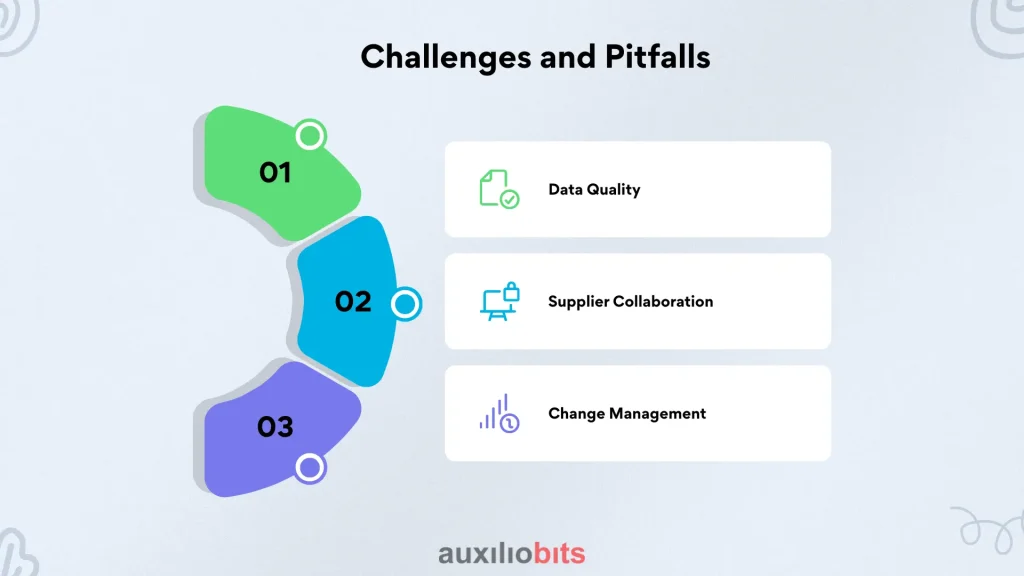
- Data Quality: Garbage in, garbage out still applies. Agents need high-fidelity, timely data from multiple sources. Missing or inconsistent inputs degrade forecasts.
- Supplier Collaboration: Autonomous replenishment decisions are only as good as the supplier’s ability to respond. Contracts, lead times, and SLAs must align with AI-driven agility.
- Change Management: Shifting to autonomous inventory management can meet resistance. Staff may feel threatened or skeptical of agentic decisions, especially when exceptions escalate.
A nuanced view is essential: agentic AI excels in dynamic, complex supply chains but is less impactful in static, predictable environments. Success is rarely about technology alone—it’s about process, data, and culture.
Looking Ahead: Adaptive Inventory Ecosystems
The trajectory is clear: inventory management is evolving from reactive to proactive, from static planning to adaptive orchestration. Agentic AI enables organizations to sense demand, resolve exceptions, and optimize replenishment in near real time, turning supply chains into responsive, self-correcting ecosystems.
Companies that ignore this trend risk falling behind competitors who can anticipate demand swings, mitigate disruption instantly, and free planners for strategic tasks rather than daily firefighting. Conversely, thoughtful adoption—with proper governance, high-quality data, and integrated multi-agent systems—can transform inventory from a cost center into a competitive advantage.